1857 Revolt Martyrs Memorial inaugurated in Ambala Haryana
Source:PIB ↗
Why It Matters
Important for understanding the regional dimensions, prominent centers like Ambala, and the historical preservation of the memory of the First War of Independence of 1857.
Summary
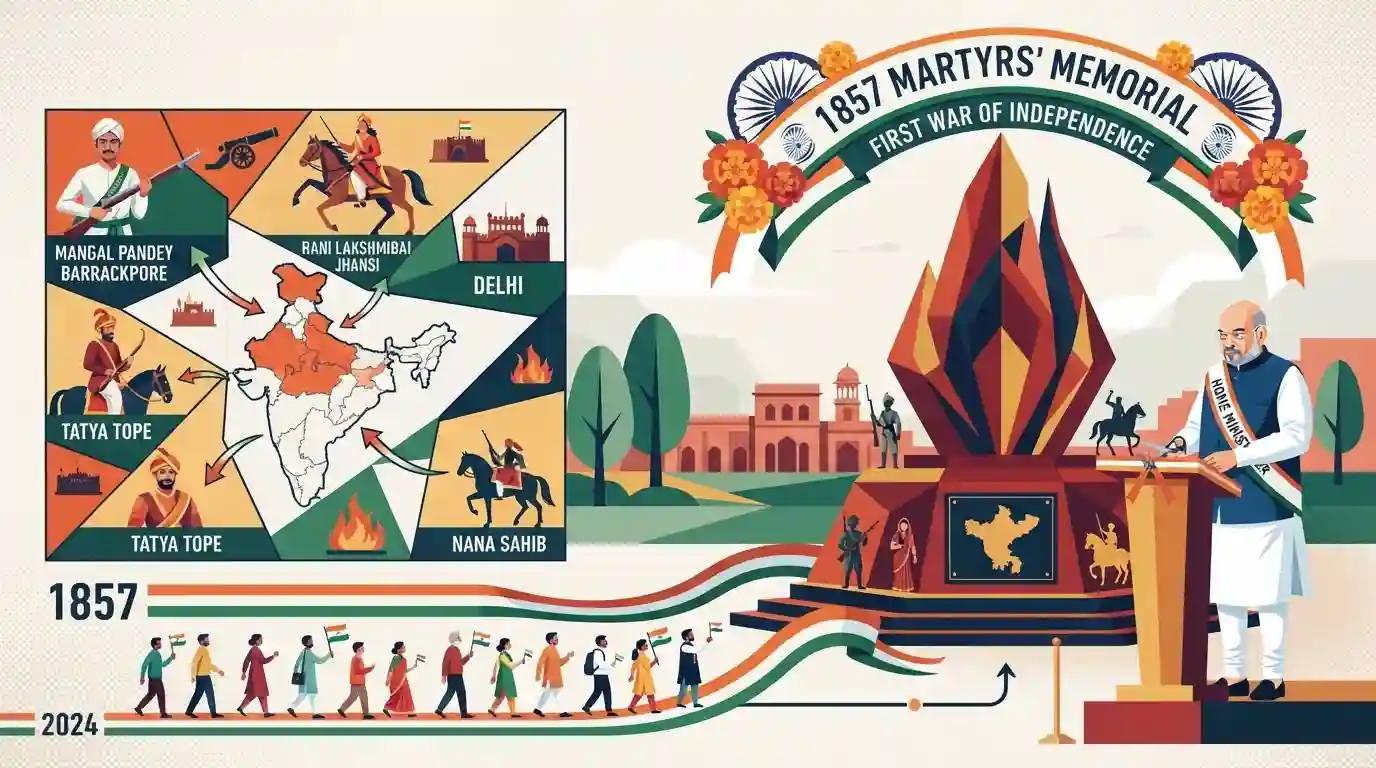
Union Home Minister and Minister of Cooperation Shri Amit Shah inaugurated the Martyrs’ Memorial of the First War of Independence of 1857 in Ambala, Haryana, commemorating the historic role and sacrifices of freedom fighters during the 1857 uprising.
Key Points
- Union Home Minister Amit Shah inaugurated the Martyrs’ Memorial of the First War of Independence of 1857 in Ambala, Haryana.
- Ambala cantonment played a critical and early role in the outbreak of the 1857 revolt.
- The memorial honors the sacrifices of freedom fighters and heroes of the 1857 uprising.
Important Terms
Ministry of Cooperation

A central government ministry established in July 2021 to provide a separate administrative, legal, and policy framework for strengthening the cooperative movement and realizing the vision of 'Sahkar se Samriddhi'.
UPSC context
Mains GS Paper II: Polity & Governance – Structure, organization, and functioning of the Executive and Ministries.
Martyrs' Memorial of 1857 (Ambala)
A major memorial complex in Ambala Cantonment commemorating the freedom fighters and events of the 1857 Revolt, highlighting Ambala's significant role in India's First War of Independence.
UPSC context
Prelims / Mains GS Paper I: Modern Indian History – The Revolt of 1857, important centers, and regional uprisings.
Static Concepts Connected
What were the primary military and administrative causes behind the 1857 Revolt?
- Sepoy Grievances: Discrimination in pay, promotion, and racial slurs against Indian sepoys by British officers created deep resentment.
- Overseas Service: The General Service Enlistment Act of 1856 compelled new recruits to serve overseas, violating Hindu religious taboos.
- Doctrine of Lapse: Lord Dalhousie’s Doctrine of Lapse annexed principalities like Satara, Nagpur, and Jhansi without recognizing adopted heirs.
Cross-Topic Patterns
1857 Historiography Meets Heritage Tourism
The establishment of cultural/historical memorials in peripheral 1857 centers (like Ambala) links regional historiography with contemporary heritage tourism initiatives under the Ministry of Culture.

UPSC often pairs minor or regional centers of the 1857 revolt (like Ambala or Meerut) with their respective leaders in matching-type questions.
Linked PYQs · 2
Linked PYQs · 2
- 2019MainsGS1
The 1857 Uprising was the culmination of the recurrent big and small local rebellions that had occurred in the preceding hundred years of British rule. Elucidate.
- 2016MainsGS1
Explain how the Uprising of 1857 constitutes an important watershed in the evolution of British policies towards colonial India.
