Drugs Rules 1945 Amendments for Qualified Batch Release Personnel
Source:PIB ↗
ఇది ఎందుకు ముఖ్యం
This topic is vital for UPSC GS-2 (Government Policies, Health Sector Regulation) and GS-3 (Pharmaceutical Industry and Standards), highlighting institutional mechanisms designed to enhance drug safety and accountability.
సారాంశం
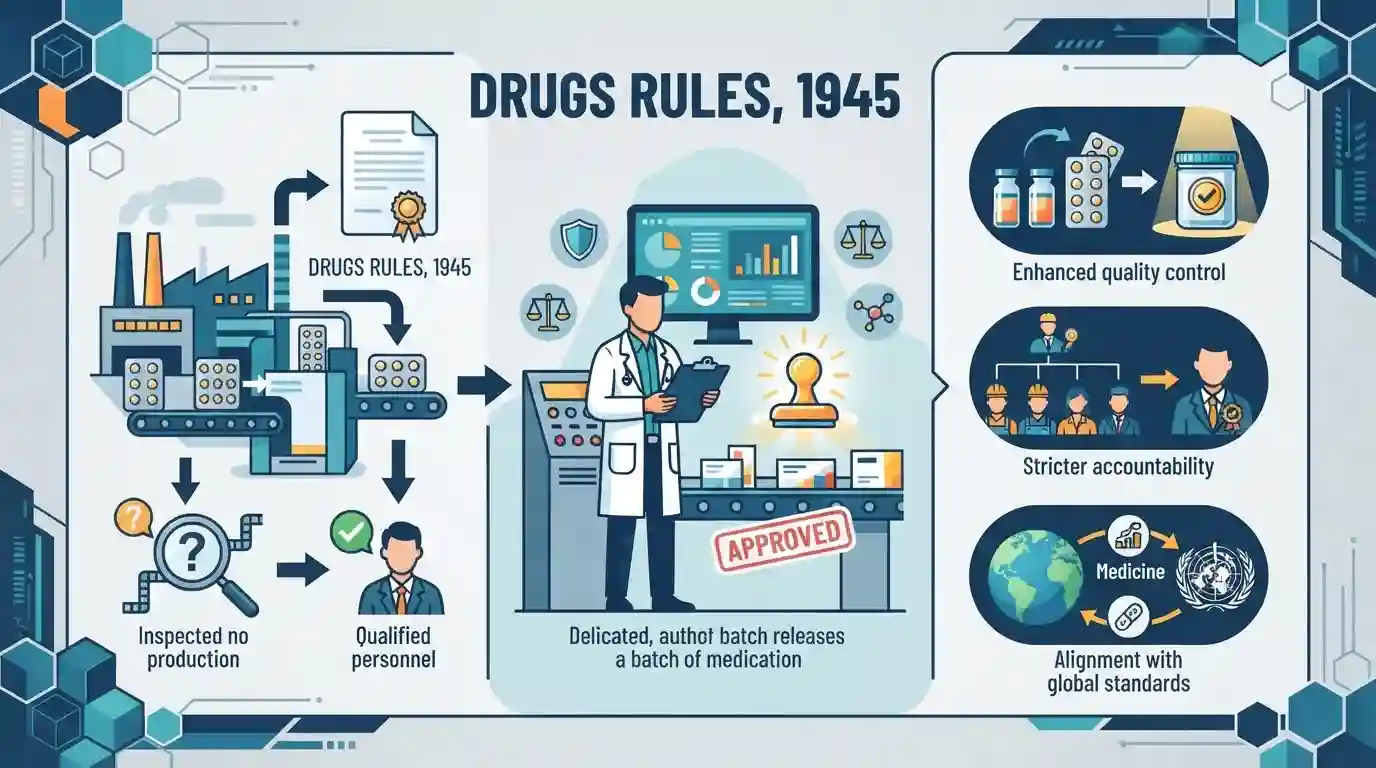
The Union Health Ministry has proposed amendments to the Drugs Rules, 1945, to make it mandatory for pharmaceutical manufacturing units to designate qualified personnel responsible for authorizing drug batch releases. This regulatory change aims to enhance quality control, ensure stricter accountability in drug manufacturing, and align India's regulatory frameworks with global safety standards.
ముఖ్య అంశాలు
- The Union Health Ministry has proposed amendments to the Drugs Rules, 1945 to mandate the authorization of qualified personnel for drug batch release.
- The move aims to strengthen quality assurance, accountability, and regulatory oversight in pharmaceutical manufacturing.
- Qualified professionals with specified educational and professional experience will be legally responsible for testing and verifying drug batches before commercial distribution.
- This initiative addresses concerns regarding drug safety, standard compliance, and international quality benchmarks for Indian pharmaceuticals.
ముఖ్యమైన పదాలు
Drugs Rules 1945

Subordinate legislation framed under the Drugs and Cosmetics Act, 1940, prescribing detailed procedures, standards, and requirements for the manufacture, sale, labeling, and import of drugs and cosmetics in India.
UPSC context
GS Paper II / Government Policies & Health. Tests understanding of statutory frameworks governing pharmaceutical manufacturing and quality control standards.
Drugs and Cosmetics Act 1940
The primary central legislation in India that regulates the import, manufacture, distribution, and sale of drugs and cosmetics to prevent sub-standard products and protect public health.
UPSC context
GS Paper II / Regulatory Frameworks. Crucial for questions on consumer safety laws, public health governance, and pharmaceutical industry regulations.
Central Drugs Standard Control Organization (CDSCO)
The national regulatory body under the Ministry of Health and Family Welfare responsible for approval of new drugs, clinical trials, standards setting, and quality control of imported drugs in India.
UPSC context
GS Paper II / Health & Human Resources. Important for evaluating institutional mechanisms for drug safety oversight and regulatory enforcement.
Union Health Ministry
The apex central government body tasked with formulating health policies, administering public health programs, and proposing statutory amendments related to pharmaceutical safety and healthcare infrastructure.
UPSC context
GS Paper II / Government Policies & Interventions. Tests knowledge of ministerial jurisdiction and executive policy formulation in the health sector.
అనుసంధానమైన స్థిర భావనలు
What is the statutory framework governing drug standards and manufacturing in India?
- Parent Act: Primary legislation regulating import, manufacture, distribution, and sale of drugs and cosmetics across India.
- Subordinate Legislation: Rules framed under the 1940 Act detailing procedural requirements, licensing conditions, and manufacturing standards.
- CDSCO Role: National regulatory body under the Ministry of Health and Family Welfare responsible for approval of new drugs and clinical trials.
అంతర-అంశ నమూనాలు
Pharma Regulation + Export Competitiveness
Stricter drug manufacturing regulations and mandatory batch-release certification directly impact India's pharmaceutical exports, linking domestic quality oversight with WTO-TBT (Technical Barriers to Trade) compliance and international market access.
Drug Safety + Administrative Accountability
Shifting accountability to designated qualified professionals bridges the gap between the Drugs and Cosmetics Act and corporate governance standards, echoing recommendations from past High-Level Committees on healthcare reforms.

Questions may test the statutory backing of Drugs Rules (under the 1940 Act) versus delegated legislation and institutional accountability.
అనుసంధాన PYQలు · 1
అనుసంధాన PYQలు · 1
- 2024MainsGS2
In a crucial domain like the public healthcare system the Indian State should play a vital role to contain the adverse impact of marketisation of the system. Suggest some measures through which the State can enhance the reach of public healthcare at the grassroots level.
