NAMASTE Scheme: Mechanized Sanitation and Worker Dignity Framework
Source:PIB ↗
આ શા માટે મહત્વનું છે
The NAMASTE scheme is a flagship initiative addressing the systemic marginalization and occupational hazards of sanitation workers, making its implementation, challenges, and outcomes crucial for GS2 (Social Justice and Governance).
સારાંશ
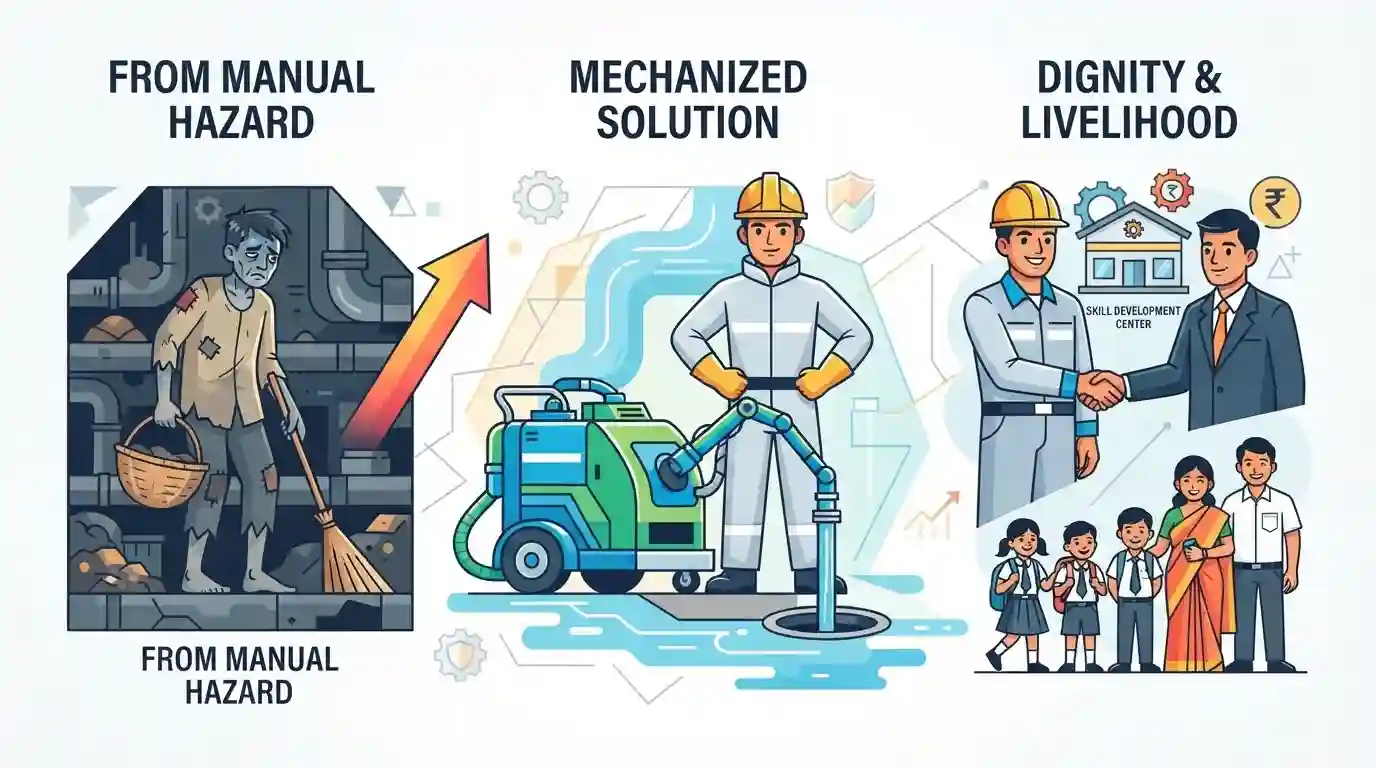
This PIB release discusses the success of the NAMASTE (National Action Plan for Mechanized Sanitation Ecosystem) scheme in transforming the lives of sanitation workers by shifting them from hazardous manual scavenging to safe, mechanized cleaning, ensuring occupational safety, dignity, and livelihood support.
મુખ્ય મુદ્દા
- The NAMASTE scheme aims to eliminate manual scavenging and ensure safety, dignity, and formalization of sanitation workers (septic tank and sewer workers).
- Success stories highlight the transition of workers from hazardous manual cleaning to mechanized operations using modern protective gear and specialized vehicles.
- The scheme focuses on occupational safety, social security benefits, capacity building, and capital subsidies for procuring sanitation machinery.
- It aligns with India's broader social justice and inclusive growth goals for vulnerable and marginalized communities.
મહત્વપૂર્ણ શબ્દો
NAMASTE Scheme

A joint initiative by the Ministry of Social Justice and Empowerment and the Ministry of Housing and Urban Affairs to eliminate hazardous manual scavenging and promote safe, mechanized sanitation ecosystems.
UPSC context
GS Paper II (Social Justice / Welfare Schemes). Tests governance, inclusive growth, and welfare measures for vulnerable sections.
Ministry of Social Justice and Empowerment
A central ministry responsible for welfare, social justice, and empowerment of marginalized groups, including Scheduled Castes, Other Backward Classes, senior citizens, and sanitation workers.
UPSC context
GS Paper II (Governance / Social Justice). Tests institutional frameworks for implementing welfare policies and protecting vulnerable populations.
સંલગ્ન સ્થિર ખ્યાલો
What are the key institutional mandates and implementing ministries of the NAMASTE Scheme?
- Dual Ministries: Joint Initiative by the Ministry of Social Justice and Empowerment (MoSJE) and the Ministry of Housing and Urban Affairs (MoHUA).
- Core Objective: Aims for zero fatalities in sanitation work by eliminating hazardous manual cleaning of sewers and septic tanks.
- Institutional Mechanism: Establishes Emergency Response Sanitation Units (ERSUs) in Urban Local Bodies equipped with specialized safety gear and modern machinery.
- Social Security: Integrates sanitation workers into social security nets via Ayushman Bharat-PMJAY and provides capital subsidies for mechanized equipment.
આંતર-વિષય પેટર્ન
NAMASTE Scheme & Inclusive Urban Governance
The transition from manual scavenging to mechanized ecosystems directly supports SDG 8 (Decent Work) and SDG 11 (Sustainable Cities), making it a key case study for inclusive urban governance questions.
Labor Formalization & Central Welfare Convergence
Social security convergence via AB-PMJAY and capital subsidies under central schemes bridges welfare administration with the formalization of informal labor markets in urban bodies.

NAMASTE scheme institutional mechanisms (ERSUs, MoSJE + MoHUA dual ministry role, AB-PMJAY integration) are prime targets for MCQs.
સંલગ્ન PYQ · 3
સંલગ્ન PYQ · 3
- 2017MainsGS2
To ensure effective implementation of policies addressing water, sanitation and hygiene needs the identification of the beneficiary segments is to be synchronized with the anticipated outcomes." Examine the statement in the context of the WASH scheme.
- 2023MainsGS2
“Development and welfare schemes for the vulnerable, by its nature, are discriminatory in approach.” Do you agree? Give reasons for your answer.
- 2022MainsGS2
Besides the welfare schemes, India needs deft management of inflation and unemployment to serve the poor and the underprivileged sections of the society. Discuss.
