MoRTH Vehicle Regulation Updates for E85 and E100 Flex Fuel
Source:PIB ↗
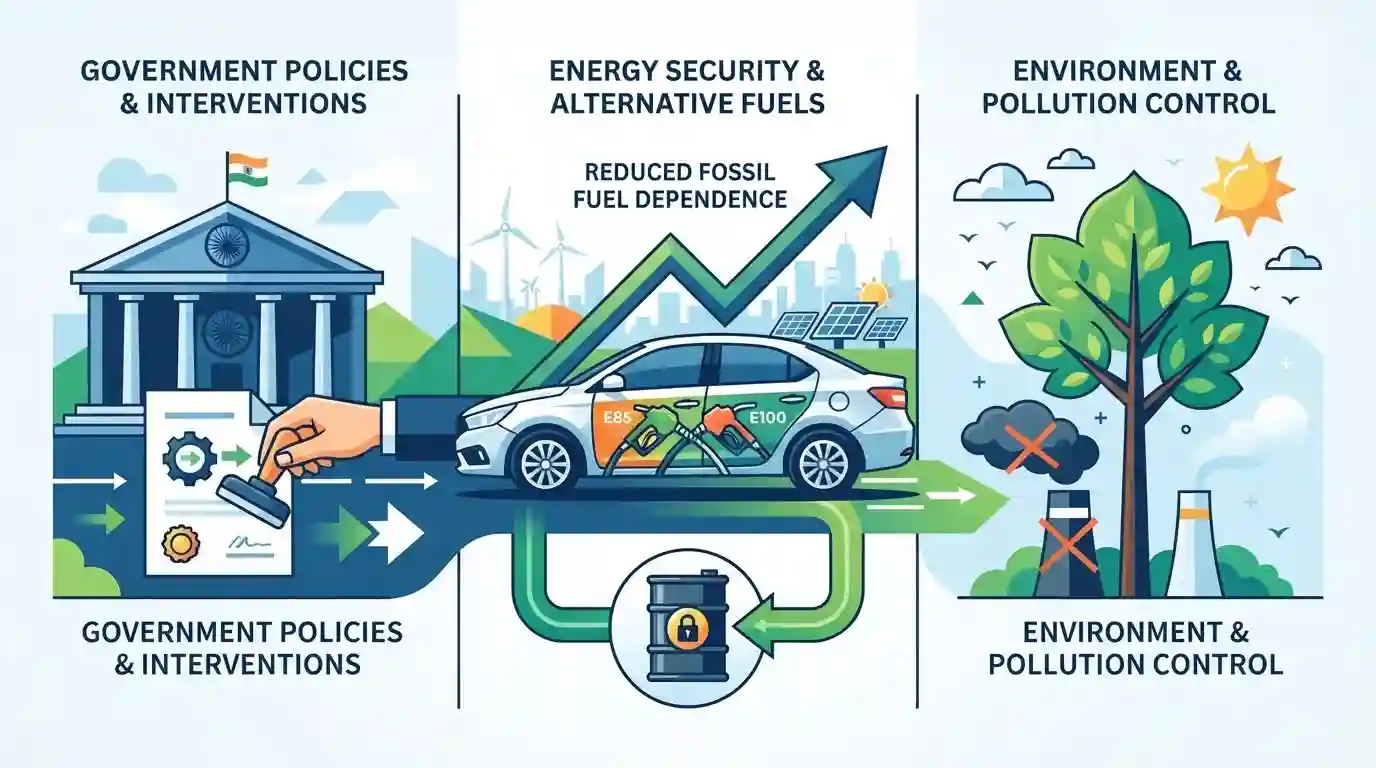
Why It Matters
This update by MoRTH is a critical policy step toward expanding the scope of biofuels (ethanol blending) beyond regular fuel mixes, directly impacting India's crude import bill, carbon footprint, and clean mobility transition.
Summary
The Ministry of Road Transport and Highways (MoRTH) has updated regulations to enable the introduction and usage of E85 and E100 flex fuel vehicles in India, bolstering the country's clean energy goals, reducing fossil fuel dependence, and promoting sustainable transportation alternatives.
Key Points
- MoRTH has updated automotive rules to facilitate the rollout and registration of E85 and E100 flex fuel vehicles.
- Flex-fuel vehicles (FFVs) running on higher ethanol blends (up to 85% or 100%) support India's transition towards clean energy and reduced crude oil imports.
- The move aligns with India's broader roadmap for achieving ethanol blending targets and promoting alternate fuels in the transportation sector.
Important Terms
E85 flex fuel

A high-ethanol fuel blend consisting of up to 85% ethanol and 15% gasoline, designed to be used in specialized flex-fuel vehicles to reduce fossil fuel dependence.
UPSC context
GS Paper III (Energy Security & Alternative Fuels): Tests understanding of India's green transition, ethanol blending roadmap, and sustainable transport policies.
E100 flex fuel
A nearly pure ethanol fuel (100% or predominantly ethanol) utilized in specially engineered flex-fuel vehicles, supporting India's domestic biofuel economy and low-emission goals.
UPSC context
GS Paper III (Environment & Infrastructure): Relevant for assessing clean energy alternatives, reducing crude oil imports, and government vehicle regulations.
Ministry of Road Transport and Highways (MoRTH)
The nodal central government ministry responsible for formulating and administering policies, rules, and regulations relating to road transport, national highways, and vehicular standards in India.
UPSC context
GS Paper II (Governance): Tests knowledge of ministerial responsibilities, regulatory amendments (like Central Motor Vehicles Rules), and policy execution.
Static Concepts Connected
What are the key mechanisms and targets under India's National Ethanol Blending Programme?
- Target timeline: India achieved its 10% ethanol blending target ahead of schedule and advanced the 20% blending target (E20) to 2025-26.
- Diverse feedstocks: Ethanol is produced from multiple feedstocks including sugarcane molasses, damaged food grains, and surplus rice available with FCI.
- Pricing mechanism: Administered pricing mechanism (APM) and differential pricing based on feedstock types incentivise distilleries to ramp up production capacity.
Cross-Topic Patterns
Ethanol Blending vs Agricultural Surplus & CAD
The ethanol blending roadmap ties agricultural surplus management (sugar/grains MSP and procurement) directly to macro-fiscal current account deficit management via reduced crude import bills.
Automotive Manufacturing Standards and Green Transition
Higher ethanol blends require specialized internal combustion engine modifications, bridging automotive manufacturing policy with green energy transition targets under India's NDC commitments.

Expect statements on whether E100/E85 vehicles are mandated or enabled, and whether ethanol is sourced solely from sugarcane or also grains.
Linked PYQs · 2
Linked PYQs · 2
- 2025MainsGS3
How can India achieve energy independence through clean technology by 2047? How can biotechnology can play a crucial role in this endeavour?
- 2022MainsGS3
Do you think India will meet 50 percent of its energy needs from renewable energy by 2030 ? Justify your answer. How will the shift of subsidies from fossil fuels to renewables help achieve the above objective ? Explain.
