Ayurveda Approaches for Menopausal Health Management
Source:PIB ↗
Why It Matters
The article deals with women's healthcare policies, maternal/geriatric/midlife health, and the mainstream integration of traditional medicine (Ayurveda), which is central to India's public health strategy and GS2 syllabus topics on social development and health.
Summary
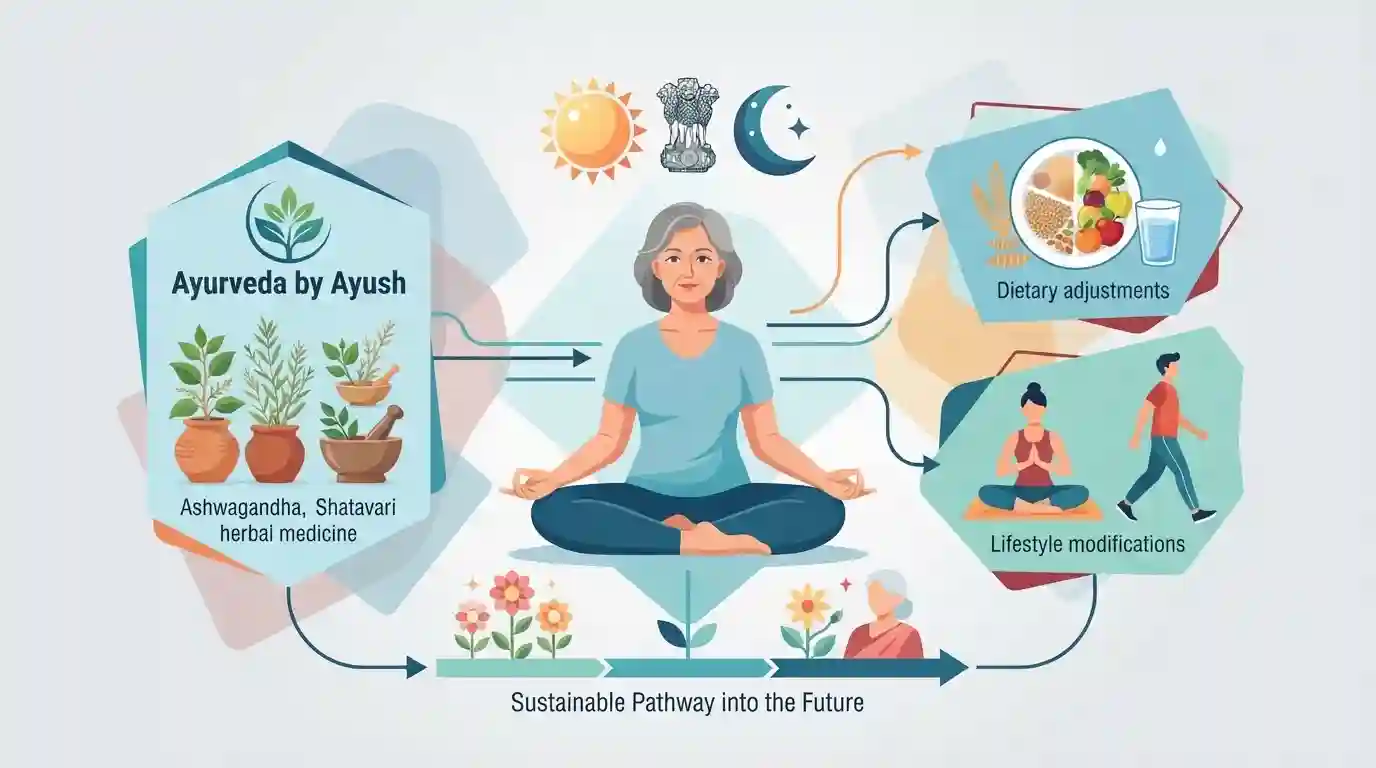
On World Menopause Day 2026, the Ministry of Ayush highlighted Ayurveda's comprehensive, holistic framework for managing menopausal symptoms. By addressing physical, mental, and emotional changes through traditional herbs, dietary adjustments, and lifestyle modifications, Ayurveda offers a sustainable pathway for women's midlife health and preventive care.
Key Points
- World Menopause Day 2026 highlights Ayurveda's holistic approach to managing menopausal health.
- Ayurveda views menopause (Rajonivritti) as a natural biological transition rather than a disease, focusing on balancing doshas through diet, lifestyle (Dinacharya, Ritucharya), and herbal remedies.
- Integrative healthcare emphasizes blending traditional systems like Ayurveda with modern medicine to improve women's midlife well-being and tackle chronic conditions like osteoporosis and metabolic syndrome.
- Public health messaging underscores breaking the social stigma and silence around menopause by promoting preventive care and self-care strategies.
Important Terms
Ministry of Ayush

A dedicated government ministry in India responsible for developing, promoting, and regulating education, research, and healthcare delivery in traditional medicine systems including Ayurveda, Yoga & Naturopathy, Unani, Siddha, and Homeopathy.
UPSC context
UPSC GS Paper II: Health infrastructure, government policies, and the promotion of traditional medicine systems in public healthcare.
World Health Organization
The specialized UN agency responsible for international public health, setting global health norms, standards, policies, and coordinating international responses to epidemics and health emergencies.
UPSC context
UPSC GS Paper II: International organizations, global health governance, and India's multilateral health collaborations.
Prelims Trap
Ayurveda offers a replacement for modern hormone replacement therapy in managing severe menopausal syndromes.
Aspirants often assume Ministry of Ayush schemes mandate replacing modern allopathic care, whereas current policy promotes integrative evidence-based medicine alongside modern healthcare.
Static Concepts Connected
What are the core principles of Ayurveda regarding physiological transitions like Rajonivritti (Menopause)?
- Natural Transition:: Treats it as a natural physiological transition rather than a disease, focusing on dosha equilibrium.
- Regimen Based:: Employs Dinacharya (daily routines) and Ritucharya (seasonal regimens) to manage midlife Vata imbalances.
Cross-Topic Patterns
Traditional Medicine + Demographic Aging Policy
The integration of AYUSH protocols into National Health Mission frameworks bridges traditional preventive wisdom with modern demographic aging policies.

Integration of AYUSH protocols into women's public health policies is a high-yield theme for Mains GS-2 (Health/Welfare).
Linked PYQs · 2
Linked PYQs · 2
- 2020MainsGS2
In order to enhance the prospects of social development, sound and adequate health care policies are needed particularly in the fields of geriatric and maternal health care. Discuss.
- 2024MainsGS2
In a crucial domain like the public healthcare system the Indian State should play a vital role to contain the adverse impact of marketisation of the system. Suggest some measures through which the State can enhance the reach of public healthcare at the grassroots level.
