National conference deliberates on e-governance administrative reforms
Source:PIB ↗
આ શા માટે મહત્વનું છે
E-governance reforms are central to improving accountability, transparency, and citizen-centric governance in India, directly tying into GS2 syllabus requirements.
સારાંશ
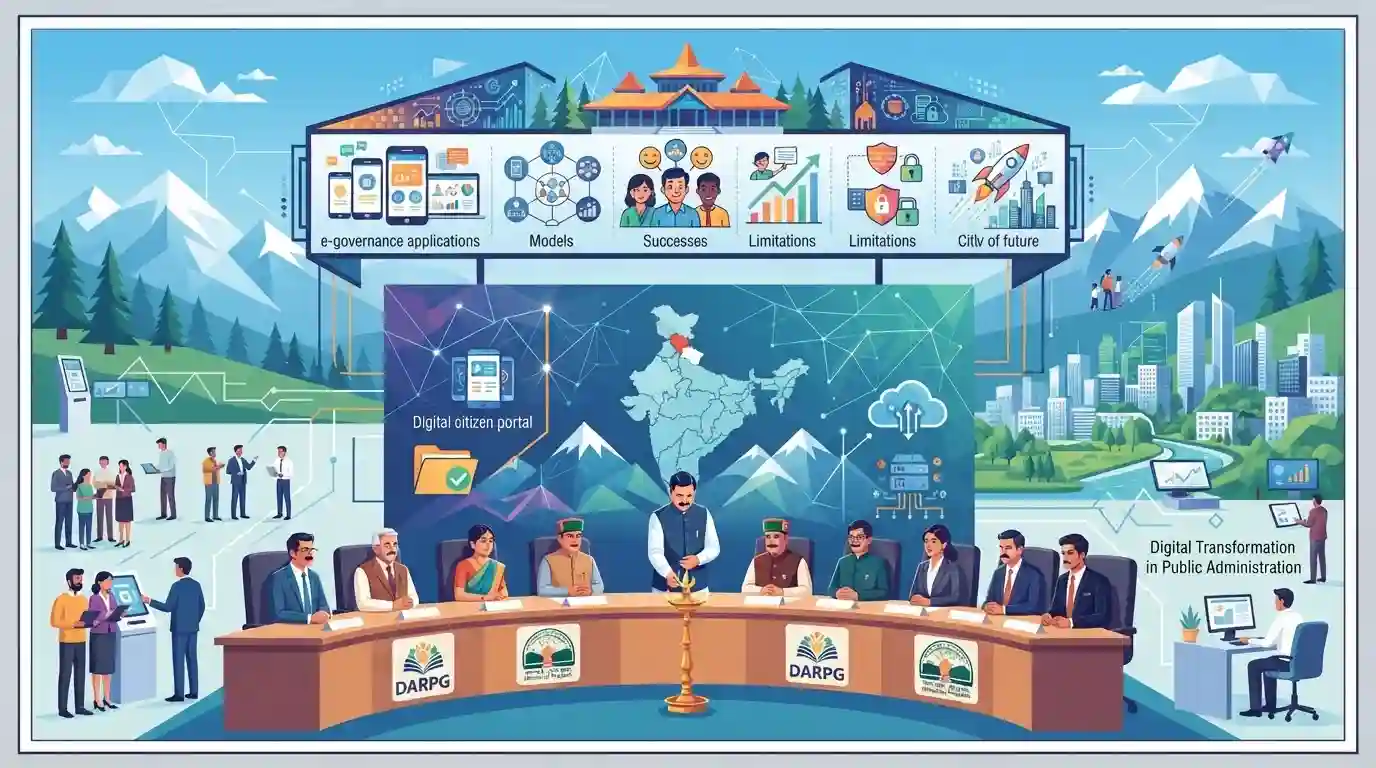
The article covers the inauguration of the two-day National Conference on e-Governance Reforms in Dharamshala, Himachal Pradesh, organized by DARPG and the state government to deliberate on digital transformation in public administration.
મુખ્ય મુદ્દા
- A two-day National Conference on e-Governance Reforms was inaugurated in Dharamshala, Himachal Pradesh.
- Jointly organized by the Department of Administrative Reforms and Public Grievances (DARPG) and the Government of Himachal Pradesh.
- Focuses on leveraging digital technology, artificial intelligence, and e-governance reforms to enhance public service delivery, transparency, and administrative efficiency.
મહત્વપૂર્ણ શબ્દો
Department of Administrative Reforms and Public Grievances (DARPG)

The nodal central agency of the Government of India tasked with driving public sector administrative reforms, policy-making, grievance redressal, and promoting e-governance across ministries and states.
UPSC context
UPSC Mains GS Paper II & IV: Important for topics related to e-governance, administrative reforms, and citizen-centric public service delivery mechanisms.
Ministry of Personnel, Public Grievances and Pensions
The nodal Union ministry responsible for personnel management, administrative reforms, training policies, pension welfare, and grievance redressal for civil servants in India.
UPSC context
UPSC Mains GS Paper II: Relevant for understanding the structure, functioning, and capacity building of the civil services in India.
પ્રિલિમ્સ ટ્રેપ
The National Conference on e-Governance Reforms is organized by the Ministry of Electronics and Information Technology (MeitY) in collaboration with state governments.
Aspirants often assume DARPG is part of the Ministry of Electronics and Information Technology (MeitY), whereas it functions under the Ministry of Personnel, Public Grievances and Pensions.
સંલગ્ન સ્થિર ખ્યાલો
What are the four pillars and key evolutionary phases of e-governance in India?
- Core Pillars: Pillars: People, Process, Technology, and Resources form the core architecture of successful e-governance frameworks in India.
- Interaction Models: G2C, G2B, G2G, and G2E constitute the primary interactive domains of e-governance service delivery models.
- Evolutionary Phase: National e-Governance Plan (NeGP) laid the foundational infrastructure including State Data Centres and Common Services Centres.
આંતર-વિષય પેટર્ન
E-Governance + Constitutional Framework of Welfare State
E-governance initiatives under DARPG directly operationalize the constitutional mandate of Article 21 and Directive Principles for citizen-centric public service delivery.
Digital Transformation + Cooperative Federalism
Decentralizing national conferences outside New Delhi operationalizes cooperative federalism by peer-sharing state administrative best practices.

DARPG conferences + Emerging tech like AI in public service delivery will feature in mains GS-2 as a critical administrative reform tool.
સંલગ્ન PYQ · 3
સંલગ્ન PYQ · 3
- 2024MainsGS2
e-governance is not just about the routine application of digital technology in service delivery process. It is as much about multifarious interactions for ensuring transparency and accountability. In this context evaluate the role of the 'Interactive Service Model' of e-governance.
- 2023MainsGS2
e-governance, as a critical tool of governance, has ushered in effectiveness, transparency and accountability in governments. What inadequacies hamper the enhancement of these features ?
- 2020MainsGS2
The emergence of Fourth Industrial Revolution (Digital Revolution) has initiated e-Governance as an integral part of government". Discuss.
