CCRAS SPARK 5.0 and Ayurshodh 2026 for Ayurveda Research Innovation
Source:PIB ↗
આ શા માટે મહત્વનું છે
It underscores India's strategic push to institutionalize evidence-based research in traditional medicine (Ayurveda), protect traditional knowledge, and build scientific temperament among young practitioners to meet global healthcare standards.
સારાંશ
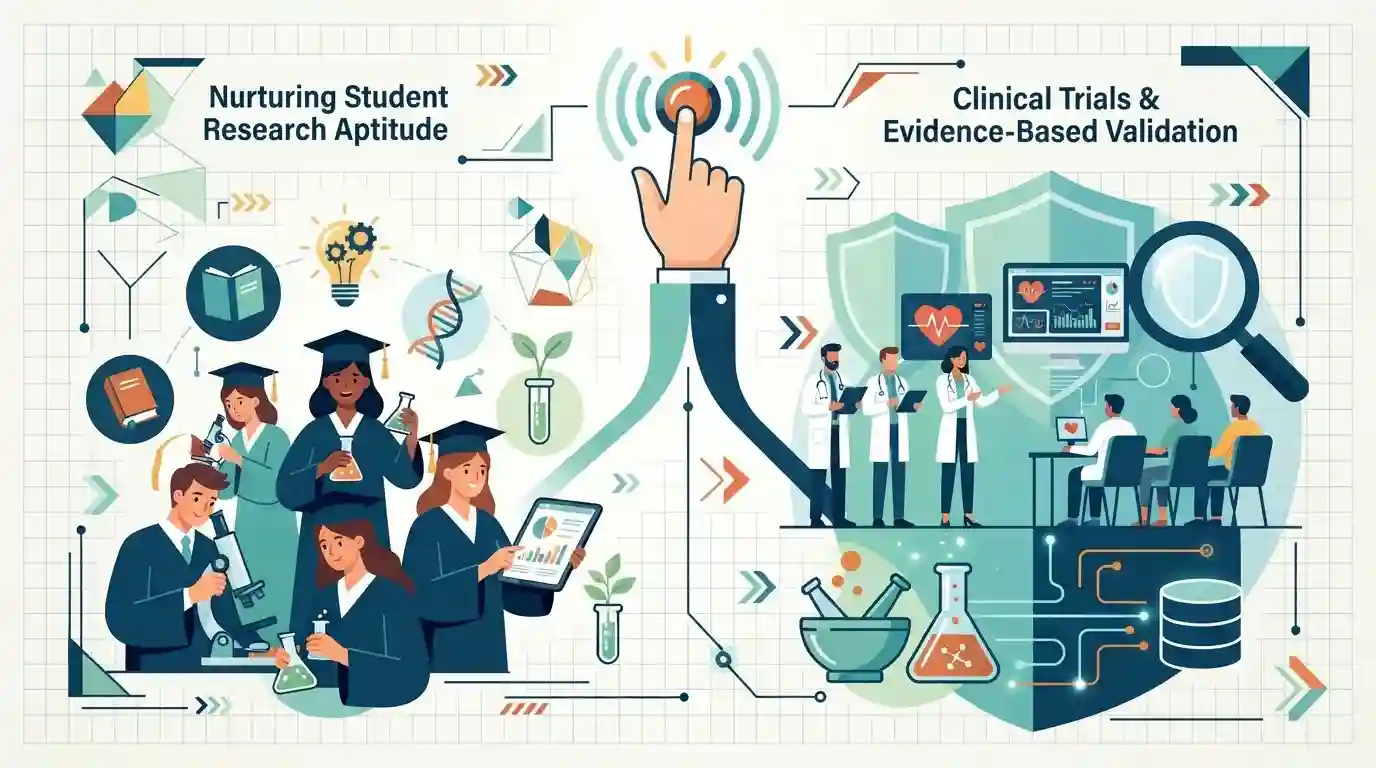
The Chairperson of the National Commission for Indian System of Medicine (NCISM) launched CCRAS SPARK 5.0 and CCRAS Ayurshodh 2026, aimed at bolstering research, innovation, and scientific validation within Ayurveda. These programs focus on nurturing research aptitude among undergraduate students and promoting clinical trials and evidence-based validation of traditional medicine formulations.
મુખ્ય મુદ્દા
- The Chairperson of NCISM launched CCRAS SPARK 5.0 and CCRAS Ayurshodh 2026 to promote evidence-based research and innovation in Ayurveda.
- SPARK 5.0 aims to support student-ship entrepreneurship and research aptitude among undergraduate Ayurveda students by providing financial grants and mentorship.
- Ayurshodh 2026 focuses on structured clinical research, collaborative institutional studies, and validating classical Ayurvedic principles through modern scientific metrics.
- The initiative highlights the integration of traditional systems of medicine with mainstream scientific research to foster holistic healthcare delivery and global competitiveness.
મહત્વપૂર્ણ શબ્દો
CCRAS SPARK 5.0

An initiative by CCRAS to foster research aptitude and support student-led scientific projects among undergraduate Bachelor of Ayurvedic Medicine and Surgery (BAMS) students.
UPSC context
Mains GS-II (Health & Human Resources; Science and Technology): Tests understanding of research promotion in traditional medicine systems.
CCRAS Ayurshodh 2026
A platform designed for postgraduate and PhD scholars in Ayurveda to showcase research, covering thesis publications, product innovations, and 3-minute research presentations.
UPSC context
Mains GS-II (Health & Human Resources): Relevant for initiatives promoting evidence-based validation and higher research in traditional systems.
NCISM (National Commission for Indian System of Medicine)
A statutory regulatory body established under the NCISM Act, 2020, to regulate medical education, standards, and professional practice for Indian systems of medicine.
UPSC context
Prelims & Mains GS-II (Statutory Bodies, Health Governance): Important for institutional frameworks governing traditional medicine education and standards.
CCRAS (Central Council for Research in Ayurvedic Sciences)
An apex autonomous research organization under the Ministry of AYUSH tasked with formulating, coordinating, and promoting scientific research in Ayurveda.
UPSC context
Prelims & Mains GS-II/III (Scientific Research & Health): Tests knowledge of premier autonomous bodies driving traditional medicine research.
Ministry of AYUSH
The Union government ministry responsible for developing education, research, and propagation of Ayurveda, Yoga, Unani, Siddha, and Homoeopathy in India.
UPSC context
Mains GS-II (Government Policies & Health Sector Development): Core nodal ministry for policy formulation in traditional healthcare.
સંલગ્ન સ્થિર ખ્યાલો
What is the mandate and composition of the National Commission for Indian System of Medicine (NCISM)?
- Statutory Origin: Statutory Apex Body created under the NCISM Act 2020, replacing the erstwhile Central Council of Indian Medicine (CCIM).
- Core Mandate: Regulates education, practice standards, assessment of medical institutions, and professional conduct for Ayurveda, Unani, Siddha, and Sowa-Rigpa.
- Key Objective: Aims to ensure availability of affordable and high-quality medical professionals of Indian Systems of Medicine across the country.
આંતર-વિષય પેટર્ન
Traditional Knowledge + IPR Protection + Scientific Validation
Initiatives like SPARK 5.0 and Ayurshodh bridge traditional knowledge with modern science, tying into IPR protection against biopiracy and TKDL databases.

CCRAS schemes like SPARK and regulatory bodies like NCISM (Act 2020) are prime candidates for matching statements in prelims.
સંલગ્ન PYQ · 2
સંલગ્ન PYQ · 2
- 2019MainsGS3
How is the Government of India protecting traditional knowledge of medicine from patenting by pharmaceutical companies?
- 2015MainsGS3
India's Traditional Knowledge Digital Library (TKDL), which has a database containing formatted information on more than 2 million medicinal formulations is proving a powerful weapon in the country's fight against erroneous patents. Discuss the pros and cons of making this database publicly available under open-source licensing.
