NBA Disburses ABS Funds to Support Grassroots Biodiversity
Source:PIB ↗
આ શા માટે મહત્વનું છે
It highlights the practical execution of Access and Benefit Sharing (ABS) mechanisms under the Biological Diversity Act, demonstrating how economic revenues from commercial seed and biological resource utilization are funneled back to grassroots communities for conservation and sustainable development.
સારાંશ
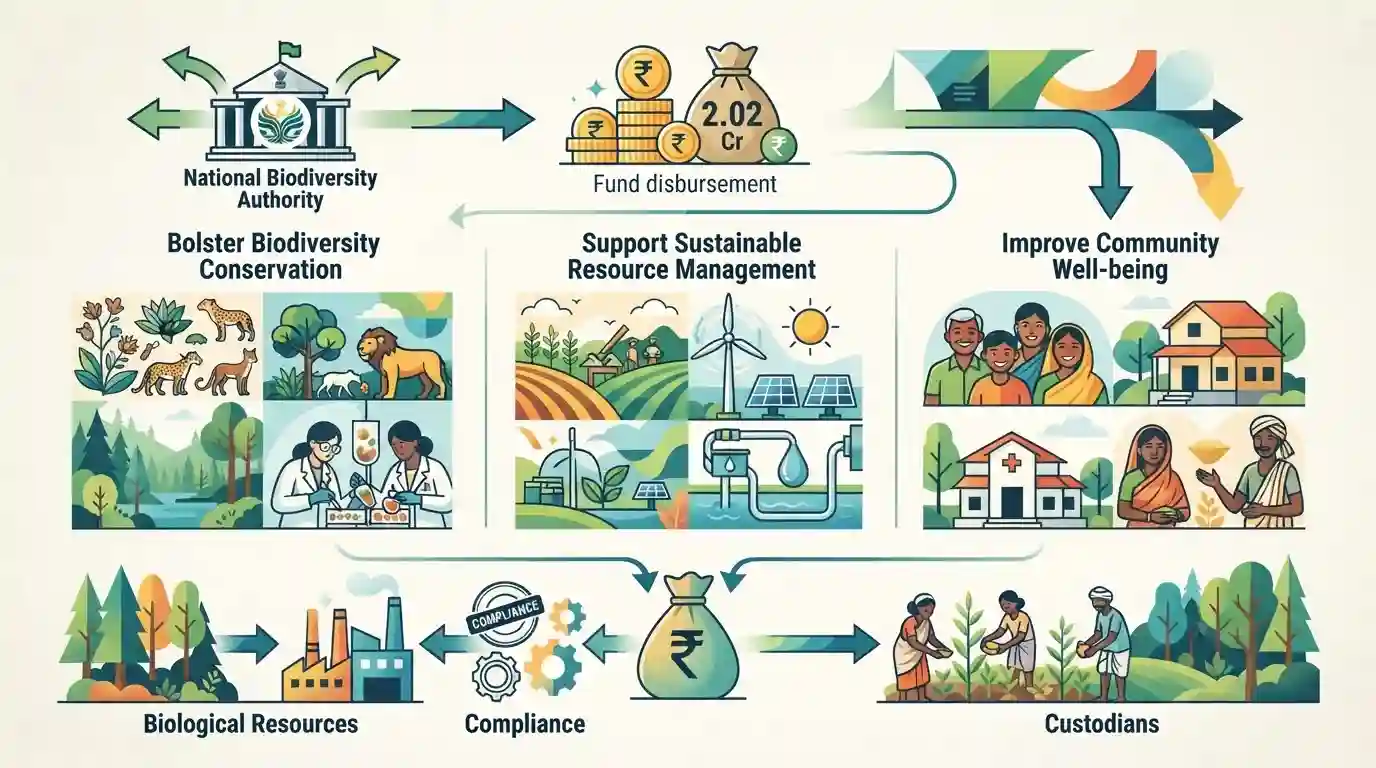
The National Biodiversity Authority (NBA) disbursed Rs 2.02 crore in Access and Benefit Sharing (ABS) funds collected from the seed sector. The initiative aims to bolster biodiversity conservation, support sustainable resource management, and improve community well-being at the grassroots level by channeling financial benefits back to local custodians of biological resources in compliance with the Biological Diversity Act, 2002.
મુખ્ય મુદ્દા
- The National Biodiversity Authority (NBA) has disbursed Rs 2.02 crore of Access and Benefit Sharing (ABS) funds sourced from the seed sector.
- The funds are directed towards grassroots level biodiversity conservation and enhancing community well-being.
- ABS mechanism operationalizes the fair and equitable sharing of benefits arising from the utilization of genetic resources, aligning with the Biological Diversity Act, 2002 and the Nagoya Protocol.
- Empowers local institutions and Biodiversity Management Committees (BMCs) to promote conservation and sustainable livelihoods.
મહત્વપૂર્ણ શબ્દો
National Biodiversity Authority (NBA)

India's statutory body established under the Biological Diversity Act, 2002, to regulate access to biological resources, promote conservation, and ensure fair and equitable benefit-sharing with local communities.
UPSC context
UPSC Prelims/Mains (GS Paper III - Environment): Important statutory bodies, biodiversity governance, and implementation of wildlife and biodiversity laws.
Biological Diversity Act, 2002
India's umbrella legislation enacted to implement the Convention on Biological Diversity, focusing on the conservation of biological diversity, sustainable use of its components, and equitable sharing of benefits arising from resource utilization.
UPSC context
UPSC Prelims/Mains (GS Paper III - Environment & Biodiversity): Core environmental legislation, institutional framework like BMCs and NBA, and environmental jurisprudence.
Nagoya Protocol
An international supplementary agreement to the Convention on Biological Diversity (CBD) that provides a transparent legal framework for the fair and equitable sharing of benefits arising from the utilization of genetic resources.
UPSC context
UPSC Prelims/Mains (GS Paper III - Environment): International environmental conventions, treaties, protocols, and India's international commitments on biodiversity conservation.
સંલગ્ન સ્થિર ખ્યાલો
What is the three-tier institutional structure under the Biological Diversity Act, 2002?
- National Biodiversity Authority (NBA):: National level body regulating access to biological resources and advising the Central Government.
- State Biodiversity Boards (SBBs):: State level bodies coordinating with NBA and advising State Governments on biodiversity conservation.
- Biodiversity Management Committees (BMCs):: Grassroots entities created by local bodies for promoting conservation and documenting PBRs.
આંતર-વિષય પેટર્ન
ABS Funds and Cooperative Federalism
Access and Benefit Sharing funds flow from commercial sectors to local custodians via BMCs, operationalizing cooperative federalism through a three-tier statutory mechanism (NBA, SBBs, BMCs).
Seed Sector ABS and Farmers' Rights
The Biological Diversity Act directly intersects with PPVFR Act rights by recognizing farming communities as traditional breeders deserving of monetary reward.

ABS fund disbursals + BMC roles under Biological Diversity Act often tested via multi-statement prelims on statutory bodies.
સંલગ્ન PYQ · 2
સંલગ્ન PYQ · 2
- 2023PrelimsGS1
Consider the following statements: 1. In India, the Biodiversity Management Committees are key to the realization of the objectives of the Nagoya Protocol. 2. The Biodiversity Management Committees have important functions in determining access and benefit sharing, including the power to levy collection fees on the access of biological resources within its jurisdiction. Which of the statements given above is/are correct?
- 2020MainsGS3
Explain intra-generational and inter-generational issues of equity from the perspective of inclusive growth and sustainable development.
