Traditional medicine role in preventive health and evidence standards
Source:PIB ↗
Why It Matters
It addresses India's policy framework for mainstreaming traditional medicine (AYUSH) into global and domestic public health systems through scientific validation and evidence-based standardization.
Summary
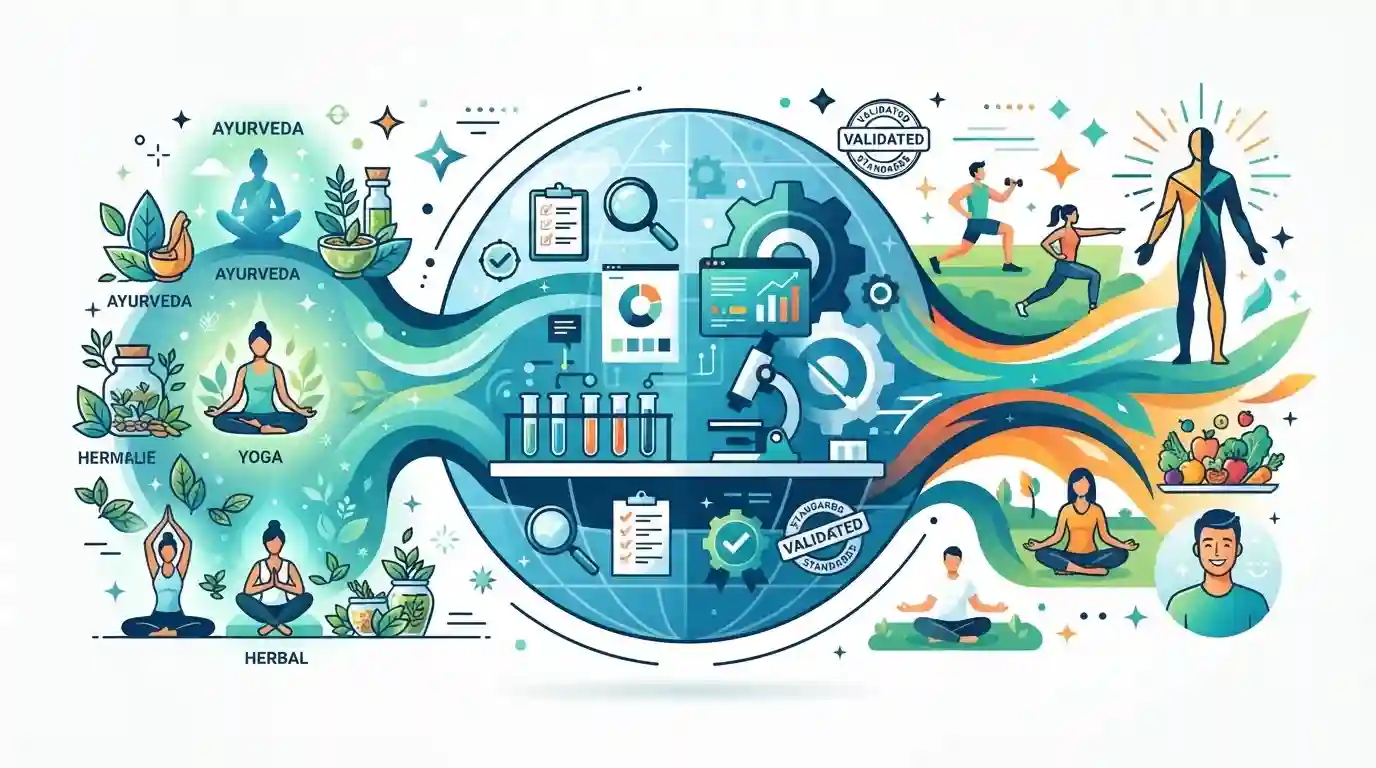
Union Minister Shri Prataprao Jadhav highlighted the global potential of traditional medicine in advancing preventive healthcare and holistic well-being, provided it is supported by robust scientific validation, global quality standards, and evidence-based practices.
Key Points
- Union Minister of State (Independent Charge) for Ayush, Shri Prataprao Jadhav, emphasized that traditional medicine can strengthen preventive healthcare and holistic well-being globally.
- Integration of traditional medicine requires backing by rigorous scientific evidence, standardized quality checks, and evidence-based research.
- The focus is shifting from reactive treatment to proactive preventive healthcare, leveraging indigenous health systems alongside modern medicine.
Important Terms
Ministry of Ayush

A ministry of the Government of India tasked with developing, promoting, and regulating traditional systems of medicine, including Ayurveda, Yoga and Naturopathy, Unani, Siddha, and Homeopathy.
UPSC context
Relevant for GS Paper II (Health, Government Policies & Interventions). Evaluates the institutional framework for promoting traditional medicine and preventive healthcare.
Prelims Trap
Traditional medicine systems operate independently of scientific validation and modern clinical trial standards in India.
Aspirants often assume statutory bodies like the National Commission for Indian System of Medicine (NCISM) regulate all health systems or that Ayush is entirely separate from modern clinical trials, whereas evidence-based integration is now mandated.
Static Concepts Connected
What are the key institutional bodies and global centers promoting traditional medicine in India?
- Ministry of Ayush: Established in 2014, it oversees the development, education, and research in Ayurveda, Yoga & Naturopathy, Unani, Siddha, and Homoeopathy.
- WHO Global Centre: Located in Jamnagar, Gujarat, it serves as the global repository and knowledge center for traditional medicine supported by WHO.
- TKDL database: A digital database created by India to prevent the misappropriation of traditional knowledge through erroneous patents globally.
Cross-Topic Patterns
Traditional Medicine Meets WTO TRIPS Framework
The intersection of traditional medical systems with modern IPR regimes (such as patenting traditional knowledge) often creates tension at the WTO TRIPS council.
Ayush Diplomacy & Global South Health Outreach
Institutionalizing Ayush globally bridges domestic heritage promotion with soft-power diplomacy, mirroring India's engagement with the Global South via platforms like the WHO Traditional Medicine Global Centre.

Integration of traditional medicine with evidence-based global health standards (WHO benchmarks) is a high-yield prelims statement area.
Linked PYQs · 2
Linked PYQs · 2
- 2018MainsGS2
Appropriate local community-level healthcare intervention is a prerequisite to achieve 'Health for All' in India. Explain.
- 2019MainsGS3
How is the Government of India protecting traditional knowledge of medicine from patenting by pharmaceutical companies?
