NHRC Bihar Open Hearing and Human Rights Redressal Mechanism
Source:PIB ↗
কেন এটি গুরুত্বপূর্ণ
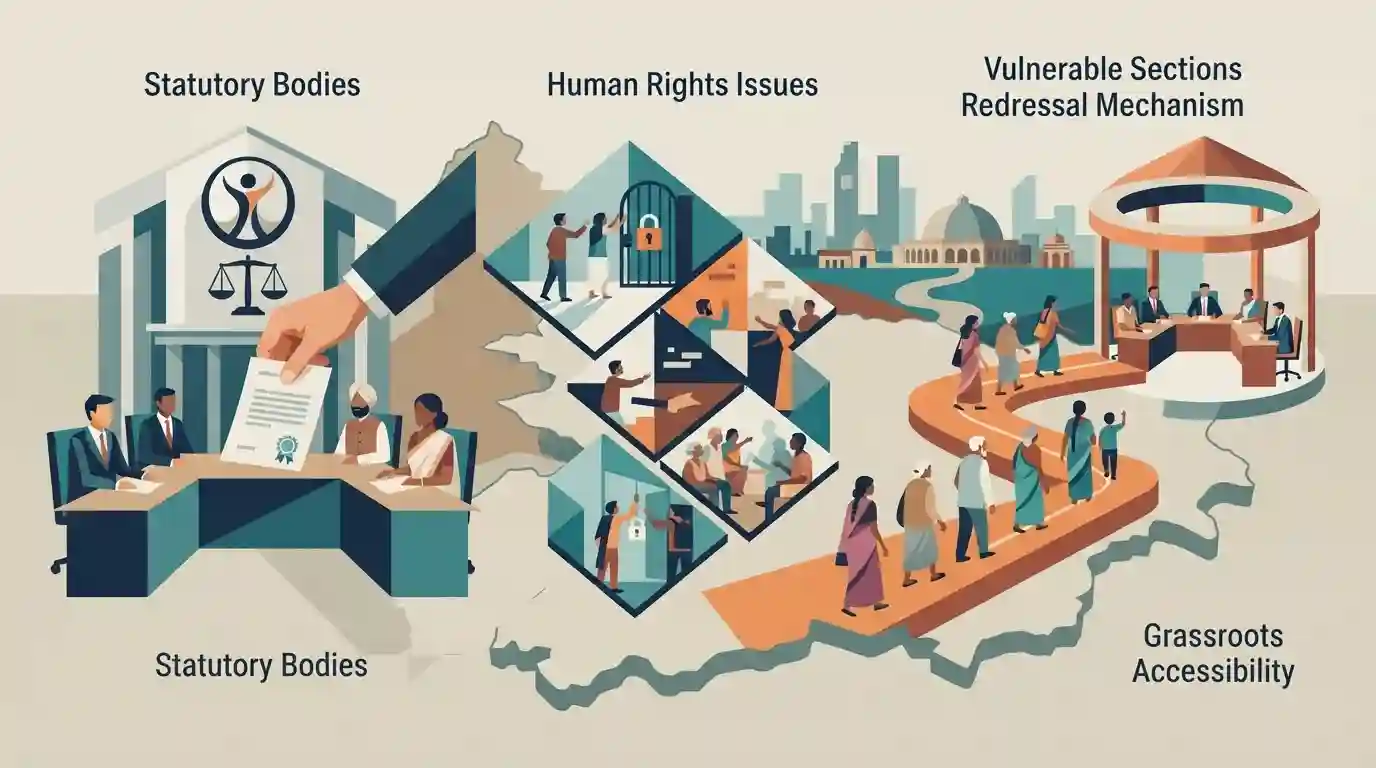
It highlights the grassroots outreach and functional mechanisms of the National Human Rights Commission (NHRC) in making justice and human rights accessible to vulnerable populations in remote or high-concern regions.
সারসংক্ষেপ
The National Human Rights Commission (NHRC) concluded a two-day Open Hearing and Camp Sitting in Patna, Bihar, aimed at directly addressing human rights grievances, ensuring grassroots accessibility, and reviewing critical human rights issues in the state.
মূল বিষয়
- The National Human Rights Commission (NHRC) concluded its two-day Bihar Open Hearing and Camp Sitting in Patna to address human rights violations at the grassroots level.
- The initiative provides a platform for victims of human rights violations, particularly marginalized and vulnerable sections, to present their grievances directly before the apex human rights body.
- Such camp sittings enhance public accessibility to the NHRC, fostering transparency, accountability, and on-the-spot redressal of complaints.
গুরুত্বপূর্ণ শব্দ
Protection of Human Rights Act

Statutory legislation enacted in 1993 that provides the legal framework for establishing the National Human Rights Commission and State Human Rights Commissions to ensure better protection of human rights in India.
UPSC context
GS Paper II (Polity & Governance) - Statutory bodies and mechanisms for vulnerable sections redressal.
National Human Rights Commission (NHRC)
An independent statutory body established in 1993 under the Protection of Human Rights Act to protect and promote human rights, investigate violations, and advise government bodies.
UPSC context
GS Paper II (Polity & Governance) - Statutory bodies, constitutional/legal rights, and human rights issues.
সংযুক্ত স্থির ধারণা
What are the composition, appointment, and functional powers of the National Human Rights Commission (NHRC) under the PHR Act?
- Statutory Basis: Statutory Basis: Established under the Protection of Human Rights Act, 1993, amended in 2019 to include more members and women representatives.
- Composition: Composition: Headed by a chairperson who has been a Chief Justice of India or a Supreme Court judge, along with members having knowledge/experience in human rights.
- Appointment Committee: Appointment Committee: Appointed by the President on the recommendation of a 6-member committee headed by the Prime Minister.
- Investigative Powers: Investigative Powers: Possesses the powers of a civil court trying a suit; can only make recommendations, lacking prosecution powers.
আন্তঃবিষয় প্যাটার্ন
Human Rights Redressal vs. Judicial Legal Aid
NHRC camp sittings bring state accountability mechanisms closer to remote populations, mirroring judicial outreach programs like National Lok Adalats and mobile courts under the Legal Services Authorities Act.

NHRC composition committee members (PM, Lok Sabha Speaker, Home Minister, etc.) + statutory powers are a perpetual prelims trap.
সংযুক্ত PYQ · 3
সংযুক্ত PYQ · 3
- 2014MainsGS2
National Human Rights Commission (NHRC) in India can be most effective when its tasks are adequately supported by other mechanisms that ensure the accountability of a government. In light of the above observation assess the role of NHRC as an effective complement to the judiciary and other institutions in promoting and protecting human rights standards.
- 2021MainsGS2
Though the Human Rights Commissions have contributed immensely to the protection of human rights in India, yet they have failed to assert themselves against the mighty and powerful. Analyzing their structural and practical limitations, suggest remedial measures.
- 2023PrelimsGS1
Consider the following organizations/bodies in India: 1. The National Commission for Backward Classes 2. The National Human Rights Commission 3. The National Law Commission 4. The National Consumer Disputes Redressal Commission How many of the above are constitutional bodies?
