NHRC Intervention on Bonded Labour and Migrant Worker Rights
Source:PIB ↗
આ શા માટે મહત્વનું છે
This case underscores the systemic prevalence of bonded labour and human trafficking in India, testing the efficacy of statutory bodies like the NHRC in protecting vulnerable migrant workers and ensuring state-level accountability.
સારાંશ
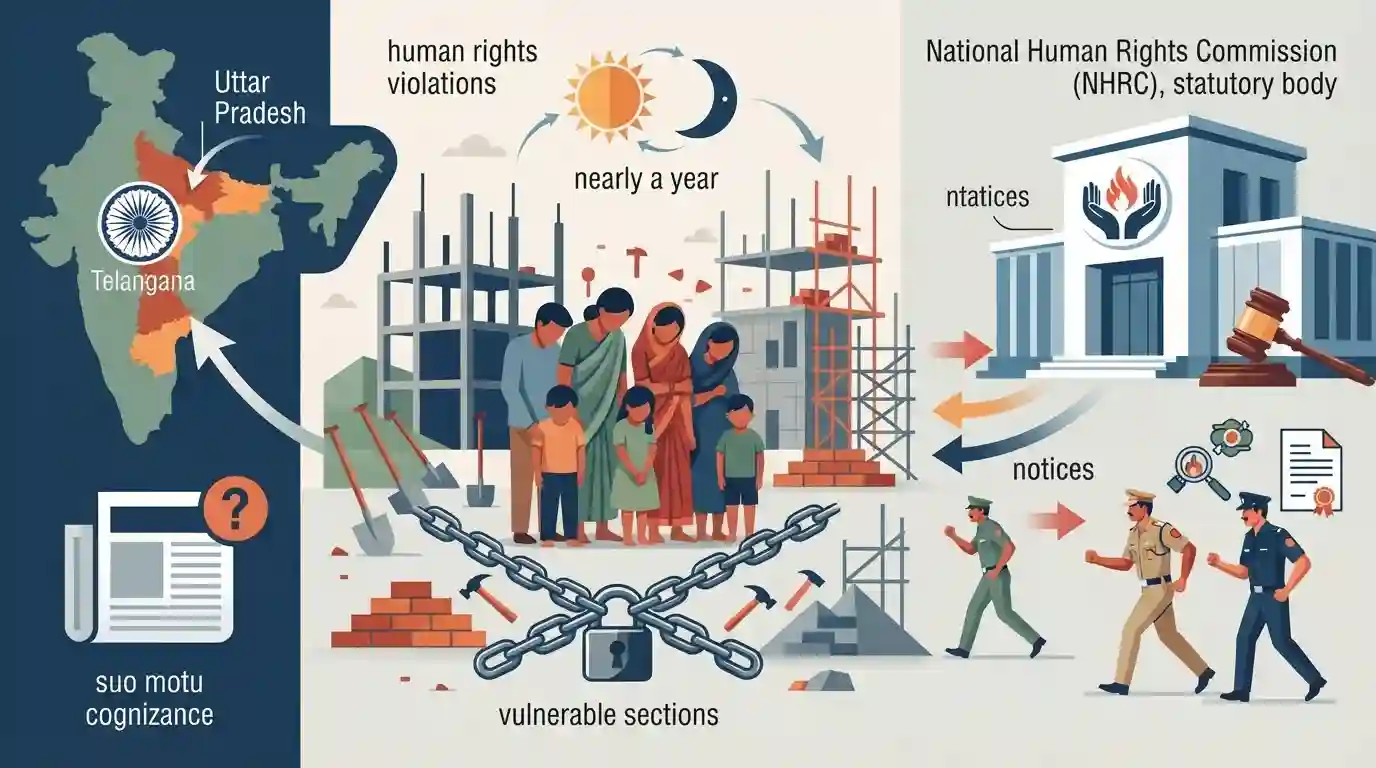
The National Human Rights Commission (NHRC) of India took suo motu cognizance of a disturbing media report alleging that a 12-member family from Uttar Pradesh was held as bonded labour for nearly a year at a construction site in Telangana's Medchal-Malkajgiri district. Terming it a grave violation of human rights, the NHRC issued notices to the Telangana government, seeking a thorough factual report and action taken against those responsible.
મુખ્ય મુદ્દા
- NHRC took suo motu cognizance of a media report regarding a 12-member family from Uttar Pradesh allegedly kept as bonded labourers for nearly a year at a construction facility in Medchal-Malkajgiri district, Telangana.
- The commission observed that the contents of the report, if true, raise serious issues of human rights violations and illegal forced labor.
- Notices have been issued to the Telangana government and state authorities seeking a detailed report on the rescue, rehabilitation, and legal action taken against the perpetrators.
- Highlights the persistent challenges of modern-day human trafficking, illegal bonded labor, and interstate coordination gaps for worker safety and welfare.
મહત્વપૂર્ણ શબ્દો
National Human Rights Commission (NHRC)

A statutory national body established under the Protection of Human Rights Act, 1993, to protect and promote human rights in India, empowered to investigate human rights violations suo motu or on petitions.
UPSC context
Important for GS Paper II (Statutory Bodies, Constitutional & Human Rights). Tests knowledge of institutional mechanisms safeguarding fundamental rights.
Bonded Labour System (Abolition) Act
A 1976 legislation enacted to abolish the bonded labour system throughout India, freeing all bonded labourers from debt obligations and penalizing offenders while assigning district-level vigilance duties.
UPSC context
Crucial for GS Paper I (Social Issues) and GS Paper II (Vulnerable Sections). Tests laws relating to forced labour and human exploitation.
સંલગ્ન સ્થિર ખ્યાલો
What are the key powers, composition, and limitations of the National Human Rights Commission (NHRC) under the Protection of Human Rights Act?
- Statutory Basis: Statutory body established under the Protection of Human Rights Act, 1993, amended in 2019 to include more members and rights bodies.
- Composition: Chaired by a retired Chief Justice of India or Supreme Court judge; includes members with expertise in human rights.
- Powers & Limits: Possesses suo motu powers under Section 12(a) to inquire into human rights violations, but its recommendations are purely recommendatory.
આંતર-વિષય પેટર્ન
Migrant Worker Protection vs Cooperative Federalism
Interstate migration of vulnerable labourers exposes gaps in the implementation of the Inter-State Migrant Workmen Act alongside the Bonded Labour System (Abolition) Act, testing Centre-State cooperative federalism.

NHRC's suo motu powers (Sec 12) combined with Article 23 enforcement obligations will likely feature in a polity/rights statement.
સંલગ્ન PYQ · 2
સંલગ્ન PYQ · 2
- 2014MainsGS2
National Human Rights Commission (NHRC) in India can be most effective when its tasks are adequately supported by other mechanisms that ensure the accountability of a government. In light of the above observation assess the role of NHRC as an effective complement to the judiciary and other institutions in promoting and protecting human rights standards.
- 2021MainsGS2
Though the Human Rights Commissions have contributed immensely to the protection of human rights in India, yet they have failed to assert themselves against the mighty and powerful. Analyzing their structural and practical limitations, suggest remedial measures.
