RoSCTL Textile Export Incentive Scheme Extension
Source:PIB ↗
ఇది ఎందుకు ముఖ్యం
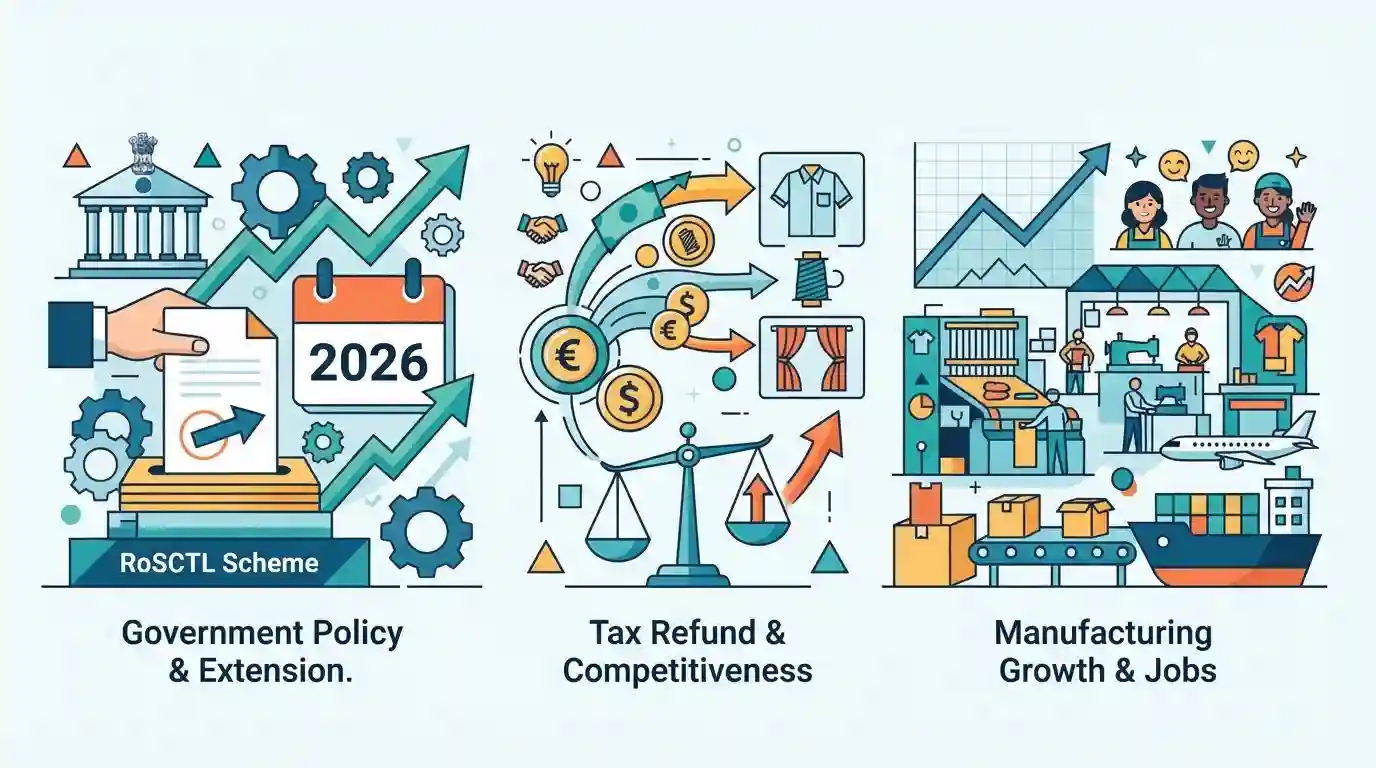
The extension of the RoSCTL scheme is vital for India's export performance, manufacturing growth, and employment generation in the labor-intensive textile sector, making it an important topic for questions related to government export policies and MSME competitiveness.
సారాంశం
The Ministry of Textiles has announced the extension of the Rebate of State and Central Taxes and Levies (RoSCTL) scheme up to December 31, 2026. This extension aims to sustain export competitiveness in the garment and made-up sectors by refunding embedded state and central taxes, providing predictability and backing labor-intensive manufacturing.
ముఖ్య అంశాలు
- The Ministry of Textiles has extended the Rebate of State and Central Taxes and Levies (RoSCTL) scheme until 31st December 2026.
- The scheme continues the tax/levy rebates on exports of made-ups and apparel garments to boost global competitiveness.
- It aims to provide stability and predictable policy support to labor-intensive textile and apparel sectors, helping MSMEs expand exports.
ముఖ్యమైన పదాలు
RoSCTL Scheme

A flagship government scheme that rebates embedded state and central taxes and levies on apparel, garment, and made-up exports, enhancing international competitiveness.
UPSC context
UPSC GS Paper III (Indian Economy): Tests export competitiveness, government policy interventions, and manufacturing growth in labor-intensive sectors like textiles.
Rebate of State and Central Taxes and Levies Scheme
The full form of RoSCTL, providing the rebate mechanism for state and central levies on exported garments and made-ups to level the global playing field.
UPSC context
UPSC GS Paper III (Foreign Trade and Taxation): Tests understanding of export incentives, WTO-compliant tax remissions, and indirect taxation structures.
Ministry of Textiles
The nodal central government ministry responsible for formulation of policy, planning, development, and export promotion in the textile and apparel sector in India.
UPSC context
UPSC GS Paper II/III: Important for evaluating governance, institutional frameworks, and sectoral development policies for employment generation.
ప్రిలిమ్స్ ఉచ్చు
RoSCTL scheme covers all categories of manufactured merchandise exports from India.
Aspirants often confuse RoSCTL (exclusive to apparel and made-ups) with the broader RoDTEP scheme which covers other export goods.
అనుసంధానమైన స్థిర భావనలు
What is the difference between RoSCTL and RoDTEP schemes in India's export framework?
- RoSCTL Scope: RoSCTL specifically targets apparel, garments, and made-ups (HSN Chapters 61, 62, and 63) refunding embedded state and central levies.
- RoDTEP Scope: RoDTEP (Remission of Duties and Taxes on Exported Products) covers rest of the exported goods across various other sectors.
- Common Objective: Both schemes operate on the principle of zero-rating exports by refunding taxes un-refunded under the GST mechanism through transferable duty credit scrips.
అంతర-అంశ నమూనాలు
RoSCTL Scheme vs WTO Subsidies Rules
RoSCTL operates as a WTO-compliant duty rebate mechanism designed to offset taxes un-refunded by GST, preventing indirect tax export dumping.
Textile Exports & Labor-Intensive Manufacturing Growth
Textile sector extensions directly support rural employment and MSME clusters under the National Manufacturing Policy framework.

Expect a matching or statement-based question on RoSCTL vs RoDTEP coverage, especially regarding sectors like apparel versus general goods.
అనుసంధాన PYQలు · 2
అనుసంధాన PYQలు · 2
- 2023MainsGS3
Faster economic growth requires increased share of the manufacturing sector in GDP, particularly of MSMEs. Comment on the present policies of the Government in this regard.
- 2017MainsGS3
Account for the failure of manufacturing sector in achieving the goal of labour-intensive exports. Suggest measures for more labour-intensive rather than capital-intensive exports.
