Decentralized Tourism Growth and Rural Community Development
Source:PIB ↗
Why It Matters
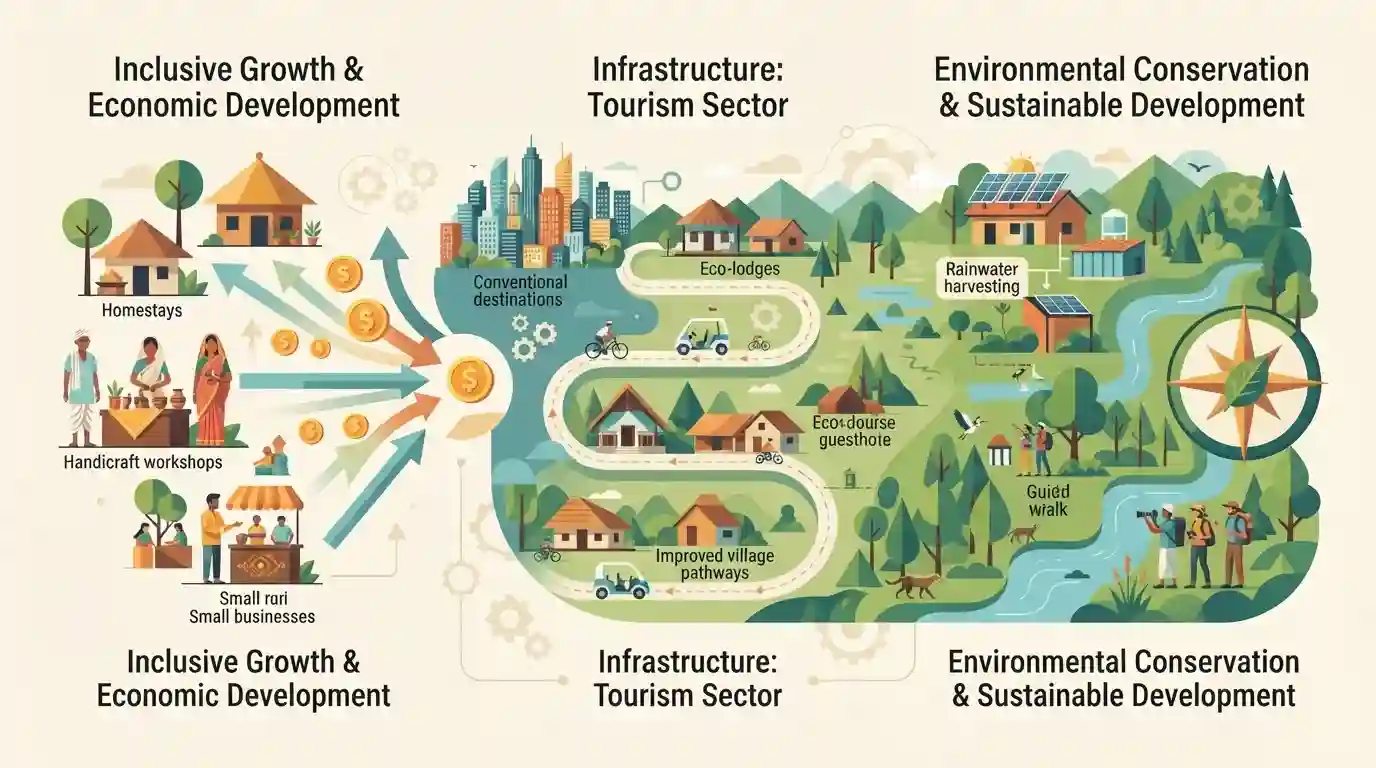
This statement highlights a key policy pivot in India's tourism sector towards decentralized economic growth, rural development, and mitigating over-tourism through sustainable alternatives.
Summary
Union Minister for Tourism and Culture Shri Gajendra Singh Shekhawat emphasized that India's tourism growth must go beyond conventional and heavily populated destinations, focusing instead on untapped potential across rural and lesser-known regions to benefit local communities directly through sustainable, community-driven economic opportunities.
Key Points
- Tourism growth must expand beyond heavily crowded popular destinations to unexploited and lesser-known locations.
- Focus needs to be placed on community-led tourism to ensure direct economic benefits and livelihood generation for local populations.
- Sustainable tourism practices are essential to balance economic growth with environmental conservation and cultural preservation.
Important Terms
Ministry of Tourism

The nodal central government agency in India responsible for the formulation of national policies, regulations, and promotional strategies for the development and expansion of the tourism sector.
UPSC context
Important for GS Paper III (Economy - Infrastructure, Tourism Sector) and governance policies promoting sustainable economic growth.
Government of India
The executive branch of the Union of India, responsible for governance, public administration, policy formulation, and implementing central welfare and developmental schemes nationwide.
UPSC context
Core concept for GS Paper II (Indian Polity, Governance, and Central Administrative Framework).
Static Concepts Connected
What are the key objectives and strategic pillars of the National Strategy for Sustainable Tourism in India?
- Joint Venture: UNEP partnership, co-launched by the Ministry of Tourism to embed sustainability principles across policies and operations.
- Core Pillars: Strategic pillars, include economic sustainability, environmental preservation, cultural heritage protection, and promotion of biodiversity.
- Decentralized Growth: Decentralization, shifting from urban-centric tourism to rural, tribal, and eco-tourism circuits for inclusive growth.
Cross-Topic Patterns
Rural Tourism + Tribal Development Schemes
The shift toward decentralized rural tourism directly supports the goals of the Pradhan Mantri Janjatiya Unnat Gram Abhiyan (PM-JUGA) and Vibrant Villages Programme in border areas.
Sustainable Tourism + Fiscal Federalism
Promoting lesser-known destinations ties into the 15th Finance Commission's recommendations on incentivizing states for ecological preservation and sustainable land use.

Expect a matching or statement-based question pairing Swadesh Darshan 2.0 pillars with UNEP-backed National Strategy for Sustainable Tourism.
Linked PYQs · 1
Linked PYQs · 1
- 2019MainsGS3
It is argued that the strategy of inclusive growth is intended to meet the objectives of inclusiveness and sustainability together. Comment on this statement.
