RuTAG 2.0 Review: Scientific Innovations for Rural Development
Source:PIB ↗
Why It Matters
RuTAG exemplifies the practical deployment of scientific research from premier institutions (like IITs) to solve grassroots problems, bridging the gap between high-end R&D and rural livelihood needs, which is vital for inclusive growth and technology-led rural development.
Summary
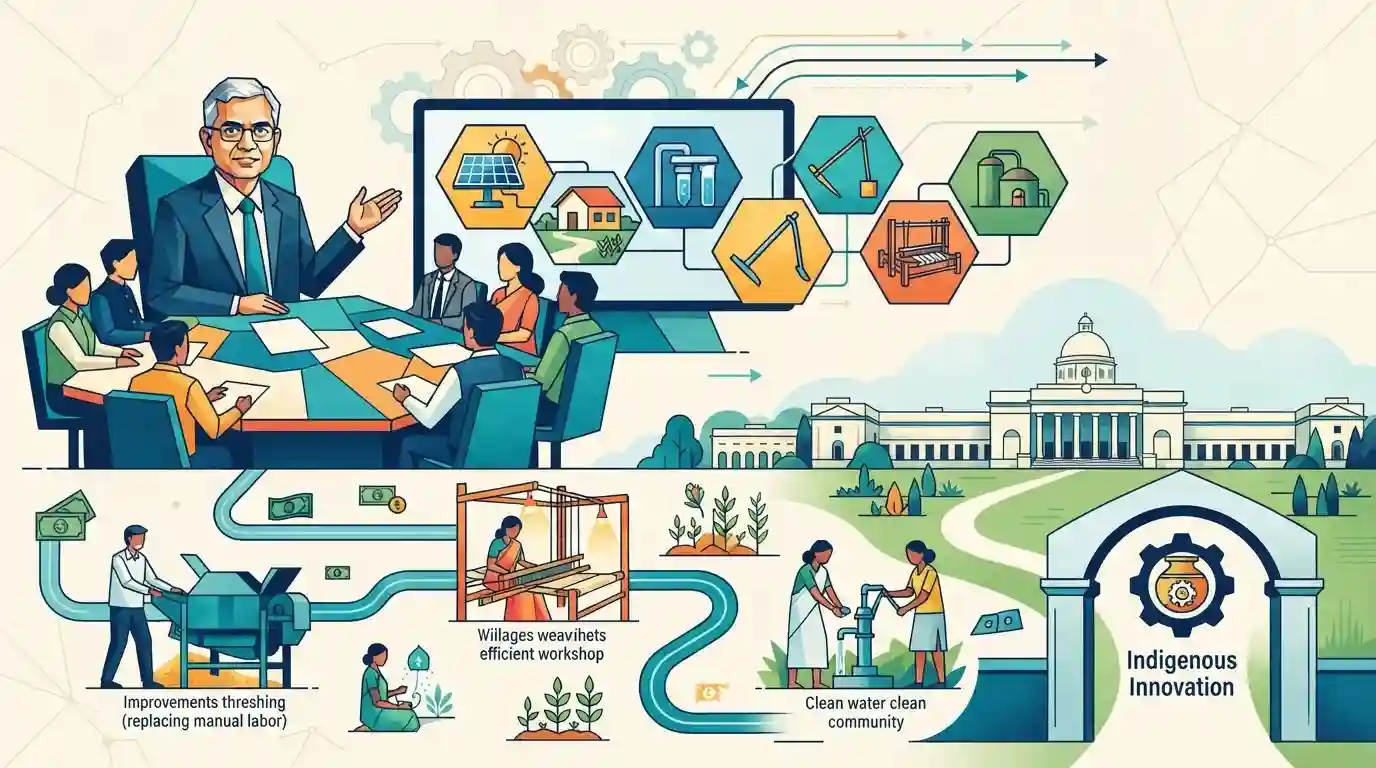
The Principal Scientific Adviser to the Government of India, Prof. Ajay Kumar Sood, chaired the Third Annual Review Meeting of RuTAG 2.0 (Rural Technology Action Group) projects hosted at IIT Roorkee. The meeting evaluated the progress of various science and technology interventions designed to address rural challenges, reduce drudgery, and boost rural livelihoods through academic-institution-driven innovations.
Key Points
- Principal Scientific Adviser (PSA) Prof. Ajay Kumar Sood chaired the Third Annual Review Meeting of RuTAG 2.0 projects at IIT Roorkee.
- RuTAG (Rural Technology Action Group) aims to provide technological interventions for rural areas by synergizing institutional R&D capabilities with grassroots needs.
- RuTAG 2.0 focuses on scaling up rural technologies, fostering livelihood opportunities, reducing drudgery for rural workers, and promoting technology transfer to micro-enterprises and artisans.
- Emphasized collaboration between premier technical institutions (like IITs) and rural stakeholders to ensure sustainable development and inclusive growth.
Important Terms
RuTAG 2.0

An upgraded initiative of the Office of the PSA, Government of India, aimed at bridging grassroots technology gaps, reducing rural drudgery, and boosting livelihoods through demand-driven academic-institution-driven innovations.
UPSC context
GS Paper III (Science & Tech - Indigenization of Technology & Rural Applications); tests knowledge of institutional mechanisms for grassroots rural innovation and inclusive development.
Office of the Principal Scientific Adviser (O/o PSA)
A premier scientific advisory body to the Union Government that provides strategic policy advice on science, technology, and innovation, and coordinates key national mission projects like RuTAG.
UPSC context
GS Paper II/III (Governance and S&P Policy); tests understanding of government science advisory architecture and S&T policy formulation.
RuTAG (Rural Technology Action Group)
A mechanism established to bridge the gap between technology developers and rural end-users by providing technological interventions and demand-driven upgrades through premier academic institutions.
UPSC context
GS Paper III (Science & Tech / Rural Development); tests awareness of lab-to-land technology transfer models for rural empowerment.
Static Concepts Connected
What is the mandate and institutional framework of the Rural Technology Action Group (RuTAG)?
- Genesis & Mandate: Established in 2004 by the Office of the Principal Scientific Adviser (OPSA) to provide demand-driven S&T interventions for rural areas.
- Institutional Link: Operates through premier technical institutions (like IITs) acting as hubs to upgrade rural technologies, reduce drudgery, and assist artisans.
- Focus Area: Focuses on translating laboratory R&D into scalable, cost-effective grassroots solutions rather than basic fundamental research.
Cross-Topic Patterns
RuTAG 2.0 & Inclusive Rural Development
RuTAG bridges premier technical research with remote villages, aligning with inclusive growth targets under Inclusive Development and S&T applications.

Expect a matching-style or statement-based question linking RuTAG's genesis (O/o PSA, 2004) to grassroots S&T intervention models.
Linked PYQs · 1
Linked PYQs · 1
- 2025MainsGS3
How does nanotechnology offer significant advancements in the field of agriculture? How can this technology help to uplift the socio-economic status of farmers?
