IICA Meet the Legend Programme Explores PMLA and IBC Interface
Source:PIB ↗
આ શા માટે મહત્વનું છે
The interplay between the PMLA and the IBC is a crucial battleground in Indian economic jurisprudence, directly impacting corporate resolution, investor confidence, and the efficacy of economic crime recovery. Understanding this interface is vital for analyzing India's financial regulatory architecture.
સારાંશ
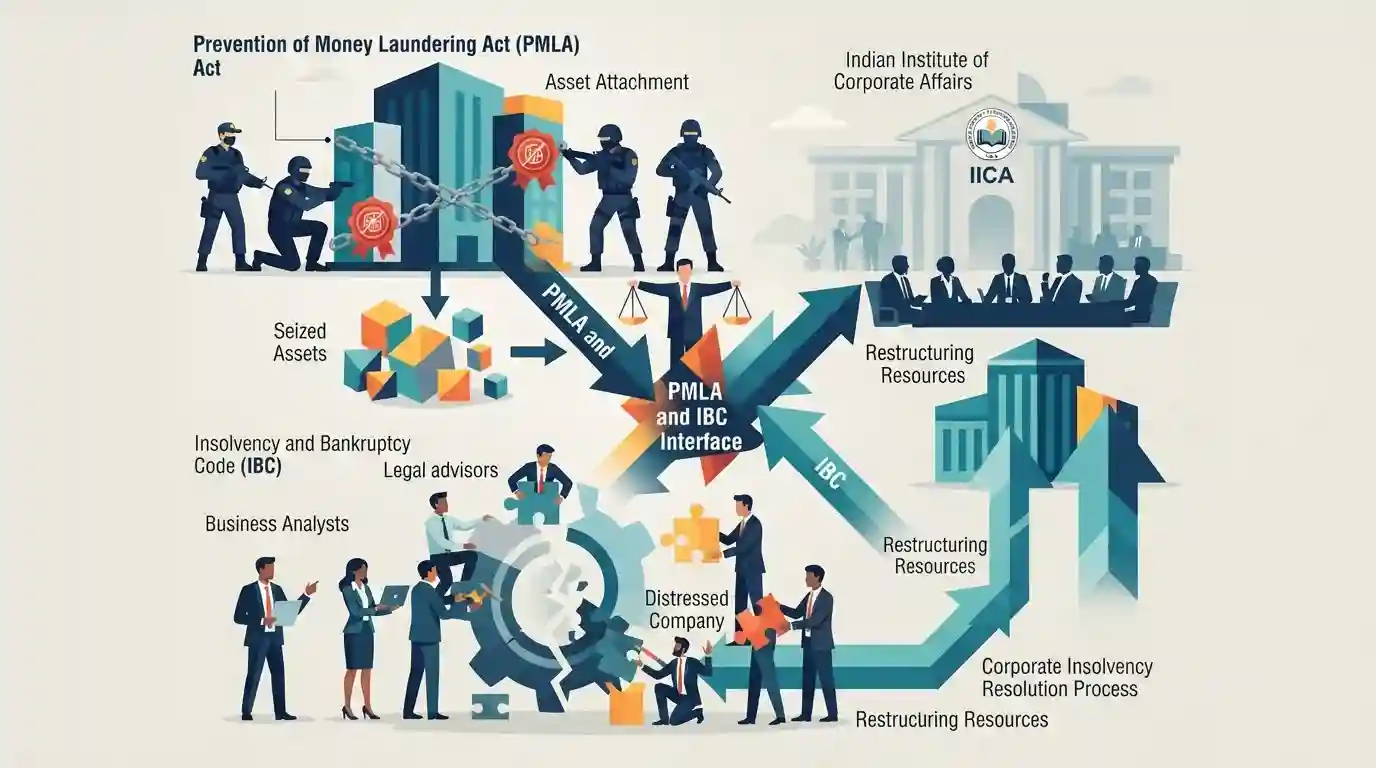
The Indian Institute of Corporate Affairs (IICA) organized a 'Meet the Legend' programme to explore the critical legal and operational interface between the Prevention of Money Laundering Act (PMLA) and the Insolvency and Bankruptcy Code (IBC). The session examined how asset attachments by law enforcement agencies interact with corporate insolvency resolution processes, highlighting challenges in asset recovery and the need for legislative alignment to balance economic crime prosecution with corporate revival.
મુખ્ય મુદ્દા
- The Indian Institute of Corporate Affairs (IICA) hosted a session under its 'Meet the Legend' programme focusing on the 'PMLA–IBC Interface'.
- The discussion analyzed the legal and practical challenges arising from the interplay between the Prevention of Money Laundering Act (PMLA) and the Insolvency and Bankruptcy Code (IBC).
- Key focus areas included asset attachment by enforcement agencies versus corporate resolution and asset recovery for financial creditors under the IBC.
- The interface highlights the need for legislative harmony and judicial clarity to balance economic crime investigation with corporate rescue mechanisms.
મહત્વપૂર્ણ શબ્દો
Prevention of Money Laundering Act (PMLA)

Enacted in 2002 to prevent money laundering and confiscate property derived from illicit activities, empowering agencies like the Enforcement Directorate to attach assets.
UPSC context
UPSC Prelims/Mains (GS-III: Internal Security & Economy): Tests legal mechanisms against financial crimes, money laundering, and asset attachment issues.
Insolvency and Bankruptcy Code (IBC)
An overarching 2016 legislation establishing a time-bound insolvency resolution process for corporate debtors and individuals to maximize asset value and balance stakeholder interests.
UPSC context
UPSC Prelims/Mains (GS-III: Economy - Growth & Development): Tests corporate insolvency framework, economic revival, and non-performing asset resolution.
Indian Institute of Corporate Affairs (IICA)
An apex institution under the Ministry of Corporate Affairs, India, established to build capacities and conduct research in corporate regulation, governance, and insolvency.
UPSC context
UPSC Prelims/Mains (GS-II/III): Tests knowledge of statutory research and capacity-building bodies under the Ministry of Corporate Affairs.
Ministry of Corporate Affairs
The Indian central government ministry tasked with administration of the Companies Act, LLP Act, IBC, and matters relating to corporate governance and regulation.
UPSC context
UPSC Prelims/Mains (GS-II: Governance & Statutory Bodies): Tests institutional framework regulating corporate affairs and economic legislation in India.
સંલગ્ન સ્થિર ખ્યાલો
What is the 'Clean Slate' principle under Section 32A of the Insolvency and Bankruptcy Code (IBC)?
- Immunity Provision: It shields a corporate debtor and its property from prosecution and attachment under laws like PMLA once a resolution plan is approved.
- Unconnected Management: Only applies if the resolution applicant is unconnected to the previous management and promoters accused of wrongdoing.
- Economic Objective: Aims to give a fresh start to the business, ensuring successful bidders are not penalized for past economic offences of the company.
આંતર-વિષય પેટર્ન
PMLA Asset Attachment vs. IBC Creditor Rights
The clash between state recovery of proceeds of crime (PMLA) and financial creditors' recovery (IBC) mirrors the broader policy tension between penal enforcement and ease of doing business.

PMLA-IBC interface (Section 32A clean slate principle vs. ED attachment powers) is prime material for a Mains analytical question.
સંલગ્ન PYQ · 2
સંલગ્ન PYQ · 2
- 2021MainsGS3
Discuss how emerging technologies and globalisation contribute to money laundering. Elaborate measures to tackle the problem of money laundering both at national and international levels.
- 2013MainsGS3
Money laundering poses a serious security threat to a country's economic sovereignty. What is its significance for India and what steps are required to be taken to control this menace?
