National pharmacovigilance week and rational medicine use in India
Source:PIB ↗
Why It Matters
It addresses issues of public health, patient safety, drug regulation, and the minimization of adverse drug reactions, which are central to effective public healthcare delivery in India.
Summary
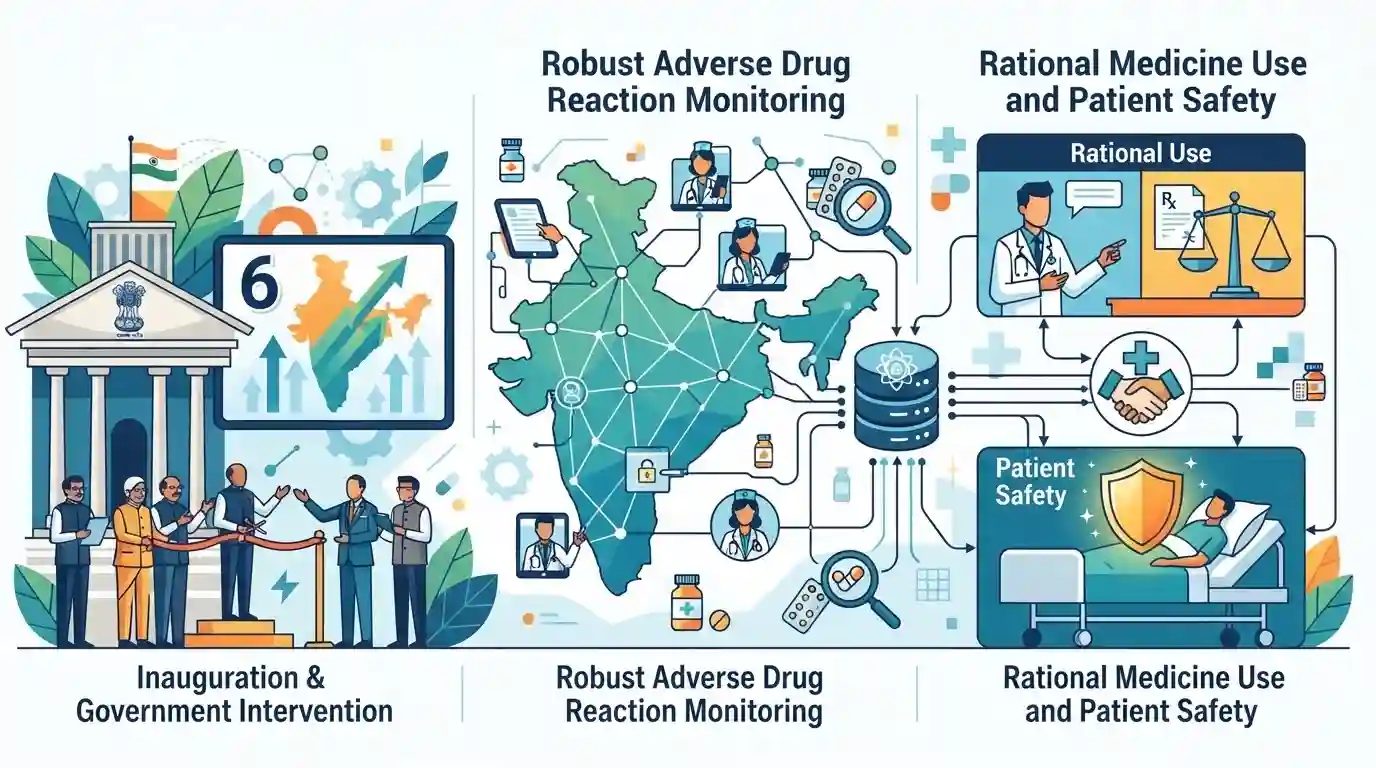
The Indian Pharmacopoeia Commission inaugurated the 6th National Pharmacovigilance Week, emphasizing the critical role of rational medicine use, robust adverse drug reaction monitoring, and patient safety across India's healthcare system.
Key Points
- The Indian Pharmacopoeia Commission (IPC) inaugurated the 6th National Pharmacovigilance Week.
- The theme focuses on promoting the rational use of medicines and minimizing Adverse Drug Reactions (ADRs).
- Highlights the significance of robust drug safety monitoring, reporting systems, and patient healthcare protection in India.
Important Terms
National Pharmacovigilance Week

An annual nationwide campaign organized by the Indian Pharmacopoeia Commission to raise awareness about reporting adverse drug reactions and promoting the rational use of medicines for patient safety.
UPSC context
UPSC GS Paper II: Issues relating to development and management of Social Sector/Services relating to Health and public health campaigns.
Indian Pharmacopoeia Commission (IPC)
An autonomous institution under the Ministry of Health and Family Welfare that sets standards for drugs in India and serves as the National Coordination Centre for the Pharmacovigilance Programme.
UPSC context
UPSC GS Paper II: Statutory bodies and government interventions for health sector development and drug safety regulation.
Ministry of Health and Family Welfare
The central government ministry responsible for implementing national health policies, public health programs, family welfare, and the regulation of drugs and healthcare infrastructure across India.
UPSC context
UPSC GS Paper II: Governance, policies, and interventions for healthcare development in India.
Static Concepts Connected
What is the mandate and administrative structure of the Indian Pharmacopoeia Commission (IPC)?
- Administrative Control: Autonomous institution under the Ministry of Health and Family Welfare, Government of India.
- Core Mandate: Publishes official standards (Indian Pharmacopoeia) for drugs, medicines, and healthcare products manufactured and marketed in India.
- Drug Safety Role: Acts as a National Coordination Centre (NCC) for the Pharmacovigilance Programme of India (PvPI) to monitor Adverse Drug Reactions.
Cross-Topic Patterns
Pharmacovigilance + WHO Global Drug Safety
The IPC's safety monitoring links domestic drug standards enforcement with international compliance under the WHO Programme for International Drug Monitoring.

IPC's statutory role under the Drugs and Cosmetics Act and its WHO collaborating center status are high-yield static traps for prelims.
Linked PYQs · 1
Linked PYQs · 1
- 2024MainsGS2
In a crucial domain like the public healthcare system the Indian State should play a vital role to contain the adverse impact of marketisation of the system. Suggest some measures through which the State can enhance the reach of public healthcare at the grassroots level.
