Ship Recycling Scrap Utilization in India Steel Manufacturing
Source:PIB ↗
কেন এটি গুরুত্বপূর্ণ
Understanding how secondary raw materials like ship recycling scrap contribute to industrial growth, raw material security, and green manufacturing is critical for GS3 questions on manufacturing and resource management.
সারসংক্ষেপ
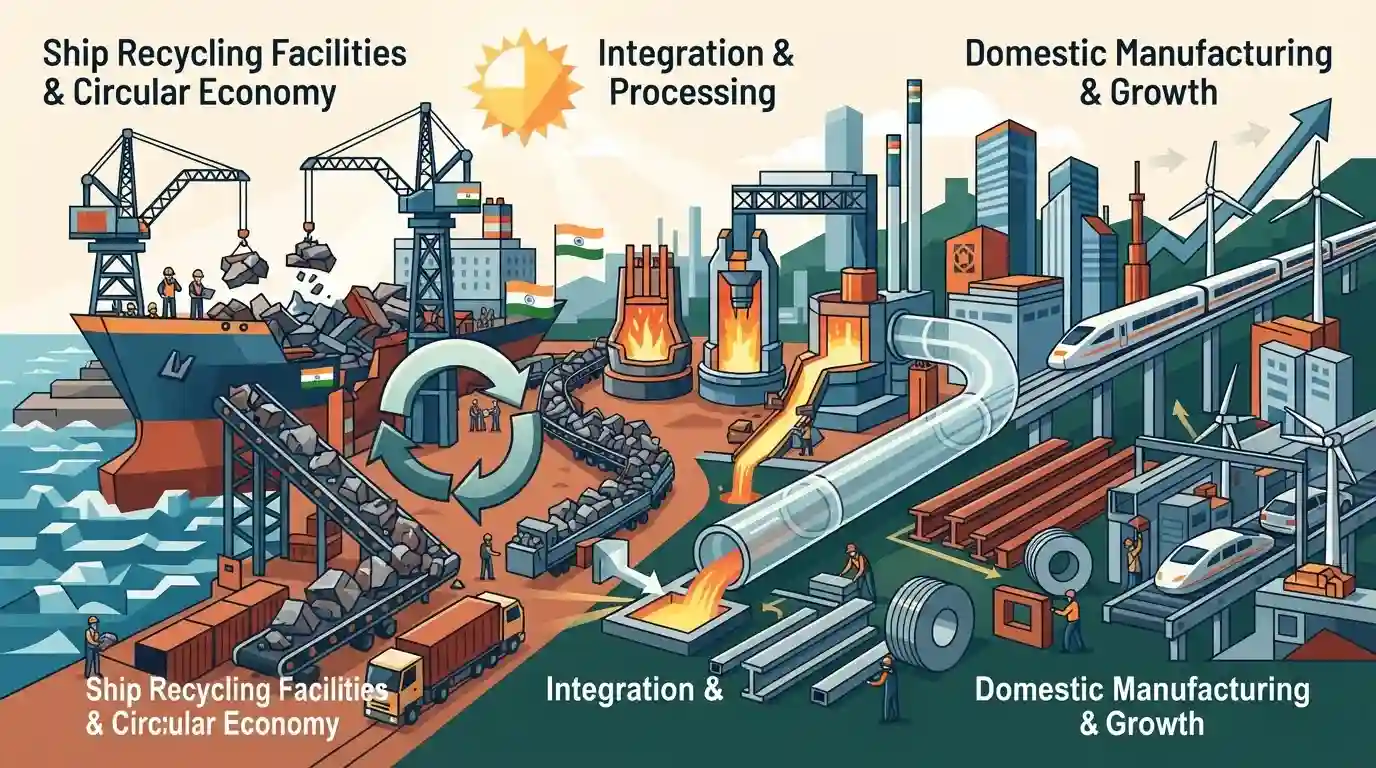
The Indian government has reviewed the integration and utilization of steel sourced from ship recycling facilities to boost domestic steel manufacturing, enhance raw material security, and promote circular economy principles within the industrial sector.
মূল বিষয়
- The Indian government reviewed the utilization of scrap steel derived from ship recycling to support domestic steel manufacturing.
- India aims to sustain its position as a global leader in steel production while emphasizing sustainable and green manufacturing practices.
- Integrating ship recycling scrap helps secure raw material availability for secondary steel producers and reduces carbon emissions.
গুরুত্বপূর্ণ শব্দ
Recycling of Ships Act

An Indian statute enacted to regulate ship recycling activities by aligning with international standards, ensuring safe working conditions, and preventing environmental degradation while managing hazardous materials.
UPSC context
UPSC GS Paper III (Environment & Industrial Policy); tests regulatory frameworks for hazardous waste, maritime governance, and green industry standards.
Ship Recycling Facilities
Specialized industrial yards, notably located in Alang, Gujarat, where end-of-life vessels are dismantled to recover scrap steel and reusable components under regulated safety and environmental norms.
UPSC context
UPSC GS Paper III (Infrastructure & Manufacturing); tests resource efficiency, circular economy models, and domestic industrial raw material security.
Ministry of Steel
The apex government department responsible for formulating policies, planning, and promoting the growth and development of the iron and steel industry in India.
UPSC context
UPSC GS Paper III (Economic Development); tests industrial policy initiatives, manufacturing competitiveness, and raw material strategies.
প্রিলিমস ফাঁদ
Primary steelmaking from virgin iron ore constitutes nearly half of India's total steel output.
Aspirants often assume primary steelmaking from virgin iron ore constitutes the entirety of India's steel output, ignoring that secondary steel from scrap accounts for nearly half.
সংযুক্ত স্থির ধারণা
What are the environmental and regulatory frameworks governing ship recycling in India?
- Alang Hub: Alang-Sosiya cluster in Gujarat handles the vast majority of India's ship recycling volume.
- Recycling of Ships Act: Enacted to regulate ship recycling yards and ensure compliance with international safety and environmental norms.
- Hong Kong Convention: International Maritime Organization (IMO) treaty ensuring ships do not pose safety or environmental risks when recycled.
আন্তঃবিষয় প্যাটার্ন
Circular Economy Meets Heavy Industrial Policy
Ship recycling scrap provides essential ferrous feedstock for secondary steelmakers, connecting industrial growth with international environmental conventions like the Hong Kong Convention.
Maritime Logistics and Regional MSME Manufacturing
Alang's dominance in ship breaking links domestic maritime trade policy directly with regional coastal industrial clusters and MSME development.

Expect statement-based questions pairing secondary steel recycling share with environmental treaties like the Hong Kong Convention.
সংযুক্ত PYQ · 1
সংযুক্ত PYQ · 1
- 2023MainsGS3
Faster economic growth requires increased share of the manufacturing sector in GDP, particularly of MSMEs. Comment on the present policies of the Government in this regard.
