NHRC Suo Motu Action on Occupational Safety and Septic Deaths
Source:PIB ↗
ఇది ఎందుకు ముఖ్యం
It highlights the intervention of statutory bodies like the NHRC in addressing systemic occupational hazards, violation of labor safety laws, and accountability of state machinery in protecting vulnerable workers.
సారాంశం
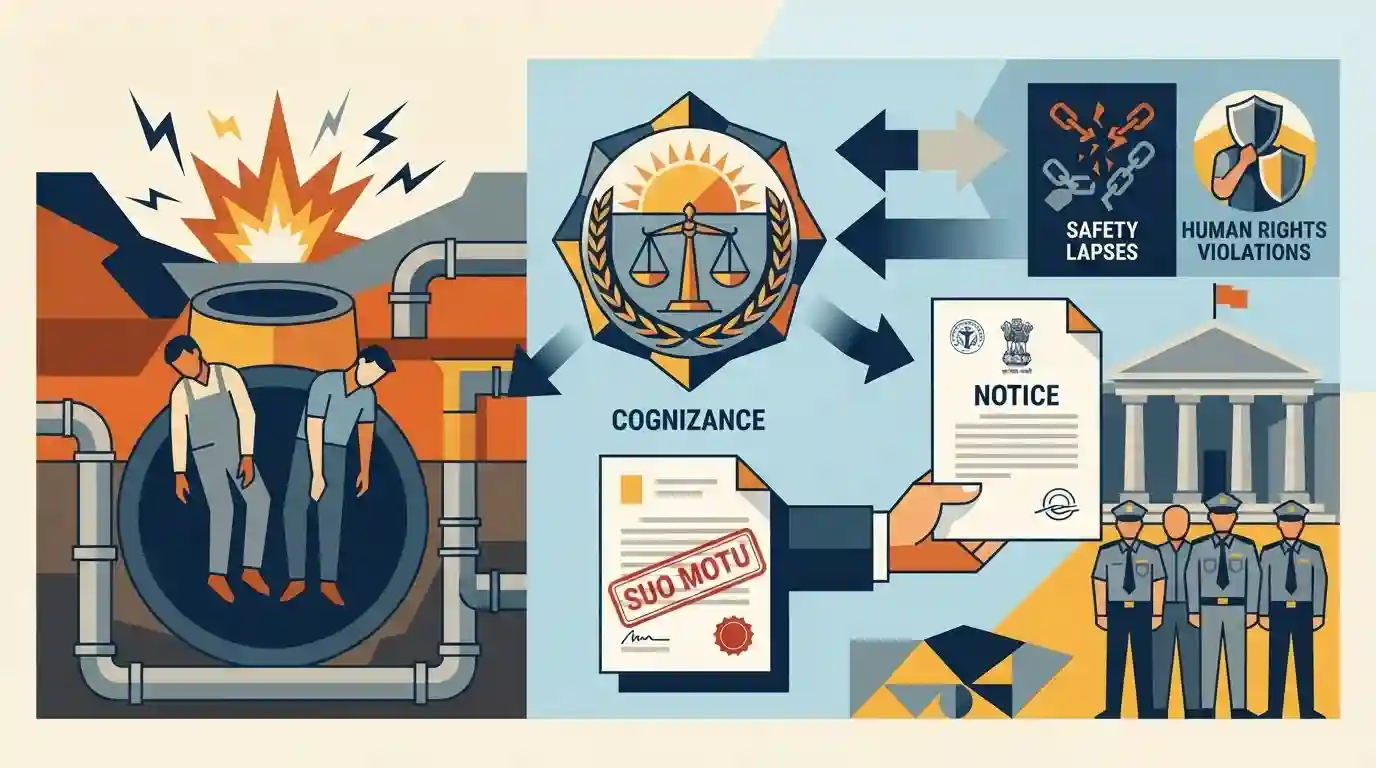
The National Human Rights Commission (NHRC) of India took suo motu cognizance of the death of two workers inside a septic tank in Muzaffarpur district, Bihar, issuing notices to state authorities over safety lapses and human rights violations.
ముఖ్య అంశాలు
- The National Human Rights Commission (NHRC) took suo motu cognizance of the tragic death of two workers inside a septic tank in Muzaffarpur district, Bihar.
- The Commission observed that the incident points to a serious violation of human rights due to negligence and lack of safety gear during hazardous cleaning work.
- Notices have been issued to the state authorities calling for a detailed report on the incident, action taken against responsible parties, and relief/compensation provided to the victims' families.
- The incident highlights the persistent issue of hazardous cleaning of sewers and septic tanks, violating statutory prohibitions and safety guidelines.
ముఖ్యమైన పదాలు
National Human Rights Commission (NHRC), India

A statutory body established in 1993 under the Protection of Human Rights Act to protect and promote human rights, investigate violations, and recommend remedial action or compensation.
UPSC context
UPSC Prelims/Mains (GS Paper II): Statutory bodies, human rights enforcement, institutional accountability, and constitutional safeguards.
Prohibition of Employment as Manual Scavengers and their Rehabilitation Act
A 2013 legislation that outlaws manual scavenging, bans hazardous cleaning of sewers and septic tanks without protective gear, and provides for rehabilitation and financial assistance.
UPSC context
UPSC Prelims/Mains (GS Paper II/I): Social justice, welfare of vulnerable sections, occupational safety, and eradication of untouchability.
అనుసంధానమైన స్థిర భావనలు
What are the key powers, functions, and composition of the National Human Rights Commission (NHRC) in India?
- Statutory Basis: Statutory body established under the Protection of Human Rights Act, 1993 (amended in 2019).
- Composition: Comprises a Chairperson who has been a Chief Justice of India or a Supreme Court Judge, along with other members having knowledge/practical experience in human rights.
- Nature of Powers: Recommendations are recommendatory in nature and not legally binding; however, authorities must inform the NHRC of action taken within a stipulated time.
అంతర-అంశ నమూనాలు
NHRC Mandate + Manual Scavenging + Urban Governance
Manual scavenging and hazardous sewer cleaning connect human rights accountability under NHRC with urban local body governance and social justice mandates for Scheduled Castes.
Occupational Safety + Statutory Enforcement + Labor Codes
Occupational safety failures in sanitation highlight gaps in implementing the Prohibition of Employment as Manual Scavengers Act alongside labor codes.

NHRC's statutory powers, suo motu jurisdiction, and limitations regarding armed forces/recommendatory nature are recurrent prelims traps.
అనుసంధాన PYQలు · 2
అనుసంధాన PYQలు · 2
- 2021MainsGS2
Though the Human Rights Commissions have contributed immensely to the protection of human rights in India, yet they have failed to assert themselves against the mighty and powerful. Analyzing their structural and practical limitations, suggest remedial measures.
- 2014MainsGS2
National Human Rights Commission (NHRC) in India can be most effective when its tasks are adequately supported by other mechanisms that ensure the accountability of a government. In light of the above observation assess the role of NHRC as an effective complement to the judiciary and other institutions in promoting and protecting human rights standards.
