Affordable Healthcare Initiatives and Out of Pocket Expenditure
Source:PIB ↗
આ શા માટે મહત્વનું છે
It provides insights into public welfare delivery, reduction of out-of-pocket health expenditure, and strengthening grassroots healthcare accessibility, which are crucial themes in UPSC GS Paper II (Governance and Social Justice).
સારાંશ
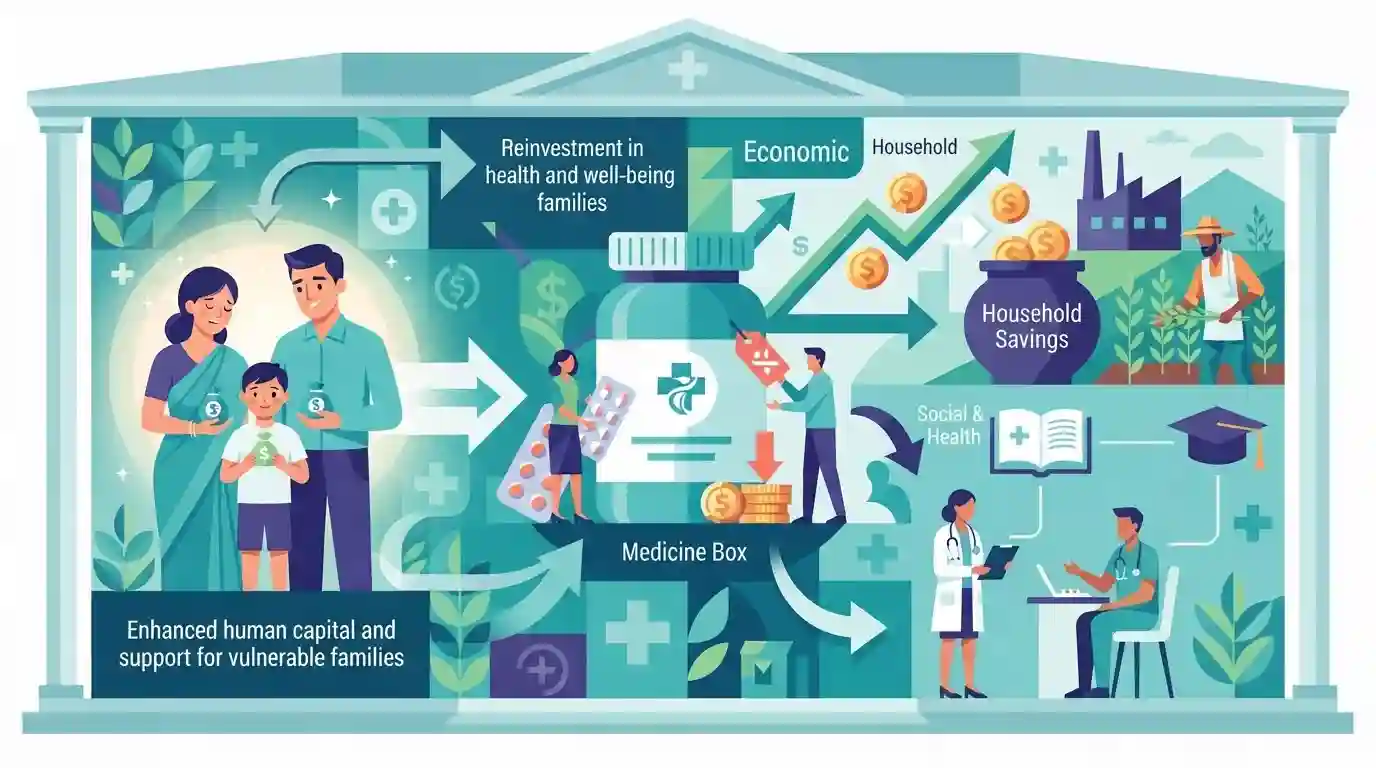
The PIB article 'Care That Goes Beyond the Prescription' discusses the profound social and economic impact of India's affordable healthcare and medicine initiatives, particularly focusing on how low-cost generic drugs ease out-of-pocket expenditure, enhance human capital, and support vulnerable families.
મુખ્ય મુદ્દા
- The article 'Care That Goes Beyond the Prescription' highlights the multi-dimensional impact of affordable healthcare initiatives like Jan Aushadhi Kendras on citizens' well-being.
- It emphasizes how access to low-cost, quality generic medicines reduces out-of-pocket expenditure on health, alleviating financial distress for vulnerable households.
- Beyond economic relief, reliable healthcare access contributes to human resource development, social security, and the realization of a welfare state as envisioned in the Directive Principles of State Policy.
મહત્વપૂર્ણ શબ્દો
Pradhan Mantri Bharatiya Jan Aushadhi Pariyojana

A flagship government campaign ensuring quality generic medicines at affordable prices through dedicated outlets to reduce out-of-pocket healthcare expenditure.
UPSC context
UPSC GS Paper II (Social Sector Schemes, Health): Evaluates government welfare interventions addressing out-of-pocket expenditure and universal healthcare goals.
Ministry of Health and Family Welfare
The central government body responsible for formulating national health policy, regulating medical education, and implementing public health programs across India.
UPSC context
UPSC GS Paper II (Governance & Health): Important for questions on institutional frameworks, public health delivery, and welfare schemes.
પ્રિલિમ્સ ટ્રેપ
Pradhan Mantri Bhartiya Janaushadhi Pariyojana is implemented by the Ministry of Health and Family Welfare.
Aspirants commonly assume PMBJP is implemented by the Ministry of Health and Family Welfare because it relates to healthcare, whereas it is actually under the Department of Pharmaceuticals, Ministry of Chemicals and Fertilizers.
સંલગ્ન સ્થિર ખ્યાલો
What are the key institutional details and implementation framework of Pradhan Mantri Bhartiya Janaushadhi Pariyojana (PMBJP)?
- Nodal Ministry: Implemented by Pharmaceuticals & Medical Devices Bureau of India (PMBI) under the Department of Pharmaceuticals, Ministry of Chemicals and Fertilizers (not Ministry of Health).
- Core Objective: Aims to provide quality generic medicines at affordable prices through dedicated outlets known as Jan Aushadhi Kendras across the country.
- Quality Control: Medicines are procured from World Health Organization - Good Manufacturing Practices (WHO-GMP) certified suppliers and tested for quality assurance.
આંતર-વિષય પેટર્ન
Healthcare expenditure vs. Rural poverty traps
Out-of-pocket health spending is a leading driver of impoverishment in India, directly undercutting rural livelihoods and asset creation targeted by MGNREGS and poverty alleviation programs.

PMBJP implementation details (nodal ministry vs department) and its alignment with DPSP welfare state mandates make a classic Prelims trap.
સંલગ્ન PYQ · 3
સંલગ્ન PYQ · 3
- 2024MainsGS2
In a crucial domain like the public healthcare system the Indian State should play a vital role to contain the adverse impact of marketisation of the system. Suggest some measures through which the State can enhance the reach of public healthcare at the grassroots level.
- 2024MainsGS2
Public charitable trusts have the potential to make India's development more inclusive as they relate to certain vital public issues. Comment.
- 2020PrelimsGS1
Which part of the Constitution of India declares the ideal of Welfare State?
