UPI remains free for peer and merchant digital transactions
Source:PIB ↗
কেন এটি গুরুত্বপূর্ণ
Understanding the cost structures, economic model, and social impact of digital public infrastructure like UPI is critical for analyzing financial inclusion and digital governance in India's economy.
সারসংক্ষেপ
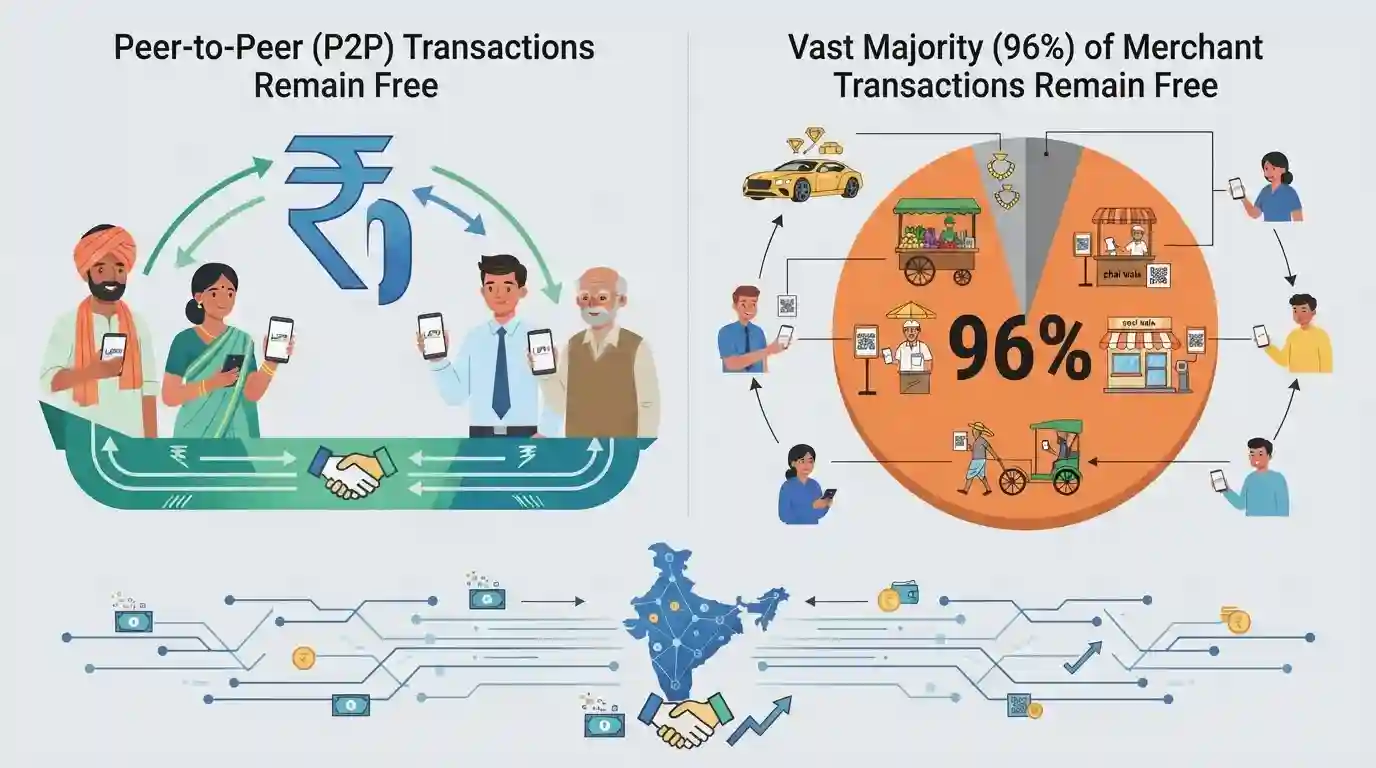
The PIB release highlights that the Unified Payments Interface (UPI) remains free for peer-to-peer (P2P) transactions as well as the vast majority (96%) of merchant transactions, reinforcing India's push for affordable and inclusive digital public infrastructure.
মূল বিষয়
- UPI continues to remain free for peer-to-peer (P2P) and 96% of merchant transactions, ensuring affordability for small businesses and common citizens.
- The government emphasizes digital public infrastructure (DPI) accessibility without imposing heavy charges on everyday retail transactions.
- Merchant transactions up to certain small thresholds or via specific setups avoid MDR, supporting broad-based adoption of digital payments.
গুরুত্বপূর্ণ শব্দ
Unified Payments Interface (UPI)

An instant real-time payment system developed by NPCI in India that facilitates inter-bank transactions through mobile devices, using virtual payment addresses or QR codes securely and seamlessly.
UPSC context
Important for GS Paper III (Indian Economy - Digital Public Infrastructure, financial inclusion, mobilization of resources).
National Payments Corporation of India (NPCI)
An umbrella organization for operating retail payments and settlement systems in India, created by the RBI and IBA under the Payment and Settlement Systems Act, 2007.
UPSC context
Important for GS Paper III (Banking, payment systems, digital economy regulations).
Ministry of Finance
A key ministry of the central government responsible for economic policies, fiscal management, public finance, banking regulation, and overall macroeconomic growth in India.
UPSC context
Important for GS Paper III (Indian Economy - Budgeting, Government Policies & Fiscal Framework).
Reserve Bank of India (RBI)
India's central banking institution that controls the monetary policy of the Indian rupee, regulates the banking system, and oversees payment and settlement systems.
UPSC context
Important for GS Paper III (Monetary Policy, Banking Sector Reforms, Financial Stability).
সংযুক্ত স্থির ধারণা
What is the institutional architecture governing the Unified Payments Interface (UPI) in India?
- Umbrella Body: Promoted by NPCI, which is an umbrella organization for retail payments operated under RBI and Indian Banks' Association provisions.
- Statutory Root: Set up under the Payment and Settlement Systems Act, 2007, to build a robust payment infrastructure in India.
- Core Tech: Operated on a real-time basis, leveraging IMPS infrastructure for instant fund transfers via a single identifier (VPA).
আন্তঃবিষয় প্যাটার্ন
UPI Growth and Financial Inclusion Index
DPI adoption metrics directly feed into financial inclusion indices, matching RBI's composite Financial Inclusion Index parameters and priority sector lending goals.
Zero-MDR Policy vs Public Infrastructure Subsidies
The debate over zero-MDR echoes classic public economics questions regarding user fees vs tax-funded subsidies for digital public goods.

Expect a statement-based prelims question on whether UPI transactions are legally mandated to be free for 100% of all merchants.
সংযুক্ত PYQ · 3
সংযুক্ত PYQ · 3
- 2023MainsGS3
What is the status of digitalization in the Indian economy? Examine the problems faced in this regard and suggest improvements.
- 2026PrelimsGS1
Which one of the following statements about Unified Payments Interface (UPI) and Central Bank Digital Currency (Digital Rupee) is not correct ?
- 2017PrelimsGS1
Which of the following is a most likely consequence of implementing the 'Unified Payments Interface (UPI)'?
