National Maritime Heritage Complex Development at Lothal
Source:PIB ↗
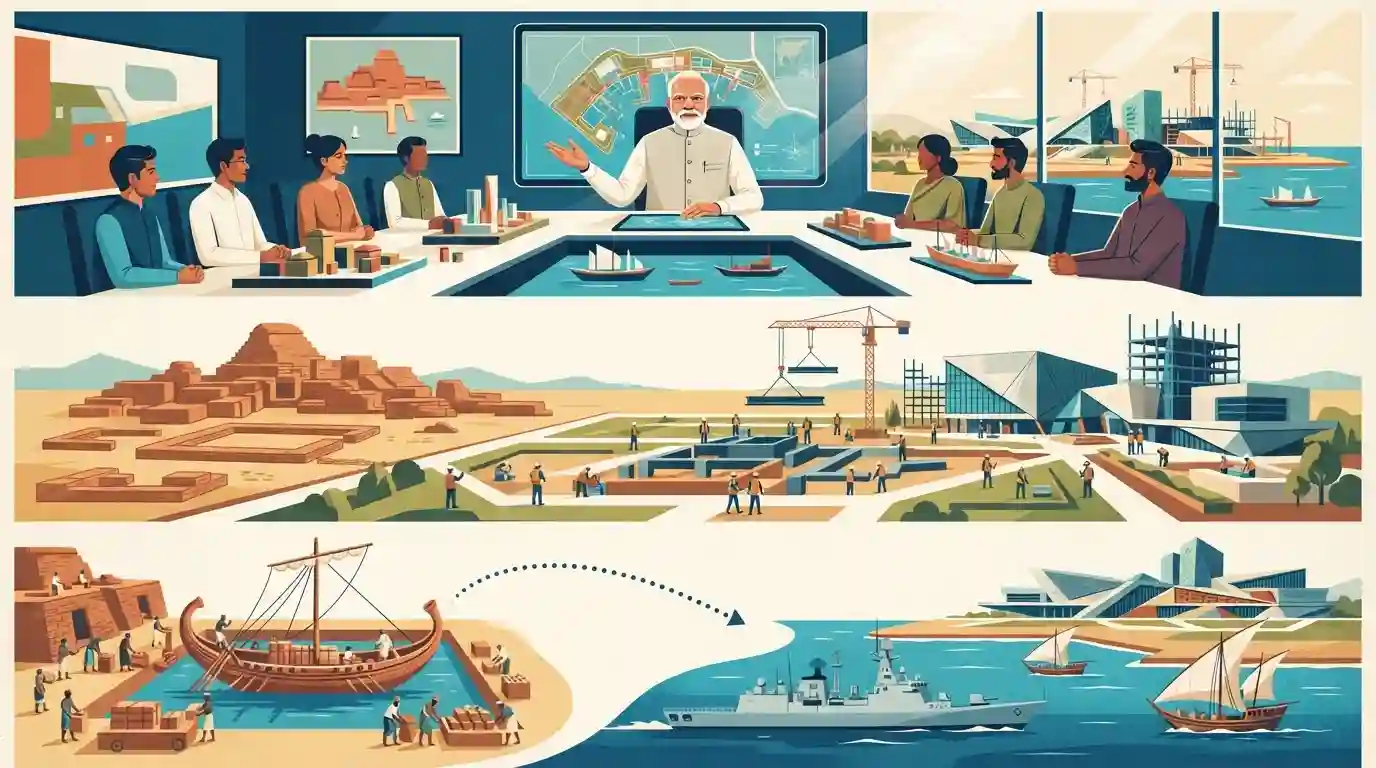
Why It Matters
The development of the National Maritime Heritage Complex at Lothal links India's glorious ancient maritime past with modern cultural diplomacy, infrastructure growth, and tourism, making it highly relevant for UPSC GS Paper 1 (Art and Culture / Ancient History).
Summary
Union Minister Sarbananda Sonowal chaired the 2nd Governing Council meeting of the National Maritime Heritage Complex (NMHC) Society, reviewing the ongoing development of the NMHC project at Lothal, Gujarat. The project seeks to highlight India's ancient-to-modern maritime history, leveraging Lothal's historical significance as an Indus Valley Civilization port city with the world's earliest known dockyard.
Key Points
- Union Minister Sarbananda Sonowal chaired the 2nd Governing Council meeting of the National Maritime Heritage Complex (NMHC) Society to review progress at Lothal, Gujarat.
- The NMHC project aims to showcase India's rich and diverse maritime heritage from ancient to modern times, utilizing cutting-edge technology.
- Lothal, a prominent site of the Indus Valley Civilization featuring the world's earliest known dockyard, is being developed as a world-class international tourist destination and heritage hub.
- The project includes various galleries, a maritime museum, a lighthouse museum, and coastal theme parks, boosting tourism and economic growth in the region.
Important Terms
National Maritime Heritage Complex (NMHC)

A world-class complex being developed at Lothal, Gujarat, to showcase India's 4,500-year-old maritime history from the Indus Valley Civilization to modern times, featuring a museum, lighthouse museum, and theme parks.
UPSC context
Important for GS Paper I (Indian Heritage and Culture, IVC sites like Lothal) and GS Paper III (Infrastructure Development and Tourism).
Lothal
An ancient Indus Valley Civilization port city located in Gujarat, renowned for possessing what is considered the world's earliest known artificial tidal dockyard.
UPSC context
Crucial for GS Paper I (Ancient Indian History and Archaeology, Indus Valley Civilization trade and town planning).
Ministry of Ports, Shipping and Waterways
The nodal union ministry steering India's maritime sector, responsible for policy formulation, port infrastructure expansion, and cultural initiatives like the National Maritime Heritage Complex at Lothal.
UPSC context
Important for GS Paper II (Governance and Ministries) and GS Paper III (Infrastructure and Economy).
Static Concepts Connected
What are the key structural and trade features of the Indus Valley Civilization port city of Lothal?
- Tidal Dockyard: A rectangular basin identified by archaeologists as a tidal dockyard connected to the Bhogavo river, facilitating trade ships.
- Trade & Craft: Excavations revealed seal-making workshops, Persian Gulf seals, and bead factories, confirming extensive overseas trade.
- Unique Planning: Unlike many Harappan cities with acropolis divisions facing west, Lothal had no divider between the citadel and lower town; houses had direct street access.
Cross-Topic Patterns
Cultural Heritage + Infrastructure Tourism Push
Mega-museums like NMHC Lothal and Hastinapur reflect the state's strategic push to anchor cultural nationalism in tangible, excavation-backed ancient archaeology.

IVC town-planning features, maritime trade networks, and specific site excavations (Lothal dockyard) are perennial UPSC Prelims favorites.
Linked PYQs · 3
Linked PYQs · 3
- 2026PrelimsGS1
In what way(s) does the Vizhinjam International Seaport represent a structural shift in India's maritime trade and logistics policy? 1. By functioning exclusively as a domestic cargo hub to reduce reliance on coastal shipping and eliminate the need for foreign collaborations. 2. By focusing primarily on passenger cruise tourism and heritage shipping to increase Kerala's profile as a maritime heritage destination. 3. By leveraging its natural deep draft and strategic location to reduce dependence on foreign trans-shipment ports, enhance revenue retention, and reposition India in regional maritime trade. Select the answer using the code given below :
- 2020PrelimsGS1
With reference to the period of Gupta dynasty in ancient India, the towns Ghantasala, Kadura and Chaul were well known as
- 2018MainsGS1
Safeguarding the Indian art heritage is the need of the moment. Discuss.
