Wildlife Trafficking and Anti-Smuggling Enforcement by DRI
Source:PIB ↗
हे का महत्त्वाचे आहे
Illegal wildlife trafficking poses a severe threat to global biodiversity, ecosystem stability, and species survival, making enforcement mechanisms by agencies like the DRI crucial for UPSC GS-3 (Environment/Security) preparation.
सारांश
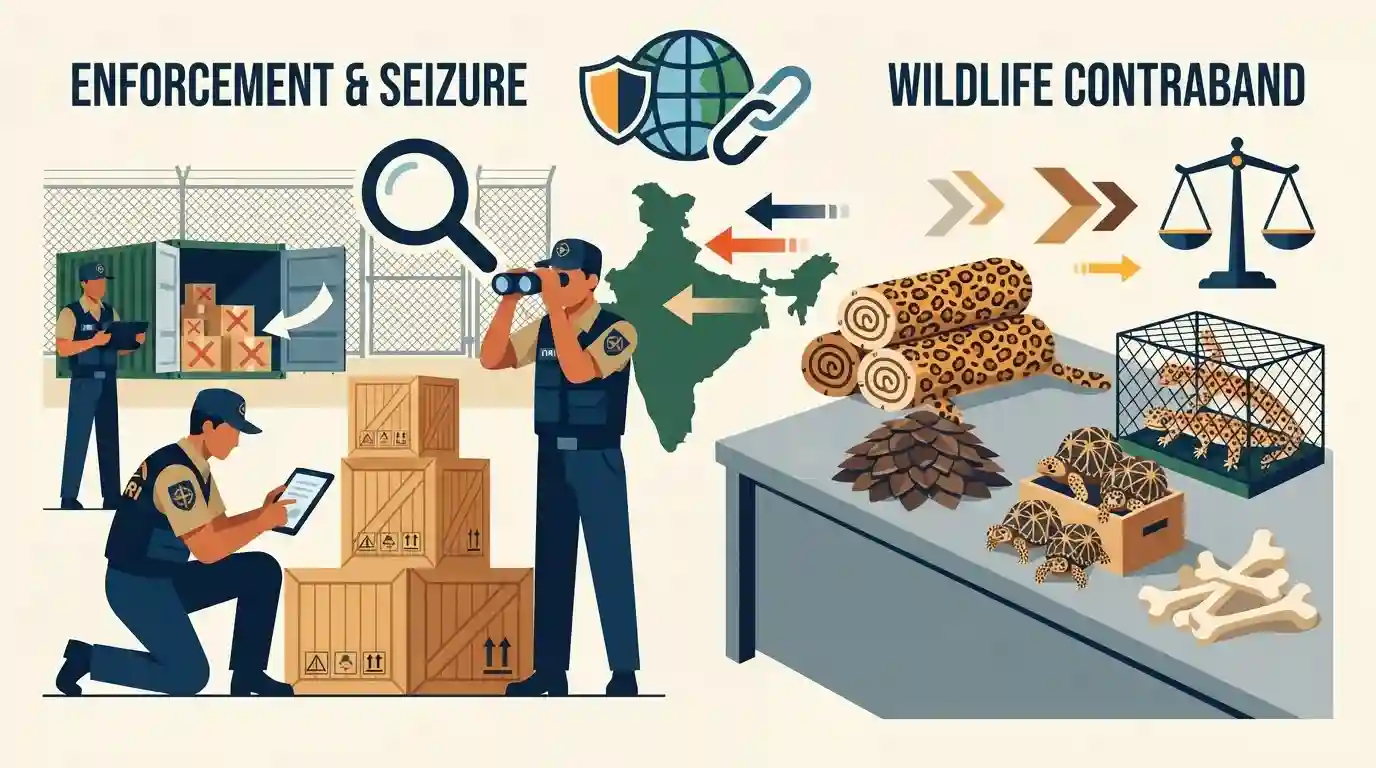
The Directorate of Revenue Intelligence (DRI) conducted successful anti-smuggling operations resulting in the seizure of a massive cache of illegal wildlife contraband, including leopard pelts, Indian star tortoises, live tokay geckos, pangolin scales, and tiger bones. This underscores the growing nexus of illegal wildlife trade and the critical enforcement role played by agencies in protecting endangered species under the Wildlife (Protection) Act.
मुख्य मुद्दे
- The Directorate of Revenue Intelligence (DRI) seized illegal wildlife contraband including two leopard pelts, 180 live Indian star tortoises, 12 live tokay geckos, around 24 kg of pangolin scales, and 500 grams of tiger bones.
- The operation highlights the persistent threat of transnational illegal wildlife trafficking targeting endangered species protected under Indian law and international conventions like CITES.
- Seized items include high-value products from Schedule-I species under the Wildlife (Protection) Act, 1972, such as leopards, tigers, and pangolins.
- Such seizures underscore the vital role of intelligence and enforcement agencies like the DRI in curbing environmental crimes and wildlife smuggling.
महत्त्वाच्या संज्ञा
Wildlife (Protection) Act, 1972

India's principal legislation for protecting wild animals, birds, and plants, providing legal frameworks for national parks, sanctuaries, and regulating wildlife crime and trade across its schedules.
UPSC context
UPSC Prelims and Mains (GS Paper III - Environment & Ecology): tests statutory conservation frameworks, wildlife crimes, and schedule classifications.
CITES
An international agreement ensuring that international trade in wild specimens of flora and fauna does not threaten their survival, classifying species into three appendices.
UPSC context
UPSC Prelims and Mains (GS Paper III - Environment & Biodiversity): tests international conventions, trans-boundary wildlife trade, and conservation protocols.
Directorate of Revenue Intelligence (DRI)
India's premier economic intelligence and anti-smuggling agency under the Central Board of Indirect Taxes and Customs, Ministry of Finance, tackling contraband and illegal wildlife trafficking.
UPSC context
UPSC Prelims and Mains (GS Paper III - Internal Security / Economy): tests enforcement mechanisms against transnational crime and smuggling rings.
पूर्वपरीक्षा सापळा
Directorate of Revenue Intelligence (DRI) is a specialized forestry and wildlife conservation body under the Ministry of Environment.
Aspirants often assume DRI is a specialized wildlife body like WCCB, whereas DRI is India's premier intelligence agency for anti-smuggling under the Ministry of Finance.
संबंधित स्थिर संकल्पना
What are the key schedules of the Wildlife (Protection) Act, 1972 post-2022 amendment?
- Schedule Structure: Rationalized structure, reducing the number of schedules from six to four major schedules for animals, plants, and CITES specimens.
- Schedule I Protection: Schedule I provides absolute protection with highest penalties for endangered species like tigers, leopards, and pangolins.
- CITES Appendix Integration: Schedule IV is newly introduced specifically for specimens listed under the CITES appendices.
आंतर-विषय नमुने
Wildlife Smuggling & Customs Intelligence Networks
The DRI operates under the Central Board of Indirect Taxes and Customs (CBIC), bridging domestic environmental crimes (WPA 1972) with transnational customs enforcement and anti-money laundering frameworks (PMLA).
CITES Appendix-I Enforcement & Treaty Compliance
CITES Appendix-I species seizures trigger international compliance reviews, connecting domestic wildlife enforcement directly to India's international environmental treaty obligations.

Expect match-the-animal to its WPA 1972 schedule or CITES appendix question, especially for Tokay Gecko and Indian Star Tortoise.
संबंधित PYQ · 1
संबंधित PYQ · 1
- 2017PrelimsGS1
In India, if a species of tortoise is declared protected under Schedule I of the Wildlife (Protection) Act, 1972, what does it imply?
