PM-KUSUM Scheme and Renewable Energy Integration in Agriculture
Source:PIB ↗
આ શા માટે મહત્વનું છે
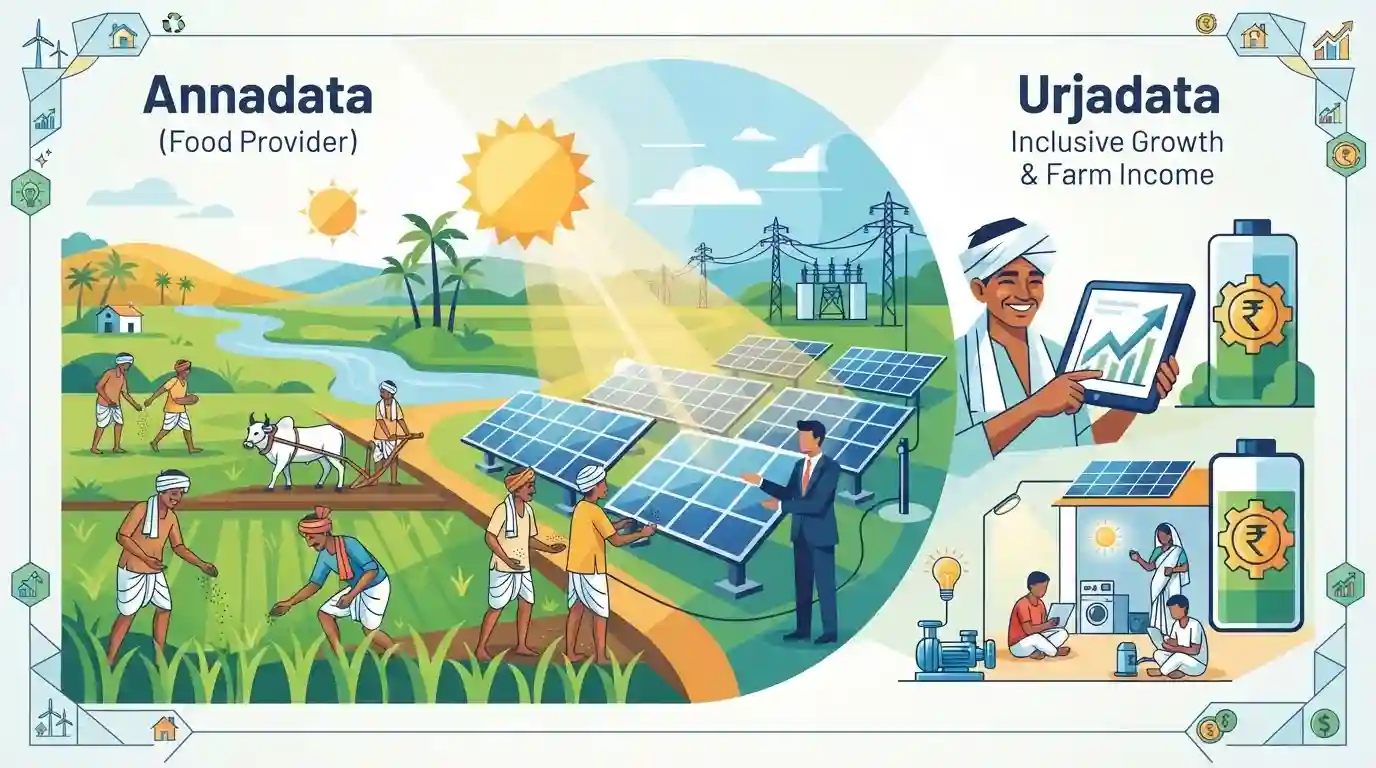
The integration of renewable energy with agriculture (Annadata to Urjadata) represents a paradigm shift in rural development, energy security, and doubling farmers' income, directly aligning with India's climate goals.
સારાંશ
Union Minister Pralhad Joshi highlighted how Indian farmers are evolving from 'Annadata' to 'Urjadata' through clean energy initiatives like PM-KUSUM, generating additional income and bolstering rural sustainability.
મુખ્ય મુદ્દા
- Union Minister Shri Pralhad Joshi highlighted the transformation of Indian farmers from 'Annadata' (food providers) to 'Urjadata' (energy providers).
- Schemes like PM-KUSUM are empowering farmers by enabling solar energy generation on their lands, ensuring energy security and additional income streams.
- Decentralized renewable energy deployment is playing a pivotal role in rural economic development and sustainable agriculture.
મહત્વપૂર્ણ શબ્દો
PM-KUSUM

A central government scheme aimed at providing energy and water security to farmers by promoting solar pumps, decentralized solar power plants, and grid-connected agriculture pump solarization to enhance rural farm incomes.
UPSC context
UPSC GS Paper III (Agriculture & Infrastructure): Tests understanding of renewable energy integration in agriculture, farm income diversification, and sustainable irrigation.
PM Surya Ghar Muft Bijli Yojana
A national initiative providing financial subsidies to residential households for installing rooftop solar systems to encourage clean energy adoption and offer free electricity.
UPSC context
UPSC GS Paper III (Environment & Infrastructure): Relevant for questions on residential renewable energy targets, green growth, and subsidy schemes.
Ministry of New and Renewable Energy
The nodal ministry of the Government of India responsible for formulating and implementing policies related to renewable energy, including solar, wind, and bio-energy.
UPSC context
UPSC GS Paper II/III: Tests governance structures, institutional mechanisms, and policy execution for India's clean energy transition.
સંલગ્ન સ્થિર ખ્યાલો
What are the key operational components of the PM-KUSUM scheme for agricultural solarisation?
- Component-A Solar Plants: Component A involves setting up small solar power plants (up to 2 MW) on barren/cultivable land by farmers for selling surplus power to DISCOMs.
- Component-B Pumps: Component B focuses on installing standalone off-grid solar agriculture pumps to replace diesel-run irrigation systems.
- Component-C Solarisation: Component C entails solarising grid-connected agricultural pumps for daytime reliable power and monetizing surplus energy.
આંતર-વિષય પેટર્ન
Renewable Energy + State Fiscal Health
Decentralized solar deployment like PM-KUSUM directly lowers state fiscal deficits through reduced electricity subsidy outlays to agricultural consumers, bridging rural development and fiscal federalism.

PM-KUSUM component-wise targets (A, B, C) and DISCOM obligations in solar procurement are prime matches for UPSC statement-based MCQs.
સંલગ્ન PYQ · 2
સંલગ્ન PYQ · 2
- 2020MainsGS3
Describe the benefits of deriving electric energy from sunlight in contrast to the conventional energy generation. What are the initiatives offered by our Government for this purpose?
- 2025PrelimsGS1
Consider the following statements about 'PM Surya Ghar Muft Bijli Yojana': I. It targets installation of one crore solar rooftop panels in the residential sector. II. The Ministry of New and Renewable Energy aims to impart training on installation, operation, maintenance and repairs of solar rooftop systems at grassroot levels. III. It aims to create more than three lakhs skilled manpower through fresh skilling, and up-skilling, under scheme component of capacity building. Which of the statements given above are correct?
