RISE Conclave Highlights Tier Two and Three Startup Ecosystem in India
Source:PIB ↗
কেন এটি গুরুত্বপূর্ণ
It highlights the decentralization of India's startup economy into Tier-2 and Tier-3 cities, aligning with inclusive growth, regional development, and grassroots innovation objectives relevant to GS3.
সারসংক্ষেপ
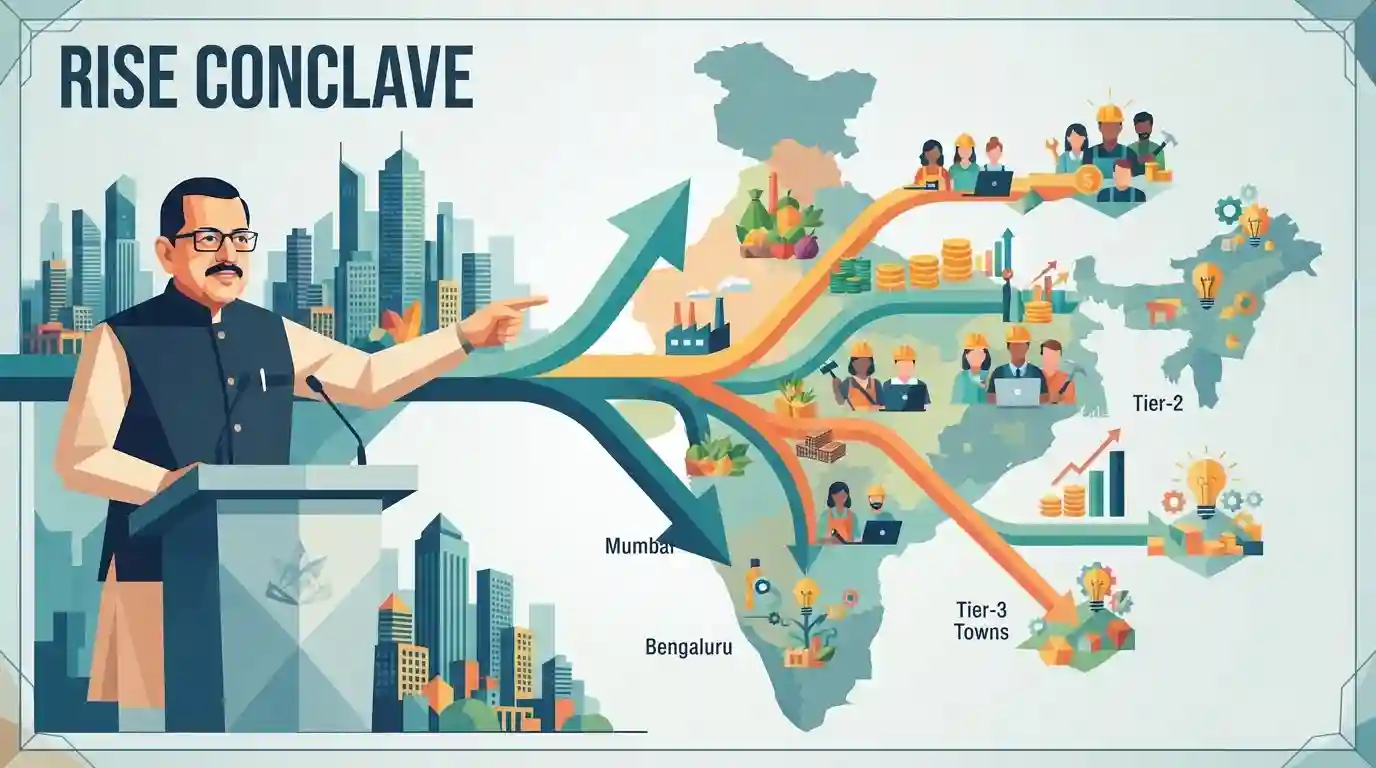
Union Minister Dr Jitendra Singh addressed the RISE Conclave, emphasizing that India's startup ecosystem is expanding beyond metropolitan cities into Tier-2 and Tier-3 regions, unlocking grassroots innovation, employment, and inclusive economic development.
মূল বিষয়
- Union Minister Dr Jitendra Singh highlighted that the RISE Conclave shines a spotlight on India's emerging startup powerhouse in Tier-2 and Tier-3 cities.
- The shift from metropolitan hubs to smaller towns reflects a decentralization of innovation, leveraging local talent and regional resources.
- Focus is laid on entrepreneurship, grassroots technology development, and inclusive economic growth across diverse sectors.
গুরুত্বপূর্ণ শব্দ
RISE Conclave

An annual event bringing together startups, researchers, industry leaders, and government agencies to promote indigenous technologies, bridge lab-to-market gaps, and highlight regional innovation in smaller cities.
UPSC context
Important for GS Paper III (Science & Technology - Indigenous Tech and Innovation Ecosystems). Tests understanding of institutional mechanisms driving regional commercialization.
Startup India
A flagship Government of India initiative launched in 2016 and administered by DPIIT to build a strong ecosystem for nurturing innovation, boosting entrepreneurship, and creating massive employment opportunities.
UPSC context
Important for GS Paper III (Indian Economy - Growth, Development, and Startup Ecosystem). Frequently tested regarding government policies, funding schemes, and inclusive growth.
Ministry of Science and Technology
The Union government department responsible for formulating and administering rules, regulations, and promotional policies relating to scientific research, technology development, and institutional capacity building across India.
UPSC context
Important for GS Paper II (Governance - Government Ministries and Institutional Mandates) and GS Paper III (Science and Technology Policy).
প্রিলিমস ফাঁদ
Over 50-60% of India's recognized startups now emerge from beyond metropolitan centers, in Tier-2 and Tier-3 cities.
Aspirants often assume India's startup ecosystem is still overwhelmingly concentrated in metro cities like Bengaluru, Mumbai, and NCR, ignoring the 50-60% emergence from smaller towns.
সংযুক্ত স্থির ধারণা
What are the key pillars and milestones of the Startup India initiative launched in 2016?
- Core Support: Simplification and Handholding: Self-certification compliance under labor and environmental laws, and a Rs. 10,000 crore Fund of Funds managed by SIDBI.
- Tax Benefits: Funding and Incentives: Income tax exemption for 3 consecutive years and exemption from capital gains tax on investments above fair market value.
- Infrastructure: Incubation and Industry-Academia: Atal Innovation Mission (AIM) and Research Parks to foster innovation and bridge the lab-to-market gap.
আন্তঃবিষয় প্যাটার্ন
Digital Public Infrastructure + Decentralized Startups
The shift of startups to smaller towns ties directly into digital infrastructure (UPI, ONDC, India Stack) penetrating rural and semi-urban markets, enabling non-metro entrepreneurship.
Inclusive Growth + Grassroots Innovation Policies
Decentralizing innovation to Tier-2/3 cities directly supports inclusive growth and reduces regional disparities, a core objective under the inclusive governance syllabus.

Tier-2/3 startup boom + digital penetration is a prime candidate for an analytical Mains question on inclusive economic growth.
সংযুক্ত PYQ · 1
সংযুক্ত PYQ · 1
- 2022MainsGS3
Is inclusive growth possible under market economy ? State the significance of financial inclusion in achieving economic growth in India.
