National Vulture Awareness Day Highlights Conservation and Recovery
Source:PIB ↗
Why It Matters
Vultures are critical keystone species for ecosystem health and waste management. Tracking India's policy measures, breeding recovery programs, and veterinary drug bans is vital for UPSC aspirants studying biodiversity conservation under GS Paper III.
Summary
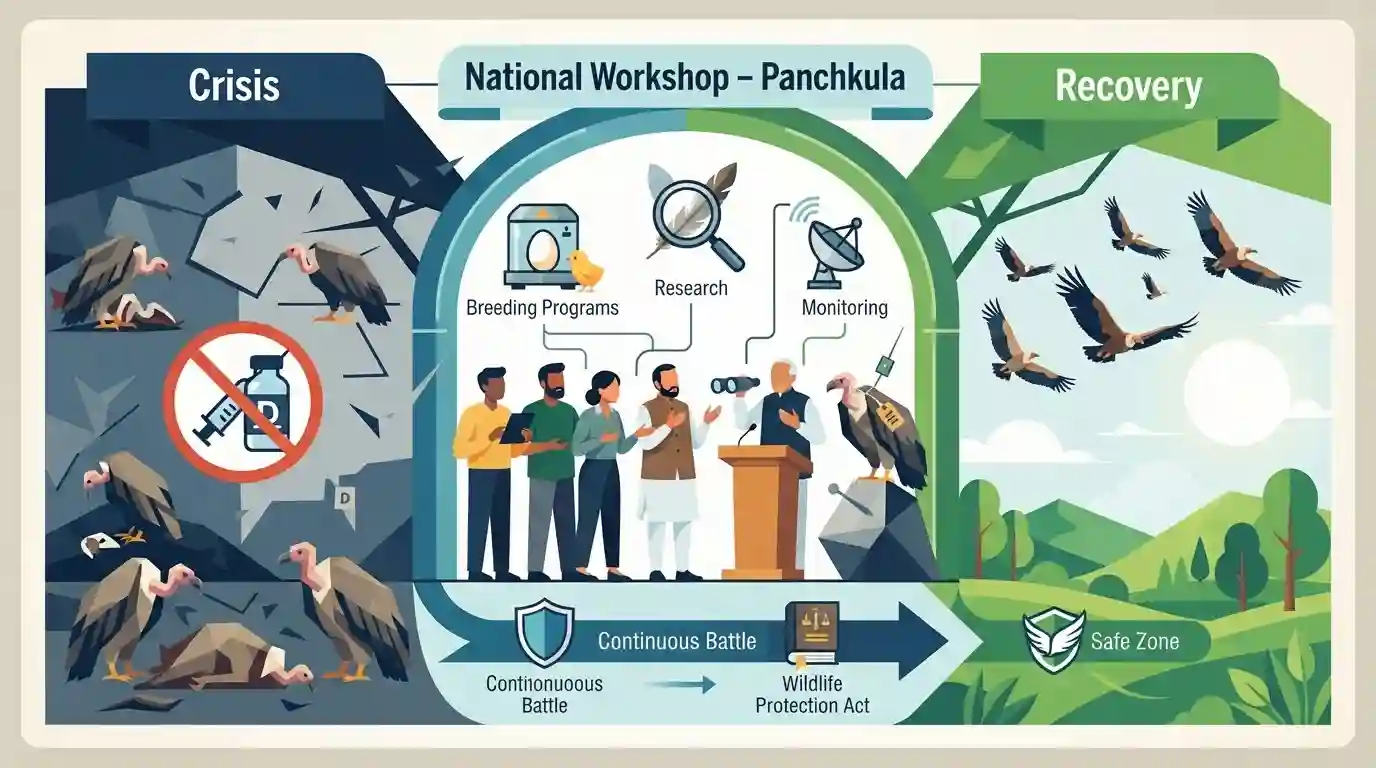
Union Environment Minister led the International Vulture Awareness Day 2026 celebrations and inaugurated the national workshop ‘From Crisis to Recovery – Conserving India’s Vultures’ at Panchkula. The event highlighted ongoing initiatives, breeding programs, and the continuous battle against harmful veterinary NSAIDs like diclofenac to ensure the ecological recovery of vulture species in India.
Key Points
- Union Environment Minister led the International Vulture Awareness Day 2026 celebrations and inaugurated a national workshop themed ‘From Crisis to Recovery – Conserving India’s Vultures’ at Panchkula.
- The event emphasized recovery programs, breeding centers, and mitigating veterinary drug threats (such as diclofenac) that historically caused catastrophic declines in India's vulture populations.
- India's conservation efforts include breeding and conservation breeding centers managed across various states to rebuild wild populations of critically endangered vulture species.
- Vultures play an irreplaceable role as natural scavengers, maintaining ecosystem health and preventing the spread of diseases.
Important Terms
Wild Life (Protection) Act, 1972

India's primary legislative framework enacted in 1972 to protect wild animals, birds, and plants, establishing protected areas and regulating wildlife trade and offenses.
UPSC context
Crucial for UPSC Prelims and Mains (GS Paper III: Environment & Ecology), focusing on wildlife conservation laws, legal schedules, and protected area networks.
Action Plan for Vulture Conservation in India
A strategic framework launched by the Ministry of Environment, Forest and Climate Change to halt vulture population declines by banning toxic veterinary drugs, breeding birds in captivity, and creating Vulture Safe Zones.
UPSC context
Important for GS Paper III (Biodiversity and Conservation), assessing specific species recovery projects, environmental policy execution, and mitigation of veterinary drug toxicity.
Ministry of Environment, Forest and Climate Change
The apex nodal ministry of the central government responsible for planning, promoting, and implementing environmental and forestry programs, as well as wildlife protection laws in India.
UPSC context
Familiarity with institutional mandates and ministries is vital for governance and environmental policy topics in UPSC Civil Services exams.
Static Concepts Connected
What are the key provisions and species status under India's Vulture Conservation Action Plan?
- Diclofenac Ban: Banned drug: Veterinary use of diclofenac was banned in 2006 under the Drugs and Cosmetics Act to halt renal failure in vultures.
- Vulture Action Plan: Action Plan: The Vulture Action Plan (2020-2025) aims to establish Vulture Safe Zones and breeding centres across various states.
- IUCN Status: IUCN Status: Species like the White-rumped, Slender-billed, and Indian Vulture are listed as Critically Endangered by the IUCN.
Cross-Topic Patterns
Veterinary NSAIDs and Wildlife Health Crosslink
The veterinary NSAID crisis illustrates the intersection of livestock economy, veterinary pharmacology, and wildlife conservation under the Wildlife Protection Act.
Ex-Situ Breeding and Public Health Nexus
Vulture conservation programs blend ex-situ breeding at Pinjore with in-situ Vulture Safe Zones, intersecting forest governance with public health.

Expect matching lists of vulture species and their IUCN statuses or specific veterinary drugs banned under the Drugs & Cosmetics Act.
Linked PYQs · 3
Linked PYQs · 3
- 2024PrelimsGS1
Consider the following statements : Statement-I: The Indian Flying Fox is placed under the "vermin" category in the Wild Life (Protection) Act, 1972. Statement-II : The Indian Flying Fox feeds on the blood of other animals. Which one of the following is correct in respect of the above statements ?
- 2022PrelimsGS1
With reference to Indian laws about wildlife protection, consider the following statements : 1. Wild animals are the sole property of the government. 2. When a wild animal is declared protected, such animal is entitled for equal protection whether it is found in protected areas or outside. 3. Apprehension of a protected wild animal becoming a danger to human life is sufficient ground for its capture or killing. Which of the statements given above is/are correct?
- 2012PrelimsGS1
Vultures which used to be very common in Indian countryside some years ago are rarely seen nowadays. This is attributed to
