GIFT City Framework for Aircraft Leasing and Financing Hub
Source:PIB ↗
ఇది ఎందుకు ముఖ్యం
India is one of the world's fastest-growing aviation markets, yet a vast majority of its aircraft are leased from foreign jurisdictions, leading to a massive outflow of capital. Developing domestic leasing and financing capabilities via GIFT City is vital for financial self-reliance and infrastructure growth.
సారాంశం
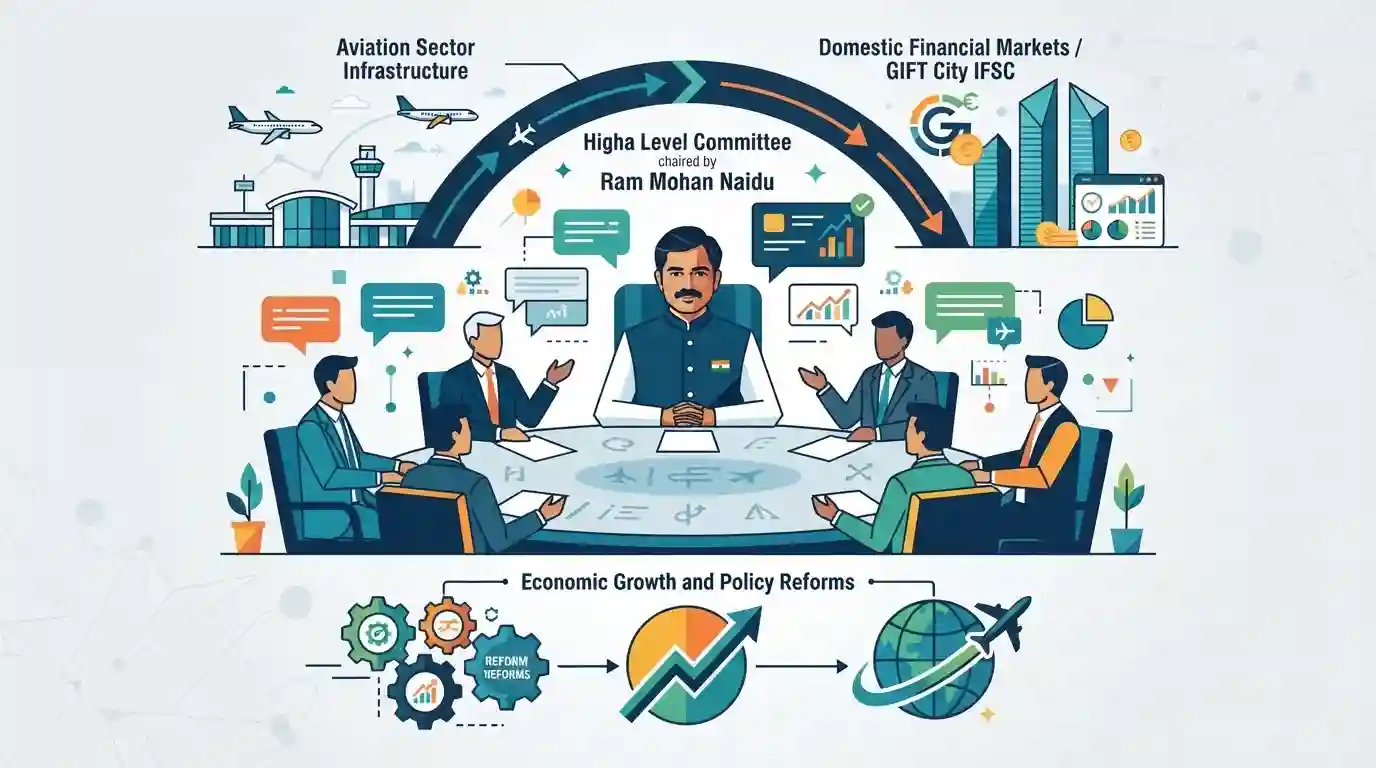
Union Minister for Civil Aviation Ram Mohan Naidu chaired a meeting of the High Level Committee on Aircraft Leasing and Financing to evaluate steps for making India a prominent global hub for aircraft leasing and financing, primarily focusing on GIFT City's IFSC framework and necessary structural policy shifts.
ముఖ్య అంశాలు
- Civil Aviation Minister Ram Mohan Naidu chaired the High Level Committee on Aircraft Leasing and Financing to review progress and strategic measures.
- The meeting focused on establishing India as a global hub for aircraft leasing and financing, leveraging GIFT City (IFSC).
- Discussions included legal, regulatory, and tax reforms required to make domestic aircraft leasing competitive with global jurisdictions like Ireland and Singapore.
- Emphasis was placed on retaining capital within India and reducing the heavy reliance on foreign lessors for Indian carriers.
ముఖ్యమైన పదాలు
Cape Town Convention

An international treaty designed to standardize transactions involving movable property, specifically providing creditor-friendly repossession and default remedies for aircraft objects, implemented in India via specialized legislation.
UPSC context
UPSC Prelims/Mains (IR & Economy): Tests international treaties, aviation finance reforms, and legal frameworks easing cross-border asset recovery.
GIFT City IFSC
India’s first and only International Financial Services Centre located in Gujarat, offering a globally competitive business and regulatory environment for banking, capital markets, and aircraft leasing.
UPSC context
UPSC Prelims/Mains (Economy): Tests domestic financial market reforms, international financial hubs, and foreign capital attraction.
High Level Committee on Aircraft Leasing and Financing
An administrative panel set up by the Ministry of Civil Aviation to evaluate steps, taxation frameworks, and credit policies to make India a global hub for aircraft leasing and financing.
UPSC context
UPSC Mains (Infrastructure/Economy): Tests governance, institutional policy responses, and strategies for scaling up India's aviation sector.
Ministry of Civil Aviation
The apex central government body responsible for the formulation of national policies and programs for the development and regulation of civil aviation in India.
UPSC context
UPSC Prelims/Mains (Governance & Polity): Tests administrative structures, regulatory bodies, and policy implementation in transport infrastructure.
అనుసంధానమైన స్థిర భావనలు
What is the strategic significance of the Cape Town Convention for aircraft leasing in India?
- Global Treaty: International treaty standardizing transactions of movable equipment, particularly high-value aviation assets like aircraft and engines.
- Asset Protection: Provides legal certainty to lessors and financiers regarding asset repossession during lessee default or airline insolvency.
- Lower Costs: Enables bankruptcy-remote financing, significantly lowering borrowing costs and insurance premiums for domestic carriers.
అంతర-అంశ నమూనాలు
Aviation Leasing + IFSC Capital Flows
Aircraft leasing utilizes GIFT City's offshore status inside India, connecting aviation infrastructure policy directly with capital account convertibility and IFSC regulatory evolution under IFSCA.
Cape Town Convention + Investor Protection
Cape Town Convention implementation tests India's legal commitment to international treaty obligations, directly mirroring debates over retrospective taxation and bilateral investment treaties.

Expect statements pairing GIFT City tax incentives with Cape Town Convention lessor protections in aviation financing MCQs.
అనుసంధాన PYQలు · 1
అనుసంధాన PYQలు · 1
- 2021MainsGS3
“Investment in infrastructure is essential for more rapid and inclusive economic growth.” Discuss in the light of India's experience.
