TRAI Quality of Service Consultation Paper and Regulatory Framework
Source:PIB ↗
কেন এটি গুরুত্বপূর্ণ
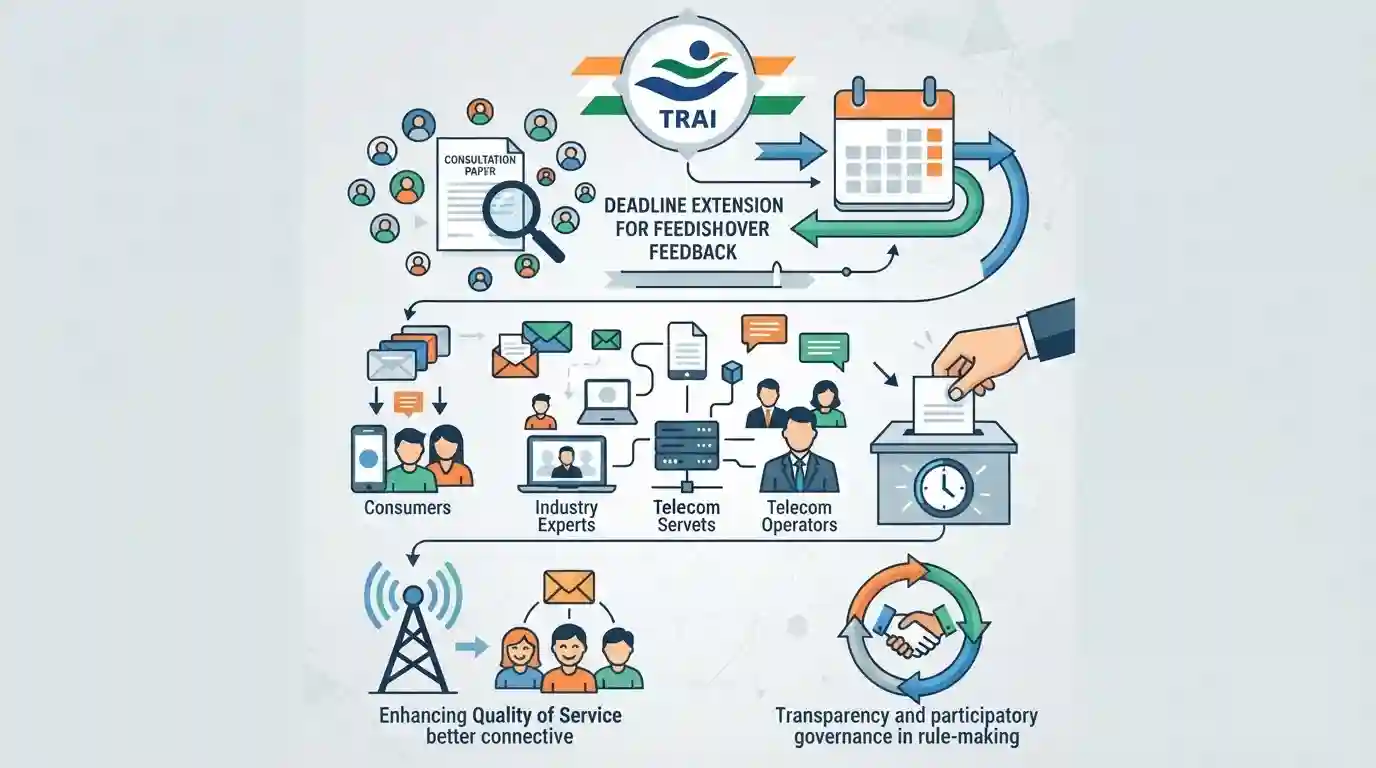
Understanding the functioning of regulatory bodies like TRAI is crucial for GS Paper 2. The use of consultation papers demonstrates participatory governance and transparency in policy-making, while the focus on Quality of Service (QoS) directly ties into India's digital infrastructure and consumer rights (GS Paper 3).
সারসংক্ষেপ
The Telecom Regulatory Authority of India (TRAI), under the Ministry of Communications, has extended the deadline for receiving comments and counter-comments on its consultation paper regarding draft amendments to 'The Standards of Quality of Service'. This extension allows stakeholders more time to provide feedback, reflecting TRAI's commitment to transparent, participatory rule-making and its focus on improving telecommunication service quality for consumers.
মূল বিষয়
- The Telecom Regulatory Authority of India (TRAI) has extended the deadline for stakeholders to submit comments and counter-comments.
- The public consultation pertains to draft amendments to "The Standards of Quality of Service" regulations in the telecom sector.
- The move highlights the role of participatory governance and stakeholder feedback in formulating regulatory frameworks for telecommunications.
গুরুত্বপূর্ণ শব্দ
Telecom Regulatory Authority of India (TRAI)

An independent statutory body established under the TRAI Act, 1997, responsible for regulating telecommunication services, fixing tariffs, ensuring quality of service, and safeguarding consumer interests in India.
UPSC context
GS Paper II: Statutory, regulatory, and various quasi-judicial bodies. Important for understanding regulatory mechanisms and telecom sector governance.
The Standards of Quality of Service Regulations
Regulations notified by TRAI establishing technology-agnostic performance benchmarks, network reliability standards, outage reporting rules, and consumer compensation mechanisms for telecom and broadband service providers.
UPSC context
GS Paper III: Infrastructure: Telecommunications. Important for understanding service quality, digital connectivity, consumer protection, and technological governance.
Ministry of Communications
A Union Ministry of the Government of India responsible for formulating and implementing national policies, regulations, and programs concerning telecommunications and postal services.
UPSC context
GS Paper II: Government policies and interventions. Tested for its developmental policies, administrative structure, and telecom sector oversight.
প্রিলিমস ফাঁদ
TRAI acts as the appellate tribunal for resolving disputes between telecom service providers and the government.
The adjudicatory and dispute resolution functions were stripped from TRAI and assigned to the Telecom Disputes Settlement and Appellate Tribunal (TDSAT) via the 2000 amendment.
সংযুক্ত স্থির ধারণা
How does TRAI's mandate differ from TDSAT?
- TRAI (Regulation): Sets Quality of Service (QoS) standards, recommends tariffs, and ensures fair competition in the telecom sector.
- TDSAT (Adjudication): Hears appeals against TRAI directions and resolves disputes between the licensor (Government) and licensees (operators).
What is the Pre-Legislative Consultation Policy (PLCP) 2014?
- Public Mandate: Requires government ministries to place draft bills, rules, or amendments in the public domain for at least 30 days.
- Impact Assessment: Drafts must include an explanatory note detailing the financial implications and estimated impact on the affected stakeholders.
আন্তঃবিষয় প্যাটার্ন
Pre-Legislative Consultation Deficit
Despite the 2014 PLCP mandate, systemic bypassing of 30-day public feedback windows is a frequent critique in Mains GS2 questions regarding the erosion of parliamentary scrutiny and democratic law-making.
Telecom QoS and Consumer Protection
TRAI's QoS benchmarks intersect with the Consumer Protection Act, 2019. Systemic service issues like call drops often invoke concurrent discourse on the overlapping jurisdictions of sector regulators and the CCPA.

Expect a Prelims question contrasting TRAI's regulatory functions (e.g., QoS) with TDSAT's exclusive dispute-resolution jurisdiction.
সংযুক্ত PYQ · 2
সংযুক্ত PYQ · 2
- 2022PrelimsGS1
With reference to the "Tea Board" in India, consider the following statements : 1. The Tea Board is a statutory body. 2. It is a regulatory body attached to the Ministry of Agriculture and Farmers Welfare. 3. The Tea Board's Head Office is situated in Bengaluru. 4. The Board has overseas offices at Dubai and Moscow. Which of the statements given above are correct?
- 2023MainsGS3
What is the status of digitalization in the Indian economy? Examine the problems faced in this regard and suggest improvements.
