Suryapath Tiranga Global Relay and Cultural Diplomacy
Source:PIB ↗
આ શા માટે મહત્વનું છે
The Suryapath Tiranga initiative demonstrates India's active engagement with its diaspora and the innovative use of cultural symbols (the National Flag) to project soft power and unity globally. It also highlights the civic duty of respecting the National Flag, relevant for Polity and International Relations.
સારાંશ
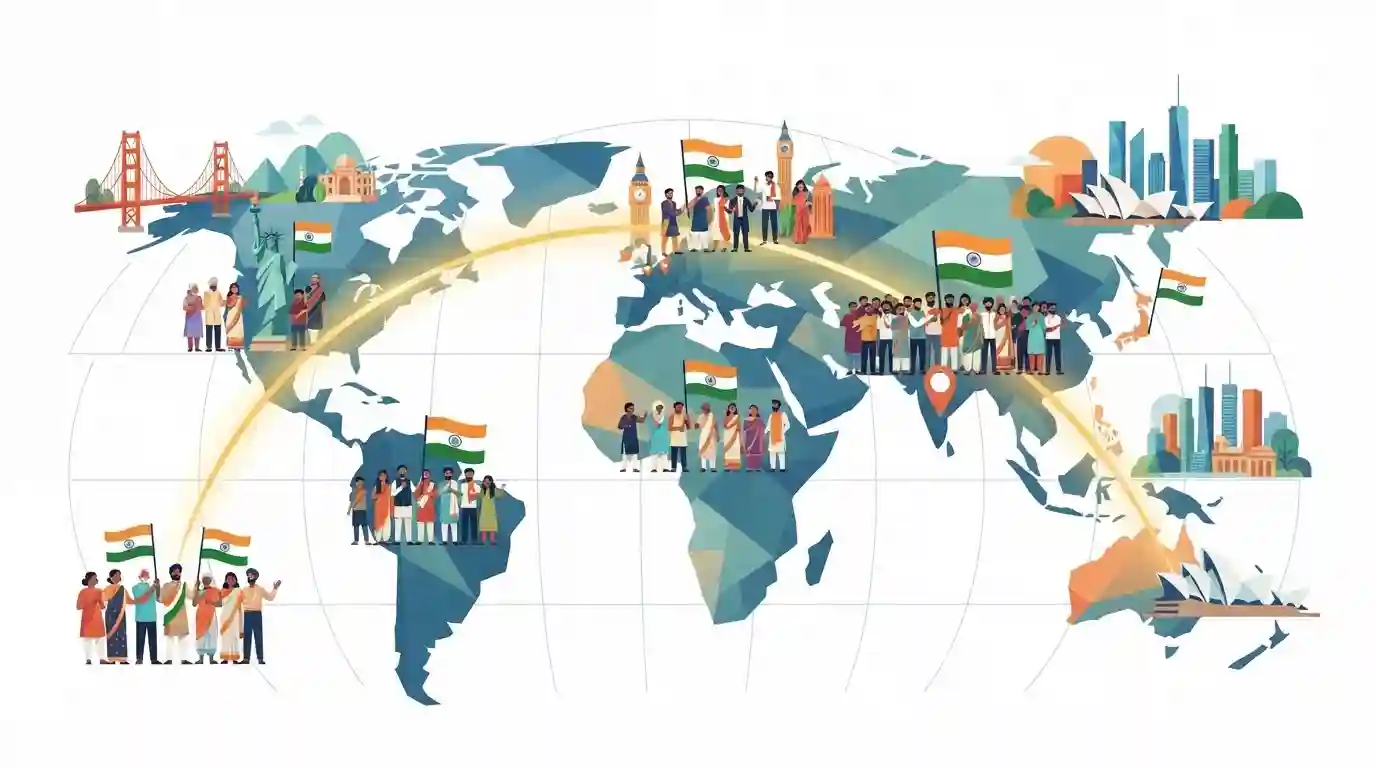
The Ministry of Culture successfully concluded the 'Suryapath Tiranga' initiative, a historic global relay of the Indian Tricolour. Moving synchronously with the path of the rising sun from east to west across continents, the flag relay symbolized India's global presence and cultural unity. It engaged Indian diaspora communities worldwide through Indian missions abroad, serving as a powerful exercise in cultural diplomacy and soft power. This event forms a crucial part of broader patriotic campaigns like Har Ghar Tiranga, instilling national pride while reinforcing the constitutional duty to respect the National Flag.
મુખ્ય મુદ્દા
- Suryapath Tiranga was a historic global relay where the Indian Tricolour was passed across continents from east to west, tracking the path of the rising sun.
- The initiative was spearheaded by the Ministry of Culture in collaboration with Indian missions abroad to actively engage the global Indian diaspora.
- It functioned as a major cultural diplomacy exercise, projecting India's soft power and the philosophy of Vasudhaiva Kutumbakam.
- The event amplifies the objectives of the Har Ghar Tiranga campaign, promoting patriotism and reminding citizens of their fundamental duty (Article 51A) to respect the National Flag.
મહત્વપૂર્ણ શબ્દો
Flag Code of India, 2002

A comprehensive set of guidelines and laws governing the display, hoisting, and respectful usage of the Indian National Flag by citizens, private organizations, and government institutions.
UPSC context
GS Paper II (Polity); tests understanding of constitutional duties, national symbols, and fundamental rights.
Har Ghar Tiranga
A national campaign launched under the Azadi Ka Amrit Mahotsav to encourage citizens to hoist the National Flag at their homes, fostering a personal connection with the Tricolour.
UPSC context
GS Paper II (Governance); tests understanding of government initiatives promoting civic participation and national integration.
Azadi Ka Amrit Mahotsav
An initiative by the Government of India to celebrate and commemorate 75 years of progressive India and the glorious history of its people, culture, and achievements.
UPSC context
GS Paper I (Modern Indian History); tests awareness of commemorative initiatives and milestones of independent India.
Indian Missions Abroad
Embassies, High Commissions, and Consulates representing India globally, playing a pivotal role in bilateral relations, cultural diplomacy, and engaging the Indian diaspora.
UPSC context
GS Paper II (International Relations); tests understanding of diplomatic infrastructure, soft power, and diaspora outreach.
Ministry of Culture
The nodal ministry of the Government of India responsible for the preservation, promotion, and dissemination of India's art, culture, heritage, and national campaigns.
UPSC context
GS Paper I (Indian Art and Culture); tests knowledge of administrative bodies managing national monuments and cultural heritage.
પ્રિલિમ્સ ટ્રેપ
Article 51A(a) of the Constitution mandates citizens to respect the National Flag, the National Anthem, and the National Song.
Article 51A(a) explicitly mandates respect only for the National Flag and the National Anthem. The National Song (Vande Mataram) is not mentioned in the Constitution.
સંલગ્ન સ્થિર ખ્યાલો
What is the historical evolution and significance of India's National Song, Vande Mataram?
- Origin and Context: Written by Bankim Chandra Chattopadhyay in 1875; featured in his 1882 novel Anandamath, set during the late-18th-century Sannyasi Rebellion.
- Political Milestones: First sung by Rabindranath Tagore at the 1896 INC session; later became the central rallying anthem of the 1905 Swadeshi Movement.
- Official Adoption: The Congress Working Committee adopted its first two verses in 1937. Declared equal to the National Anthem by Dr. Rajendra Prasad on January 24, 1950.
What are the constitutional and statutory provisions protecting India's National Symbols?
- Article 51A(a): Mandates respect specifically for the Constitution, its ideals, institutions, the National Flag, and the National Anthem, notably omitting the National Song.
- Flag Code of 2002: Governs the display and usage of the flag. Though historically non-statutory, parts of it are enforced via statutory acts like the 1971 Act.
- Prevention of Insults Act 1971: Provides strict legal penalties for desecrating, burning, or showing disrespect to the National Flag and National Anthem.
આંતર-વિષય પેટર્ન
Diaspora diplomacy and soft power projection
Using cultural relays through overseas missions leverages the massive Indian diaspora to enhance India's geopolitical soft power and foster global goodwill.
Anti-colonial resistance to civic duties
Translating anti-colonial symbols (like Vande Mataram and the flag) into state-led civic campaigns reflects a shift from revolutionary resistance to constitutional patriotism.

Constitutional distinction between National Anthem/Song paired with the Sannyasi Rebellion's history highly likely for Prelims.
સંલગ્ન PYQ · 4
સંલગ્ન PYQ · 4
- 2023PrelimsGS1
Consider the following statements in respect of the National Flag of India according to the Flag Code of India, 2002: Statement-I: One of the standard sizes of the National Flag of India is 600 mm x 400 mm. Statement-II: The ratio of the length to the height (width) of the Flag shall be 3:2. Which one of the following is correct in respect of the above statements?
- 2021PrelimsGS1
With reference to Madanapalle of Andhra Pradesh, which one of the following statements is correct?
- 2023MainsGS2
Indian diaspora has scaled new heights in the West. Describe its economic and political benefits for India.
- 2020MainsGS2
Indian diaspora has a decisive role to play in the politics and economy of America and European Countries'. Comment with examples.
