Physical inactivity drives heart failure in Indian diabetics study
Source:The Hindu ↗
Why It Matters
It draws attention to the massive burden of non-communicable diseases (like diabetes and cardiovascular diseases) in India and emphasizes the need to pivot from curative to preventive healthcare. Furthermore, it highlights the intersection of health with social determinants like gender and education, which is crucial for framing inclusive public policies.
Summary
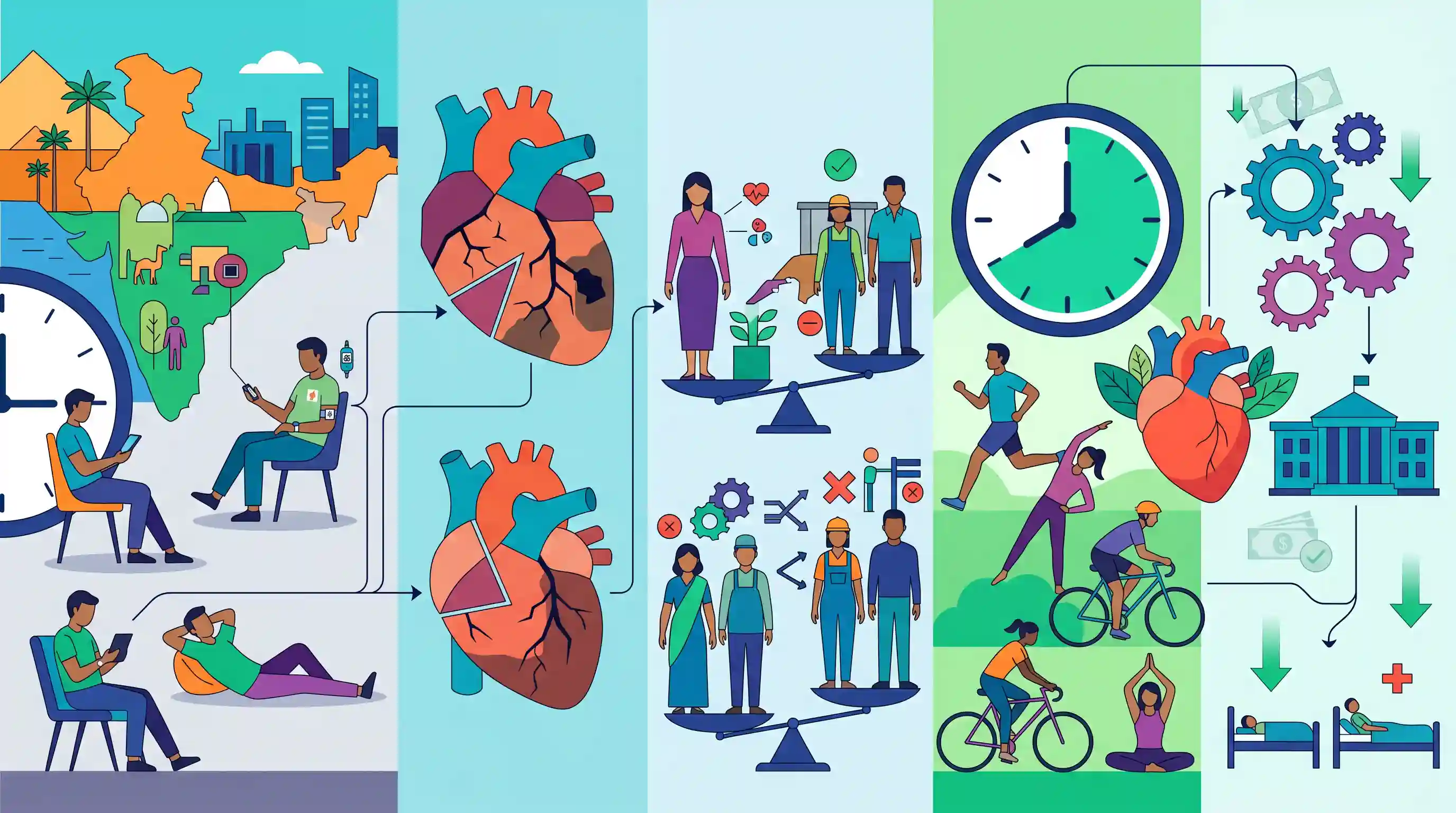
A recent global study underscores the profound impact of physical inactivity on cardiovascular complications among diabetics in India. With India home to over a quarter of the world's diabetic population, a lack of exercise is linked to 13% of heart failure cases and nearly 10% of coronary heart disease cases in this group. The research reveals significant social inequities, noting that women and individuals with lower educational backgrounds suffer disproportionately from these preventable complications. By reframing the WHO's recommendation of 150 minutes of weekly physical activity as an essential preventive measure, the study advocates for its integration into national non-communicable disease (NCD) strategies to alleviate hospitalisations and the growing financial strain on the healthcare system.
Key Points
- Physical inactivity is responsible for 13% of heart failure cases and nearly 10% of coronary heart disease cases among diabetics in India.
- India houses over 25% of the global diabetic population, making the management of non-communicable diseases a critical public health challenge.
- Globally, 1 in 10 cases of macrovascular complications and retinopathy in people with diabetes is attributed to a lack of physical activity.
- The World Health Organization (WHO) recommends at least 150 minutes of moderate-to-vigorous physical activity per week to mitigate these risks.
- Social inequities are prominent, with women and individuals with lower education levels experiencing a higher proportion of inactivity-attributable complications.
- Promoting physical activity as a core component of routine diabetes care can significantly reduce hospitalisations, disability, and the economic burden on strained healthcare systems.
Important Terms
Non-Communicable Diseases (NCDs)

Chronic, non-infectious conditions like diabetes and heart disease, typically of long duration. They result from genetic and lifestyle factors, currently causing roughly 66% of deaths in India.
UPSC context
GS II (Health/Social Justice); tests understanding of India’s changing disease profile and its impact on the demographic dividend.
World Health Organization (WHO)
A specialized UN agency responsible for international public health, setting global standards such as the 150-minute weekly moderate-to-vigorous physical activity recommendation for adults.
UPSC context
GS II (International Institutions); evaluates awareness of global health governance and India's alignment with international health standards.
Preventive Healthcare
Healthcare focusing on preventing diseases—through lifestyle changes, screening, and vaccinations—rather than treating them, aiming to reduce long-term morbidity and out-of-pocket healthcare expenditure.
UPSC context
GS II (Government Policies/Health); analyzes the shift from reactive curative care to proactive health promotion in India’s National Health Policy.
Health Inequity
Avoidable and unjust differences in health outcomes between population groups—often based on gender, education, or wealth—that prevent equitable access to healthcare.
UPSC context
GS I (Social Issues) and GS II (Social Justice); essential for discussing "inclusive growth" and social determinants of health.
NP-NCD
A flagship Indian government program under the National Health Mission aiming for early diagnosis and management of chronic conditions through primary health infrastructure.
UPSC context
GS II (Governance/Social Sector); tests knowledge of institutional mechanisms and government interventions to manage the NCD epidemic.
Cardiovascular Diseases (CVDs)
A group of heart and blood vessel disorders, including heart failure; physical inactivity is linked to 9.4% of such complications in Indian diabetics.
UPSC context
GS III (Science & Technology/Health); focuses on the medical impact of lifestyle risk factors and the specific disease burden in India.
Coronary Heart Disease (CHD)
A condition where restricted blood flow to the heart occurs due to narrowed arteries; nearly 10% of cases among Indian diabetics are caused by inactivity.
UPSC context
GS III (Health/Science); tests understanding of specific non-communicable complications and their association with the rising diabetic population.
Prelims Trap
"India's mortality rate is still predominantly driven by communicable and infectious diseases."
Aspirants often underestimate the epidemiological transition. Non-communicable diseases (NCDs) actually account for over 60% of all deaths in India, far surpassing communicable diseases.
Static Concepts Connected
What is India's National Programme for Prevention and Control of NCDs (NP-NCD)?
- Core Focus: Aims to prevent and control major NCDs, specifically Cancer, Diabetes, Cardiovascular Diseases, and Stroke (formerly known as NPCDCS).
- 75/25 Initiative: A Union Health Ministry target to screen and put 75 million people with hypertension or diabetes on standard care by the year 2025.
- Modifiable Factors: Primary interventions target massive lifestyle modifications, specifically addressing physical inactivity, unhealthy diets, tobacco use, and harmful alcohol use.
What defines India's Epidemiological Transition?
- Disease Shift: The shift in the primary burden of disease and mortality from communicable, maternal, and neonatal conditions to non-communicable diseases (NCDs).
- Key Drivers: Fueled by rapid urbanization, sedentary lifestyles, dietary shifts, globalization, and increased life expectancy across the population.
Cross-Topic Patterns
Gendered burden of NCDs
Restricted spatial mobility, safety concerns, and lack of leisure time for women directly translate into higher physical inactivity and disproportionate diabetic complications, linking GS1 gender issues with GS2 health.
Urban planning and Public health
Unplanned urbanization lacks non-motorized transport infrastructure and public green spaces, explicitly linking GS1 urban geography with GS2 public health crises like rising diabetes.

Expect a multi-statement Prelims question linking NP-NCD targets (75/25 initiative) with India's epidemiological transition towards NCDs.
Linked PYQs · 3
Linked PYQs · 3
- 2020MainsGS2
In order to enhance the prospects of social development, sound and adequate health care policies are needed particularly in the fields of geriatric and maternal health care. Discuss.
- 2021MainsGS2
“Besides being a moral imperative of a Welfare State, primary health structure is a necessary precondition for sustainable development.” Analyze.
- 2024MainsGS2
In a crucial domain like the public healthcare system the Indian State should play a vital role to contain the adverse impact of marketisation of the system. Suggest some measures through which the State can enhance the reach of public healthcare at the grassroots level.
