Parliamentary Panel Flags Punitive Tax Regime and Compliance Burden
Source:The Hindu ↗
આ શા માટે મહત્વનું છે
This development highlights the continuous tension between tax enforcement and taxpayer facilitation, offering rich content for answers on tax reforms, compliance simplification, and the vital oversight role of parliamentary committees in India's democracy.
સારાંશ
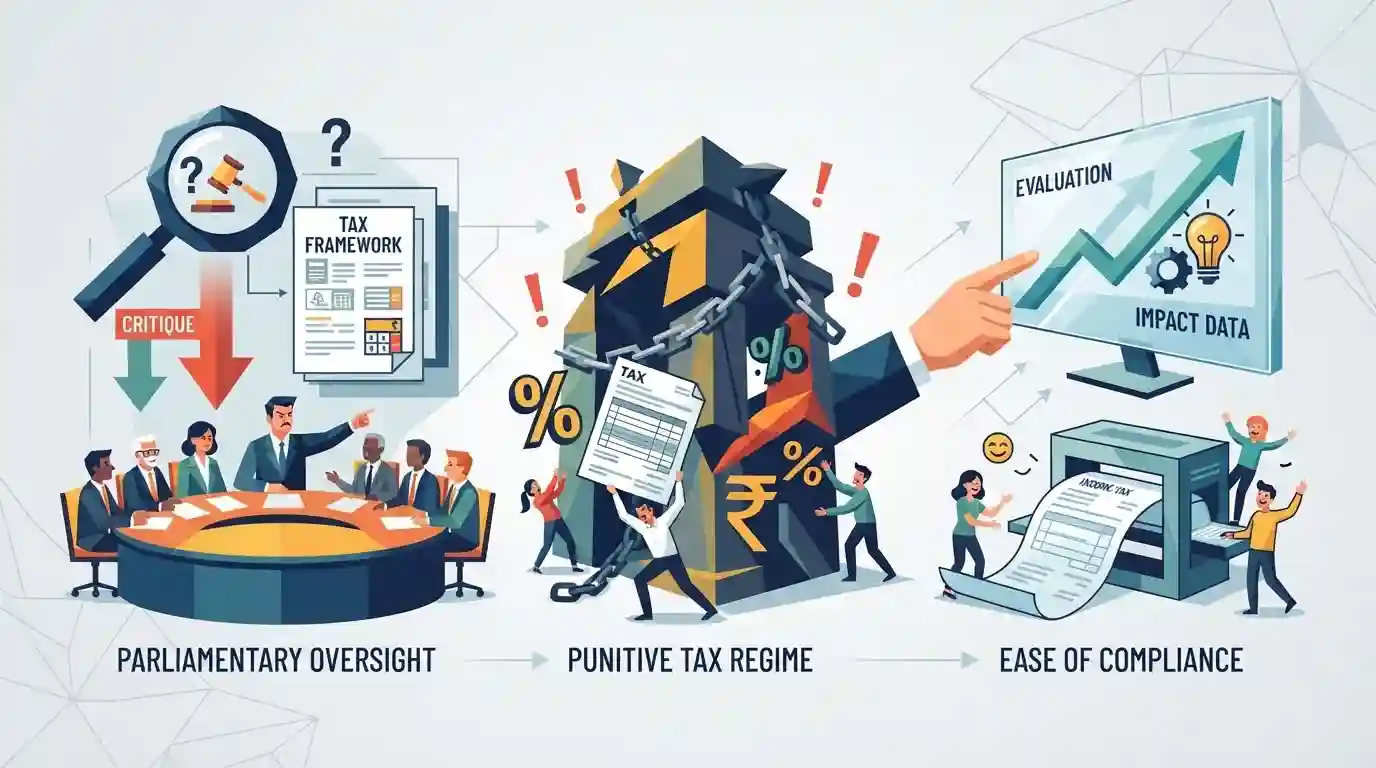
A parliamentary panel has critiqued aspects of India's tax framework, labeling elements of the tax regime as punitive, and demanded concrete data to evaluate the actual impact of the new Income Tax Act on ease of compliance and tax administration.
મુખ્ય મુદ્દા
- A parliamentary panel has flagged India's tax regime as 'punitive', expressing concerns over high compliance burdens and enforcement measures.
- The panel has sought empirical data and studies on the impact of the new Income Tax Act on compliance, tax collection, and taxpayer behavior.
- Discussions highlighted the need to reduce tax litigation, simplify tax structures, and build trust between taxpayers and tax administrators.
- Stresses the ongoing legislative and parliamentary oversight regarding economic reforms and taxpayer facilitation.
મહત્વપૂર્ણ શબ્દો
Income Tax Act

A statutory framework governing direct taxation of income in India, overhauled to streamline compliance, reduce litigation, and replace legacy legislation.
UPSC context
UPSC Paper III (Indian Economy - Resource Mobilization & Taxation). Tests understanding of tax reforms and compliance architecture.
Parliamentary Panel
A designated panel of members of Parliament constituted to scrutinize legislative proposals, policies, and executive actions, such as direct tax administration and reforms.
UPSC context
UPSC Paper II (Polity - Parliamentary Committees). Important for studying legislative oversight, accountability, and financial scrutiny.
Income Tax Department
The apex statutory body under the Ministry of Finance responsible for administering direct taxes and formulating policies related to personal and corporate income tax in India.
UPSC context
UPSC Paper III (Economy - Tax Administration & Revenue Mobilization). Evaluates the machinery of tax collection and administration.
સંલગ્ન સ્થિર ખ્યાલો
What are the constitutional provisions and mechanisms for parliamentary financial control over the executive in India?
- Constitutional Bar: Article 265 mandates that no tax shall be levied or collected except by authority of law, ensuring parliamentary supremacy in taxation.
- Standing Committees: Department-related Standing Committees (DRSCs) scrutinize demands for grants, bills, and policies of ministries, ensuring continuous legislative oversight.
- PAC Scrutiny: The Public Accounts Committee (PAC) examines the Comptroller and Auditor General (CAG) reports on the execution of revenue and expenditure accounts.
આંતર-વિષય પેટર્ન
Tax Administration vs. Ease of Doing Business
The friction between aggressive revenue mobilization and ease of doing business directly impacts India's manufacturing competitiveness and foreign direct investment inflows under Atmanirbhar Bharat.
Legislative Oversight and Financial Accountability
Parliamentary scrutiny of economic legislation exemplifies the checks and balances inherent in fiscal federalism and financial accountability over the executive branch.

Parliamentary committees + tax administration reforms (litigation reduction, compliance burden) frequently appear in Mains GS-2 and GS-3.
સંલગ્ન PYQ · 1
સંલગ્ન PYQ · 1
- 2021MainsGS2
Do Department-related Parliamentary Standing Committees keep the administration on its toes and inspire reverence for parliamentary control? Evaluate the working of such committees with suitable examples.
