United States Tariffs Threaten Vulnerable Pakistani Economy
Source:Indian Express ↗
Why It Matters
Provides a stark contemporary example of how rising protectionism and unilateral trade barriers by major powers can immediately destabilize vulnerable developing economies, relevant for questions on global trade shifts and India's neighbourhood.
Summary
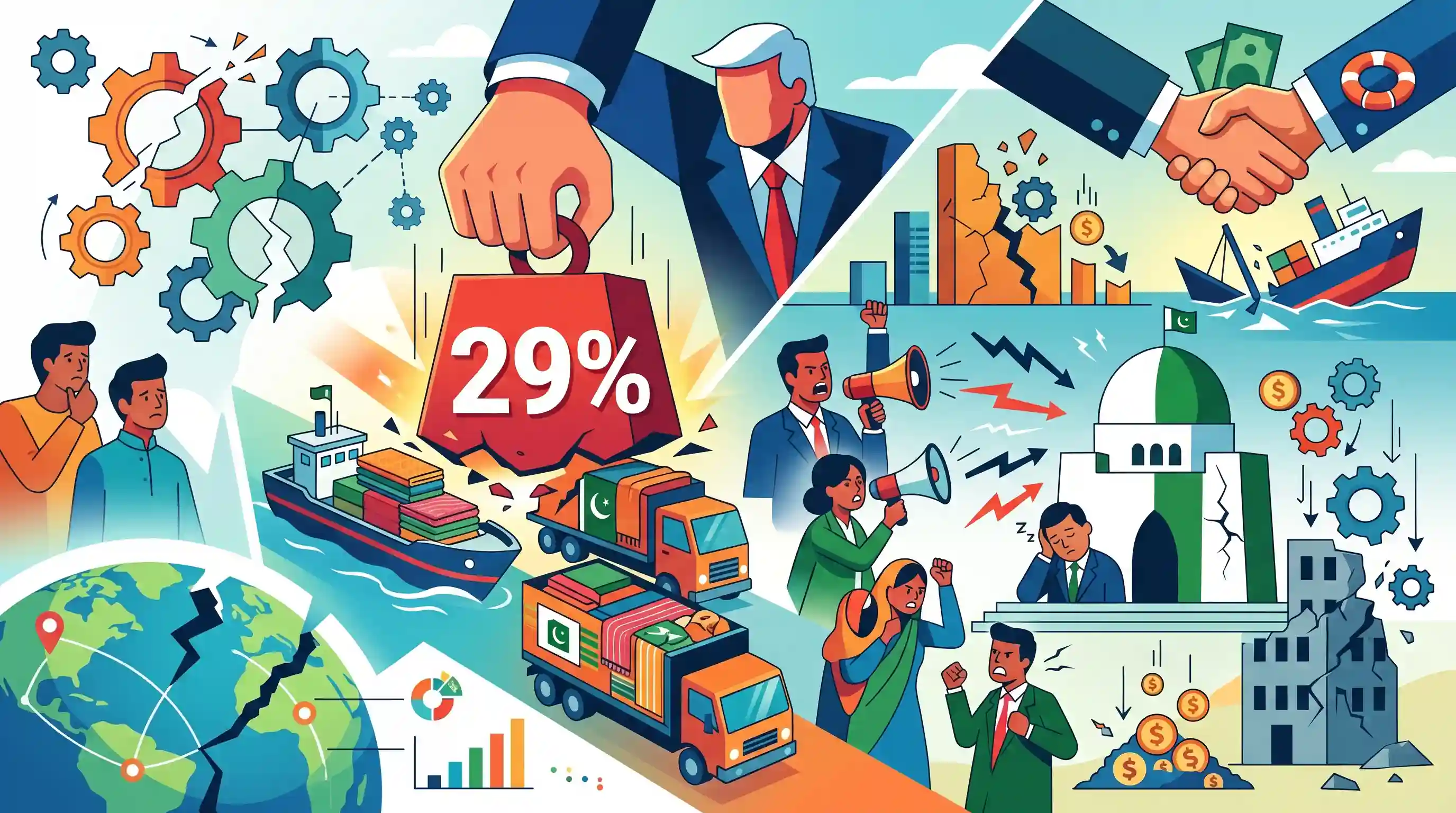
The US administration under Donald Trump has imposed a sharp 29% tariff on Pakistani exports, prompting severe backlash from Pakistan's domestic media against its government's complacency. The media is urging the government to "wake up" and address the sudden economic blow. This tariff hike comes at a highly precarious time for Pakistan's economy, which is already struggling with structural distress, shrinking foreign reserves, and heavy reliance on IMF bailouts. From a broader perspective, this incident underscores the escalating trend of US protectionism and the severe risks it poses to emerging and export-reliant economies, highlighting the ongoing global shift away from multilateral free trade.
Key Points
- The US administration under Donald Trump has unilaterally imposed a steep 29% tariff on exports from Pakistan.
- Pakistan's media has heavily criticized the government's lack of preparedness, urging immediate diplomatic and economic interventions to mitigate the shock.
- The tariff hike strikes at a vulnerable time for Pakistan, which is already grappling with severe debt, inflation, and reliance on IMF bailouts, heavily threatening its foreign exchange earnings.
- This development reflects the broader trend of rising global protectionism and trade wars, illustrating the severe vulnerability of developing economies to sudden trade barriers.
Important Terms
Protectionism

Economic policy of restricting imports through tariffs, quotas, or subsidies to shield domestic industries from foreign competition and support local employment.
UPSC context
GS Paper III (Economy); relevant for discussing global trade barriers and their impact on India’s export-led growth.
Geoeconomics
The strategic use of economic instruments (like trade policy or investment) to advance a nation's interest and produce beneficial geopolitical results.
UPSC context
GS Paper II (International Relations); crucial for analyzing how economic leverage shapes diplomacy and regional power dynamics.
IMF Bailout
Emergency financial assistance provided by the International Monetary Fund to member countries facing severe balance of payments or currency crises, usually with structural reform conditions.
UPSC context
GS Paper III (External Sector); important for understanding the global financial architecture and economic stability of neighboring countries.
Multilateralism
The principle of cooperation among several countries in a common action, particularly through international organizations like the WTO to manage global trade.
UPSC context
GS Paper II (International Institutions); relevant for discussions on the decline of the rules-based global trade order.
Trade War
An economic conflict where countries retaliate against each other by raising import duties or placing other restrictions on each other's trade.
UPSC context
GS Paper III (International Trade); tests understanding of the volatility of global markets and retaliatory economic diplomacy.
Tariff
A tax or duty imposed by a government on imported goods, making foreign products more expensive to encourage the consumption of domestic alternatives.
UPSC context
GS Paper III (Indian Economy); a fundamental concept for understanding fiscal policy and international trade regulation.
Prelims Trap
"WTO member nations cannot impose retaliatory tariffs without prior authorization from the WTO's Dispute Settlement Body."
Aspirants assume WTO strictly prevents unilateral actions. However, nations frequently use domestic laws (like US Section 301) to unilaterally bypass WTO rules, driving global trade fragmentation.
Static Concepts Connected
What is the IMF's Extended Fund Facility (EFF) and how does it work?
- Core Purpose: Provides financial aid to countries facing serious medium-term balance of payments issues resulting from deep structural economic weaknesses.
- Strict Conditionality: Requires recipient nations to implement comprehensive economic reforms, such as fiscal consolidation, subsidy cuts, and privatization.
- Extended Repayment: Offers longer engagement and repayment periods (typically 4.5 to 10 years) compared to traditional short-term Stand-By Arrangements (SBA).
What are the primary WTO-approved trade remedy measures?
- Anti-Dumping Duty: Imposed when a country exports a product at a price significantly lower than its normal domestic value, thereby materially harming local industry.
- Countervailing Duty: Tariffs specifically levied to neutralize the negative market effects of direct financial subsidies granted by the exporting country's government.
- Safeguard Measures: Temporary, emergency import restrictions used to protect a specific domestic industry from a sudden, unforeseen surge in imported goods.
Cross-Topic Patterns
Protectionism fueling Global South debt
Unilateral tariff shocks severely reduce the dollar-earning capacity of export-reliant developing nations, exacerbating their Current Account Deficits and pushing them toward sovereign default or IMF bailouts.
Bypassing WTO's multilateral framework
The use of domestic tools like US Section 301 bypasses the WTO's dispute settlement mechanism, reflecting a broader shift from rules-based multilateralism toward transactional geoeconomics and trade wars.

Expect a Prelims statement comparing IMF's EFF vs SBA, or a Mains Q on how Global North protectionism triggers Global South debt crises.
Linked PYQs · 3
Linked PYQs · 3
- 2018MainsGS3
How would the recent phenomena of protectionism and currency manipulations in world trade affect macroeconomic stability of India?
- 2025MainsGS3
What are the challenges before the Indian economy when the world is moving away from free trade and multilateralism to protectionism and bilateralism? How can these challenges be met?
- 2018MainsGS2
What are the key areas of reform if the WTO has to survive in the present context of "Trade War', especially keeping in mind the interest of India?
