Pahalgam attack aims to disrupt Jammu and Kashmir economic revival
Source:Indian Express ↗
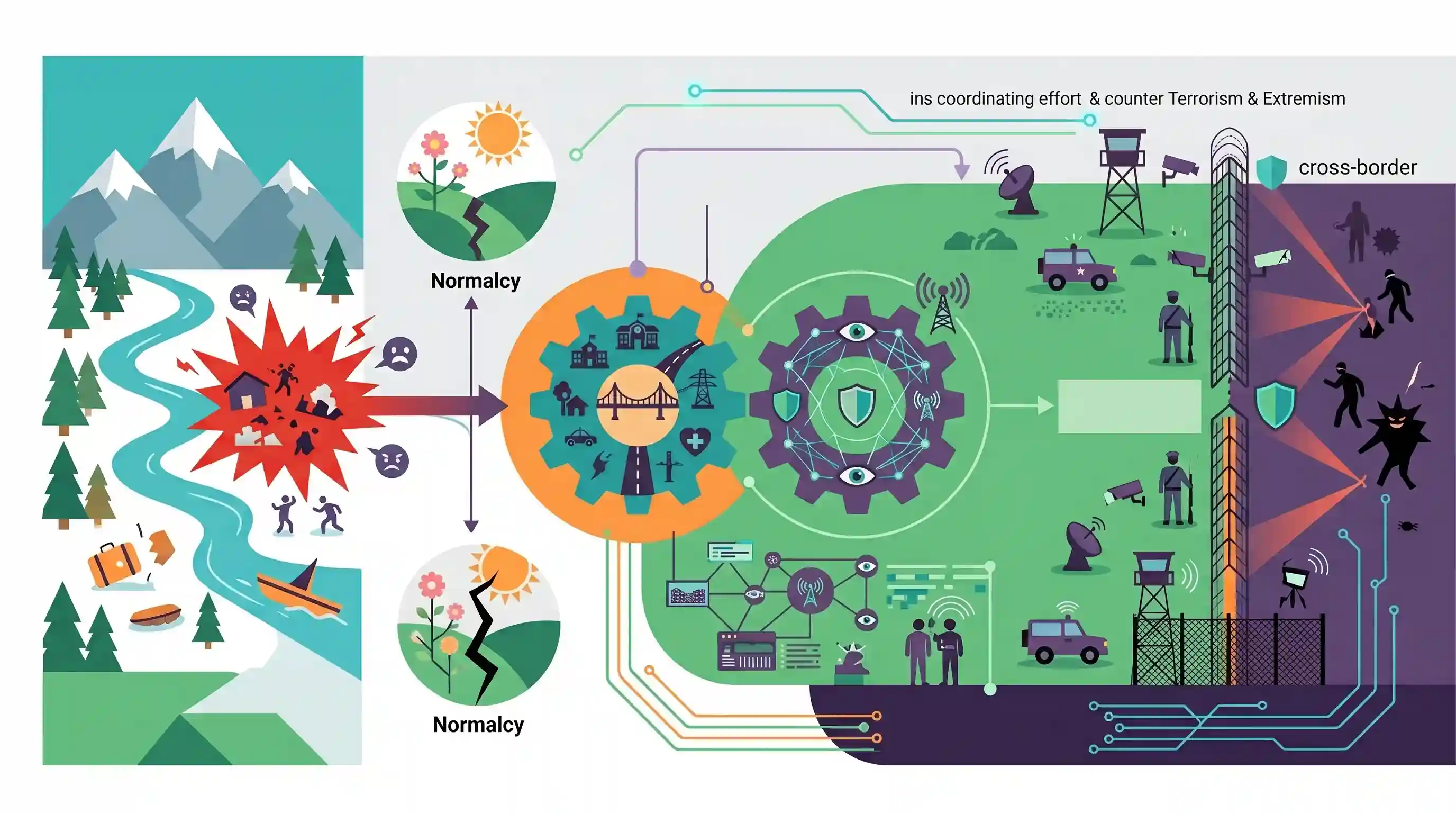
Why It Matters
Understanding the shifting tactics of terrorism in Jammu and Kashmir, specifically the targeting of economic assets like tourism to disrupt normalcy, is crucial for GS-3 Internal Security. It illustrates the complexities of hybrid warfare and the challenges in sustaining peace in conflict-prone zones.
Summary
The article analyses the strategic intent behind the recent terrorist attack in Pahalgam, framing it as a deliberate effort to undermine the growing normalcy and economic revival in Jammu and Kashmir. By striking a prominent tourist destination, the attackers aim to spread fear, damage the local economy, and challenge the government's assertions of peace and stability. The piece emphasizes that maintaining public confidence requires sustained vigilance, robust intelligence networks, and continued developmental integration to counter the shifting tactics of cross-border terrorism.
Key Points
- The terrorist attack in Pahalgam aims to disrupt the return of normalcy and the resurgence of tourism in Jammu and Kashmir.
- By targeting a major tourist hub, terror groups seek to instill fear among locals and tourists, directly threatening the region's economic lifeline.
- Such attacks challenge the state's narrative of restored peace and attempt to shake public confidence in the security apparatus.
- Countering these incidents requires not just kinetic military operations but also strengthening the intelligence grid and sustaining 'winning hearts and minds' initiatives to prevent alienation.
Important Terms
Cross-border Terrorism

Acts of violence planned or supported by one country to be executed in another, typically involving non-state actors or proxies to destabilize a nation.
UPSC context
GS III (Internal Security). Tests understanding of external state-sponsored threats and border management challenges.
Development-Security Nexus
A strategic concept holding that security is a prerequisite for development, while socio-economic development addresses the root causes of extremism and insurgency.
UPSC context
GS III (Linkages between development and spread of extremism). Crucial for analyzing J&K's post-2019 stability.
Hybrid Terrorism
A term for unlisted, seemingly normal individuals who carry out small-scale terror acts and return to their daily lives, making them hard for security forces to track.
UPSC context
GS III (Internal Security). Tests knowledge of evolving militant tactics and "faceless" terrorism in Kashmir.
Soft Targets
Non-military, vulnerable locations such as tourist hubs, markets, or schools chosen by terrorists to cause maximum civilian impact, fear, and economic disruption.
UPSC context
GS III (Internal Security). Relevant for discussing challenges in protecting civilian spaces from low-intensity attacks.
The Resistance Front (TRF)
An offshoot of Pakistan-based Lashkar-e-Taiba (LeT) that emerged after 2019, using secular branding to mask communal agendas and targeting minorities or non-locals.
UPSC context
GS III (Security forces and agencies). Tests recognition of contemporary terror outfits and their shift in strategy.
National Investigation Agency (NIA)
India's premier federal counter-terrorism agency, empowered to investigate and prosecute offenses affecting the sovereignty, security, and integrity of India.
UPSC context
GS III (Various Security forces and agencies). Essential for understanding India's counter-terror legal framework.
Prelims Trap
The Multi-Agency Centre (MAC) is a statutory investigative body operating under the National Investigation Agency (NIA).
MAC is not a statutory investigative body. It is solely an intelligence-sharing and fusion node operating under the Intelligence Bureau (IB), created post-Kargil War.
Static Concepts Connected
What is the Multi-Agency Centre (MAC) in India's intelligence architecture?
- Origin: Created post-Kargil War (2001) to streamline counter-terrorism intelligence sharing across various agencies.
- Nodal Agency: Operates under the Intelligence Bureau (IB), not as an independent investigative agency.
- Function: Fuses inputs from defense, police, financial intelligence units, and central agencies, operating 24/7.
What is the WHAM strategy in counter-insurgency?
- Core philosophy: Stands for 'Winning Hearts and Minds', aiming to integrate alienated populations through civic engagement.
- Civic action: Involves programs like the Indian Army's Operation Sadbhavana (education, health, infrastructure) in J&K and Ladakh.
- Strategic nexus: It complements kinetic military operations by addressing the socio-economic root causes of extremism and radicalization.
Cross-Topic Patterns
Terrorism & Regional Economy (GS3)
Terror groups targeting tourist hubs like Pahalgam deliberately weaponize economic stagnation. This links GS3 Internal Security with GS3 Development, as localized unemployment acts as a catalyst for radicalization.
Smart Border Management & Tech
Physical LoC fencing is increasingly insufficient against modern infiltration. The shift requires integrating Comprehensive Integrated Border Management Systems (CIBMS) and AI-driven intelligence grids for dynamic area domination.

GS3 Mains 2026 will likely test the 'soft target' terror shift in J&K, demanding a focus on the Development-Security Nexus and MAC's role.
Linked PYQs · 2
Linked PYQs · 2
- 2023MainsGS3
Winning of 'Hearts and Minds' in terrorism-affected areas is an essential step in restoring the trust of the population. Discuss the measures adopted by the Government in this respect as part of the conflict resolution in Jammu and Kashmir.
- 2021MainsGS3
Analyse the complexity and intensity of terrorism, its causes, linkages and obnoxious nexus. Also suggest measures required to be taken to eradicate the menace of terrorism.
