US Reciprocal Tariffs and Implications for Global Multilateral Trade
Source:Indian Express ↗
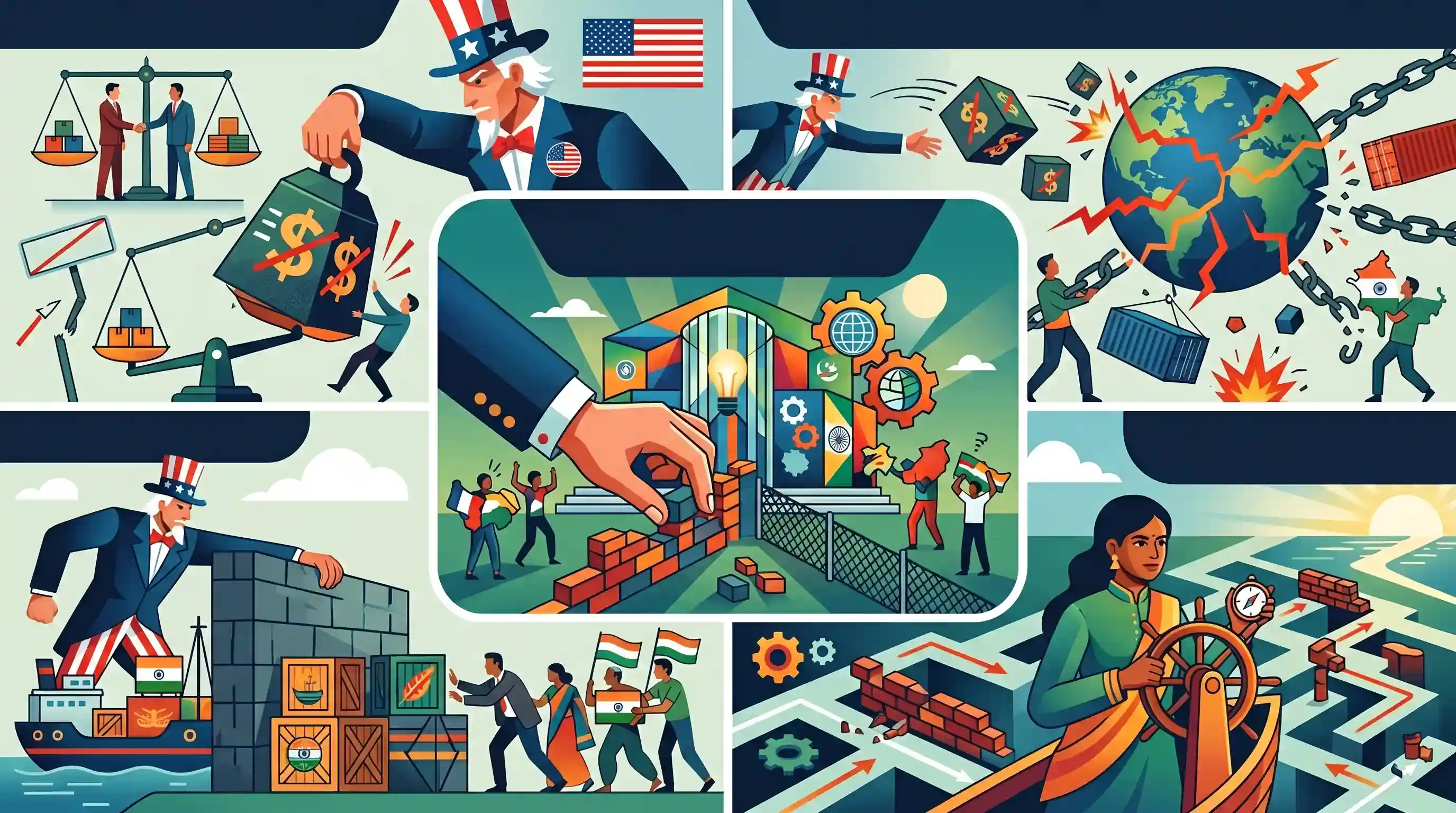
Why It Matters
Understanding the shift from globalization and multilateralism toward protectionism is crucial for the UPSC exam. It directly relates to GS3 topics on the Indian economy, exports, and macroeconomic stability, as well as GS2 topics concerning international institutions like the WTO and bilateral relations with the US.
Summary
In this opinion piece, P. Chidambaram critiques the recent United States trade policy approach centered on 'reciprocal' tariffs, characterizing it as American 'audacity' rather than genuine reciprocity. The article highlights how unilateral tariff impositions and protectionist measures by the US undermine the multilateral trading system established under the WTO. By targeting trading partners like India under the guise of reciprocity, the US is engaging in aggressive trade practices that could spark trade wars, disrupt global supply chains, and negatively impact emerging economies. The author emphasizes the need for India to navigate these protectionist challenges strategically and continue advocating for a rules-based international trading order.
Key Points
- Critique of the US administration's aggressive implementation of 'reciprocal tariffs' as a unilateral trade tool rather than a genuine economic exchange.
- Characterization of these US trade policies as 'audacity,' highlighting their potential to undermine established bilateral and multilateral trade negotiations.
- The implications of the US shifting away from free trade towards systemic protectionism, threatening global macroeconomic stability.
- Concerns over the weakening of the World Trade Organization (WTO) and the rules-based global trading system due to unilateral trade wars.
- The direct impact of such protectionist measures on India's exports and the necessity for India to strategically navigate this shifting global trade paradigm.
Important Terms
Reciprocity (in Trade)

A principle where nations exchange equivalent trade concessions. Chidambaram critiques its 'weaponisation' by the US to unilaterally demand market access while imposing high 'reciprocal' tariffs on partners like India.
UPSC context
GS Paper 3 (Economy); tests understanding of trade barriers, bilateral vs. multilateral negotiations, and impact on Indian exports.
World Trade Organization (WTO)
The only global international organization dealing with the rules of trade between nations. It facilitates negotiations, settles disputes, and promotes non-discriminatory trade through principles like the Most Favoured Nation (MFN) rule.
UPSC context
GS Paper 2 (International Institutions); crucial for topics on global trade governance and institutional reforms.
Most Favoured Nation (MFN) Principle
A core WTO principle requiring members to treat all trading partners equally. Granting one member a trade favor requires extending it to all, preventing discriminatory trade practices.
UPSC context
GS Paper 3 (Economy); relevant for analyzing the legality of unilateral tariffs and trade wars under international law.
Protectionism
Economic policy of restricting imports through tariffs, quotas, or regulations to shield domestic industries from foreign competition. Chidambaram views the US approach as aggressive protectionism disguised as reciprocity.
UPSC context
GS Paper 3 (Economic Development); key to debates on 'Deglobalization' and its impact on India's growth strategy.
Multilateralism
The process of organizing international relations through collective agreements and institutions (like the WTO) rather than unilateral or purely bilateral actions, ensuring a stable, rules-based global system.
UPSC context
GS Paper 2 (International Relations); tests awareness of the crisis in global governance and India's role in the Global South.
Rules-based International Order
A framework of treaties, norms, and institutions (UN, WTO) designed to ensure that global relations are governed by law and shared principles rather than raw power or unilateralism.
UPSC context
GS Paper 2 (IR); a frequent theme in India's foreign policy and its response to global trade disruptions.
Prelims Trap
Reciprocal tariffs are a standard, permitted trade remedy under the WTO's Most-Favoured-Nation principle.
The MFN principle requires non-discrimination among all WTO members. Unilateral 'reciprocal tariffs' inherently violate MFN by selectively targeting countries based on bilateral trade balances.
Static Concepts Connected
What are the two foundational non-discrimination principles of the WTO?
- Most-Favoured-Nation (MFN): Concessions granted to one member must be granted to all WTO members. Eliminates bilateral favoritism.
- National Treatment: Foreign goods, once they have entered the domestic market, must be treated equally to locally produced goods.
- Legal Exceptions: FTAs, Customs Unions, and Generalized System of Preferences (GSP) for developing nations are valid exemptions.
What trade remedy measures are legally permissible under WTO rules?
- Anti-Dumping Duties: Levied when imported goods are priced below their normal market value in the exporting country.
- Countervailing Duties: Measures designed to neutralize the negative effects of specific subsidies provided by the exporting country's government.
- Safeguard Duties: Temporary import restrictions to protect a specific domestic industry from a sudden, unforeseen surge in imports.
Cross-Topic Patterns
Trade Wars & PLI Synergy
Rising US protectionism accelerates India's need to shift toward integrated domestic manufacturing via PLIs, actively safeguarding vulnerable supply chains from sudden, unilateral external tariff shocks.
Protectionism & CAD Spillover
Unilateral US tariffs inflate imported intermediate costs and depress export earnings, which simultaneously exerts structural pressure on India's Current Account Deficit (CAD) and exchange rate.

Expect a 2026 Prelims question testing WTO's MFN principle exceptions against unilateral 'reciprocal' tariffs and their CAD impact.
Linked PYQs · 3
Linked PYQs · 3
- 2025MainsGS3
What are the challenges before the Indian economy when the world is moving away from free trade and multilateralism to protectionism and bilateralism? How can these challenges be met?
- 2018MainsGS3
How would the recent phenomena of protectionism and currency manipulations in world trade affect macroeconomic stability of India?
- 2018MainsGS2
What are the key areas of reform if the WTO has to survive in the present context of "Trade War', especially keeping in mind the interest of India?
