Impact of US Protectionist Policies on Global Trade and India
Source:Indian Express ↗
Why It Matters
Understanding the political shifts in the United States—the world's largest economy and a major strategic partner—is crucial for UPSC aspirants. The article highlights key themes such as protectionism, the retreat of multilateralism, and the 'America First' policy, which directly tie into the GS2 syllabus on global politics and the GS3 syllabus on macroeconomic stability and trade.
Summary
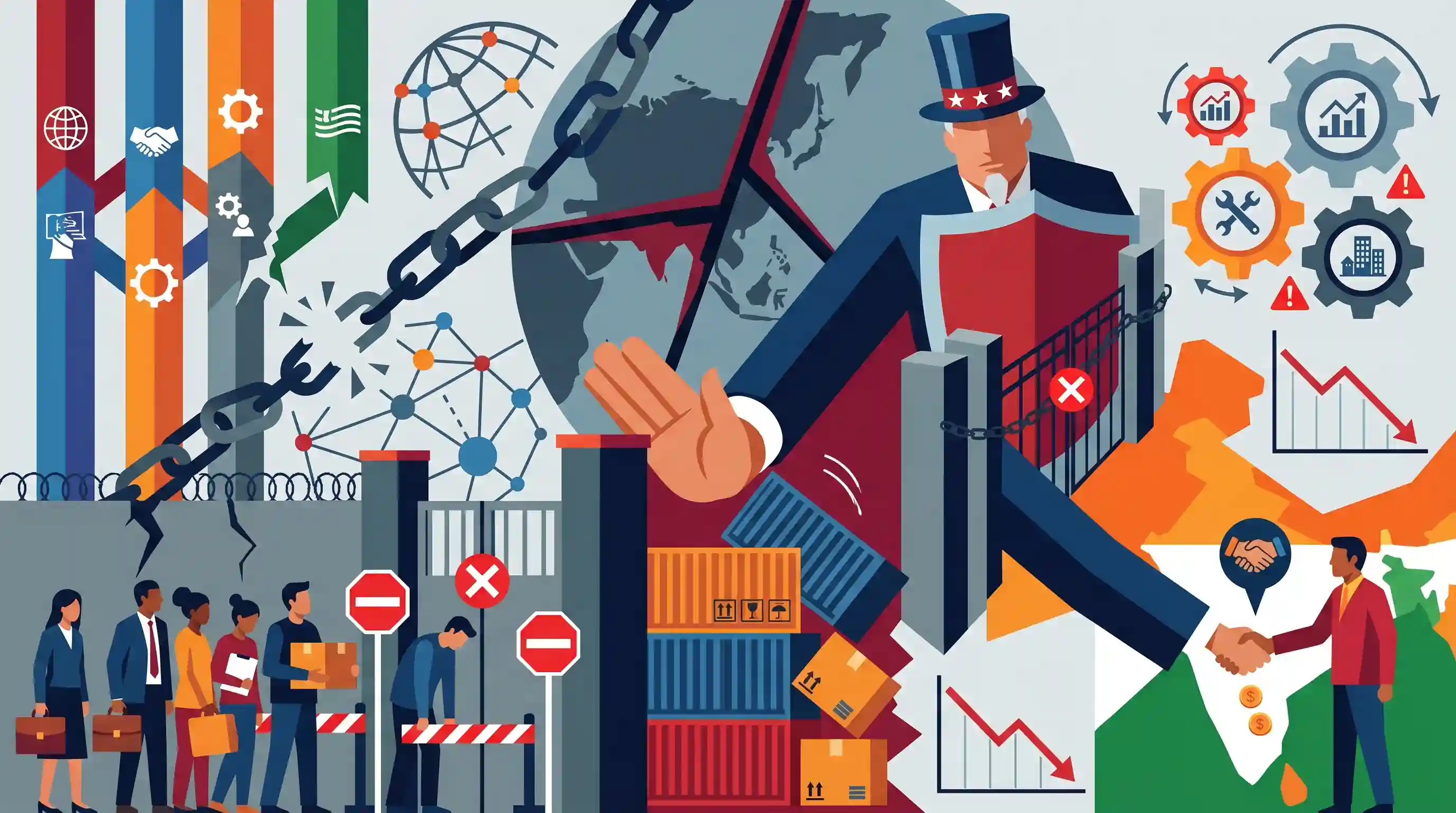
In this column, P. Chidambaram discusses the political resurgence and distinct brand of Donald Trump, exploring the implications of his 'America First' ideology. The article analyzes how a US administration heavily focused on aggressive trade protectionism, restrictive immigration policies, and skepticism of multilateralism alters the global world order. It underscores the challenges this presents for countries like India, specifically concerning the impact of trade barriers on exports, the Indian diaspora's prospects, and the shift from globalization towards transactional bilateralism.
Key Points
- Evaluates the unique political phenomenon of Donald Trump, highlighting his resilient voter base and sustained dominance in US politics.
- Analyzes the 'America First' agenda, noting its emphasis on domestic economic protectionism, aggressive tariffs, and skepticism toward multilateral agreements.
- Discusses the broader global trend of retreating from free trade and globalization, heavily influenced by US policy shifts towards transactional bilateralism.
- Highlights potential implications for India, including risks to export sectors like software and manufacturing due to tariff walls and tighter immigration/visa policies for the Indian diaspora.
- Raises concerns about the unpredictability in international relations and the weakening of global institutions under protectionist leadership.
Important Terms
America First

A foreign policy stance prioritizing United States national interests through unilateralism, trade protectionism, and skepticism of multilateral agreements to safeguard domestic industries and sovereignty.
UPSC context
GS Paper-II: Impact of policies of developed countries on India's interests and global world order.
H-1B visa program
A U.S. non-immigrant visa allowing employers to hire foreign workers in specialty occupations requiring technical expertise; Indians consistently receive over 70% of these annual approvals.
UPSC context
GS Paper-II: Important for Indian Diaspora and the effect of foreign immigration laws on Indian labor.
World Trade Organization (WTO)
The global intergovernmental organization regulating international trade rules. It faces challenges from unilateral trade barriers and the paralysis of its dispute settlement mechanism.
UPSC context
GS Paper-II & III: Significant international institutions and issues related to global trade governance.
Protectionism
Economic policy of shielding domestic industries from foreign competition via tariffs or quotas, representing a retreat from globalization toward transactional bilateralism and trade barriers.
UPSC context
GS Paper-III: Effects of liberalization on the economy and challenges to India’s export growth.
Republican Party
One of the two major U.S. political parties, currently characterized by a platform emphasizing conservative nationalism, restricted immigration, and aggressive trade reciprocity.
UPSC context
GS Paper-II: International politics and the impact of leadership changes on India-US bilateral relations.
Prelims Trap
The WTO's Appellate Body can directly compel the US to roll back its unilateral 'America First' tariffs.
The US has blocked appointments to the WTO's Appellate Body since 2019, effectively paralyzing the binding dispute settlement mechanism against unilateral tariffs.
Static Concepts Connected
Why is the WTO Dispute Settlement Body currently in crisis?
- Two-tier mechanism: The WTO dispute mechanism has two tiers: dispute panels and an Appellate Body (AB).
- Quorum requirement: The AB requires a minimum of three judges to hear appeals and issue binding rulings.
- Appellate Body paralysis: The US has continuously blocked new judicial appointments, leaving the AB defunct and unable to enforce international trade rules against protectionism.
What are the key US work visas impacting the Indian diaspora?
- H-1B Visa: A non-immigrant visa allowing US companies to employ foreign workers in specialty occupations; heavily utilized by Indian IT professionals.
- L-1 Visa: Facilitates the temporary transfer of a foreign worker to the US within the same multinational corporation.
- H-4 Visa: Issued to dependent family members of H-1B visa holders. Their employment authorization is a frequent subject of US policy shifts.
Cross-Topic Patterns
Deglobalization and Atmanirbhar Bharat
US 'America First' protectionism parallels a broader inward-looking global trend, forcing India to delicately balance 'Atmanirbhar Bharat' (self-reliance) with its ambitions for export-led economic growth.
Shift from WTO to Bilateral FTAs
As the US weakens multilateral institutions like the WTO, India is strategically pivoting toward bilateral Free Trade Agreements (UAE, Australia, UK) to secure crucial market access.

GS2 Mains will likely test the impact of 'transactional bilateralism' and developed-world protectionism on India's export growth strategy.
Linked PYQs · 4
Linked PYQs · 4
- 2025MainsGS3
What are the challenges before the Indian economy when the world is moving away from free trade and multilateralism to protectionism and bilateralism? How can these challenges be met?
- 2018MainsGS3
How would the recent phenomena of protectionism and currency manipulations in world trade affect macroeconomic stability of India?
- 2012MainsGS2
Discuss the likely negative impact of the protectionist measures proposed by the US on India's software industry.
- 2020MainsGS2
Indian diaspora has a decisive role to play in the politics and economy of America and European Countries'. Comment with examples.
