US protectionism and deglobalisation impact on trade
Source:Indian Express ↗
Why It Matters
The resurgence of inward-looking, protectionist policies in a major economy like the US directly challenges India's export-driven economic goals, IT sector mobility, and reliance on a stable, rules-based global trading system.
Summary
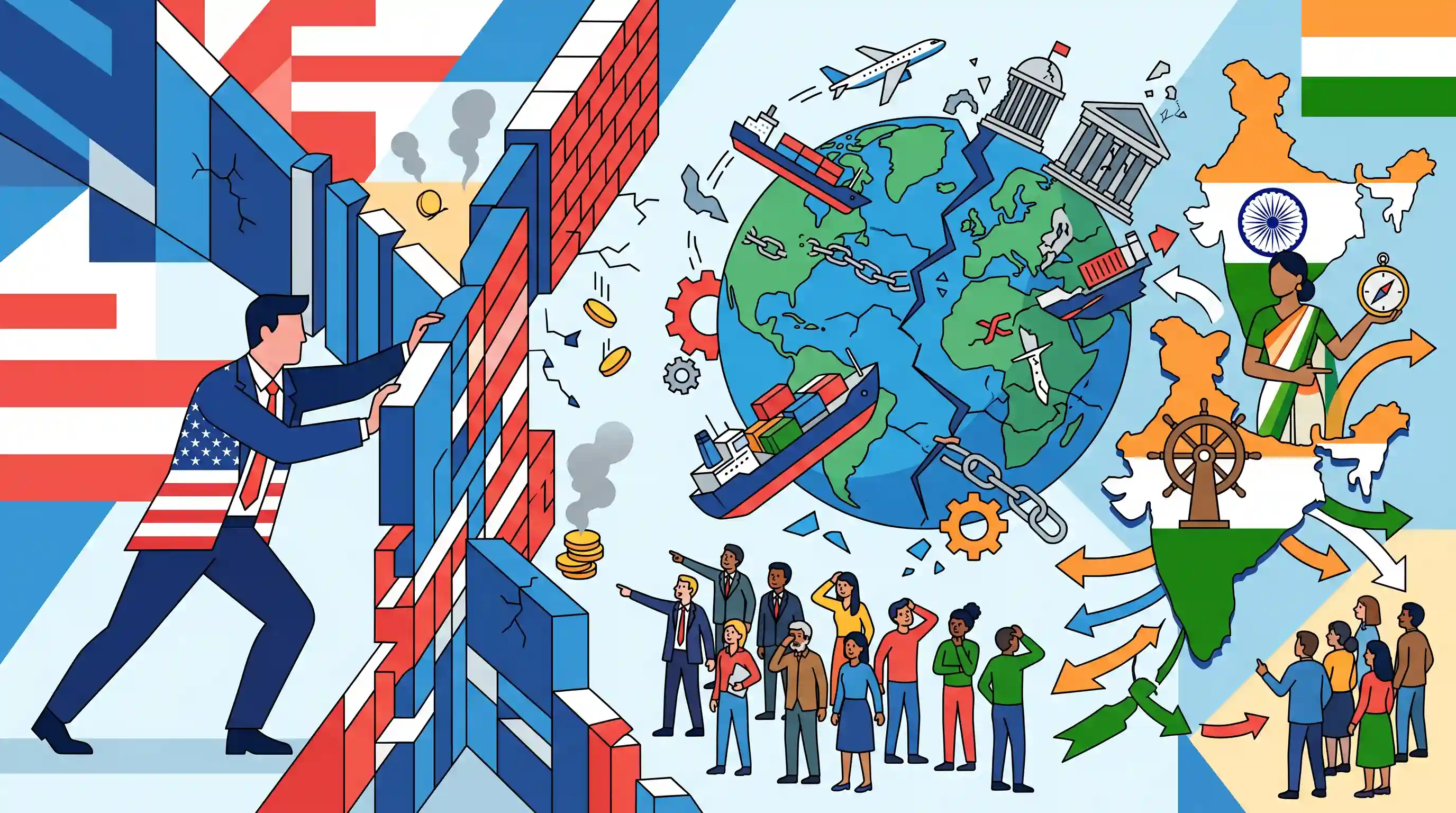
In his column, P Chidambaram critiques the anticipated policy trajectory of Donald Trump, highlighting the severe pitfalls of the 'America First' doctrine. The article argues that aggressive trade protectionism, unilateral tariffs, and a systemic retreat from multilateralism will ultimately harm the US economy as much as the broader global order. By initiating trade wars and abandoning global leadership, the US risks economic isolation, inflation, and disrupted supply chains, rendering such inward-looking policies a losing proposition in a deeply interconnected world. The piece underscores the need for countries like India to strategically navigate the fallout of such deglobalisation trends.
Key Points
- Trump's 'America First' doctrine relies on aggressive trade protectionism, including unilateral tariffs, which historically invite retaliatory measures and spark trade wars.
- A retreat from multilateralism weakens institutions like the WTO, undermining the rules-based international order and replacing it with unpredictable bilateralism.
- Protectionist policies intended to shield domestic industries often backfire, causing imported inflation, disrupted global supply chains, and economic instability for the instigator.
- For India, US isolationism poses challenges including potential friction over trade tariffs, restrictive immigration policies (such as H-1B visas) affecting the IT sector, and the broader global economic slowdown.
Important Terms
America First Policy

A US policy prioritizing national sovereignty and economic self-sufficiency over global governance, often characterized by unilateralism, trade protectionism, and withdrawal from multilateral agreements.
UPSC context
GS Paper 2 (International Relations); tests understanding of how policies of developed nations impact global stability and India's interests.
World Trade Organization (WTO)
A Geneva-based international body established in 1995 to regulate and facilitate global trade through rules, negotiations, and a dispute settlement mechanism.
UPSC context
GS Paper 2/3 (International Institutions/Economy); critical for questions on global trade governance and challenges to rules-based order.
Protectionism
Economic measures like tariffs, quotas, and subsidies designed to shield domestic industries and workers from foreign competition by restricting international trade.
UPSC context
GS Paper 3 (Economy); tests the ability to analyze trade barriers, their impact on global supply chains, and domestic manufacturing.
Multilateralism
A process where countries collaborate within a rules-based framework (3+ states) to solve common problems, bind powerful nations, and ensure inclusive global governance.
UPSC context
GS Paper 2 (International Relations); central to discussions on the "crisis of multilateralism" and the future of the liberal world order.
Deglobalisation
The trend of diminishing economic interdependence and integration between nations, marked by rising trade barriers, reshoring of supply chains, and declining cross-border investments.
UPSC context
GS Paper 3 (Economy); focuses on shifts in the global economic landscape and their long-term growth implications for emerging markets.
Trade War
An economic conflict where countries impose retaliatory tariffs or trade barriers on each other, often leading to disrupted supply chains and higher consumer prices.
UPSC context
GS Paper 2/3; tests understanding of bilateral trade tensions (e.g., US-China) and their strategic/economic fallout for India.
Prelims Trap
The WTO Appellate Body can mandate the immediate removal of unilateral tariffs imposed by member nations.
The US has blocked appointments to the WTO Appellate Body since 2019, rendering the final stage of the dispute settlement mechanism largely paralyzed and unenforceable.
Static Concepts Connected
What are the primary tools of trade protectionism?
- Tariffs: Taxes levied on imported goods to increase their final market price, making domestic substitutes relatively cheaper.
- Quotas: Direct administrative limits on the physical quantity or value of specific goods that can be imported during a set period.
- Non-Tariff Barriers: Stringent sanitary, phytosanitary (SPS), or complex technical standards used covertly to restrict the entry of foreign goods.
How is the WTO Dispute Settlement Mechanism structured?
- Consultations: Parties first must attempt to resolve their trade disputes amicably through bilateral mediation.
- Panel Stage: If consultations fail, a Dispute Settlement Body (DSB) panel evaluates the case and issues a formal ruling.
- Appellate Body: A standing committee to review appeals on points of law; currently non-functional due to unfilled judicial vacancies.
Cross-Topic Patterns
Imported Inflation and Currency Dynamics
US trade protectionism often strengthens the dollar, causing imported inflation in India as oil, electronics, and essential imports become more expensive in rupee terms.
WTO GATS and Mode 4 Service Delivery
Restrictive US immigration policies like tightening H-1B visas directly undermine India's Mode 4 (presence of natural persons) service exports under the WTO General Agreement on Trade in Services (GATS).

Expect a GS-2 mains question linking US protectionism (America First) to the paralysis of WTO's dispute settlement and India's FTAs.
Linked PYQs · 4
Linked PYQs · 4
- 2025MainsGS3
What are the challenges before the Indian economy when the world is moving away from free trade and multilateralism to protectionism and bilateralism? How can these challenges be met?
- 2018MainsGS3
How would the recent phenomena of protectionism and currency manipulations in world trade affect macroeconomic stability of India?
- 2018MainsGS2
What are the key areas of reform if the WTO has to survive in the present context of "Trade War', especially keeping in mind the interest of India?
- 2012MainsGS2
Discuss the likely negative impact of the protectionist measures proposed by the US on India's software industry.
