Osteoporosis and Geriatric Public Health Challenges in India
Source:The Hindu ↗
Why It Matters
As India's demographic transitions towards an aging population, diseases like osteoporosis represent a significant public health challenge. It intersects with UPSC themes of geriatric health policies, women's health vulnerabilities, and basic scientific awareness of nutrition and deficiency diseases.
Summary
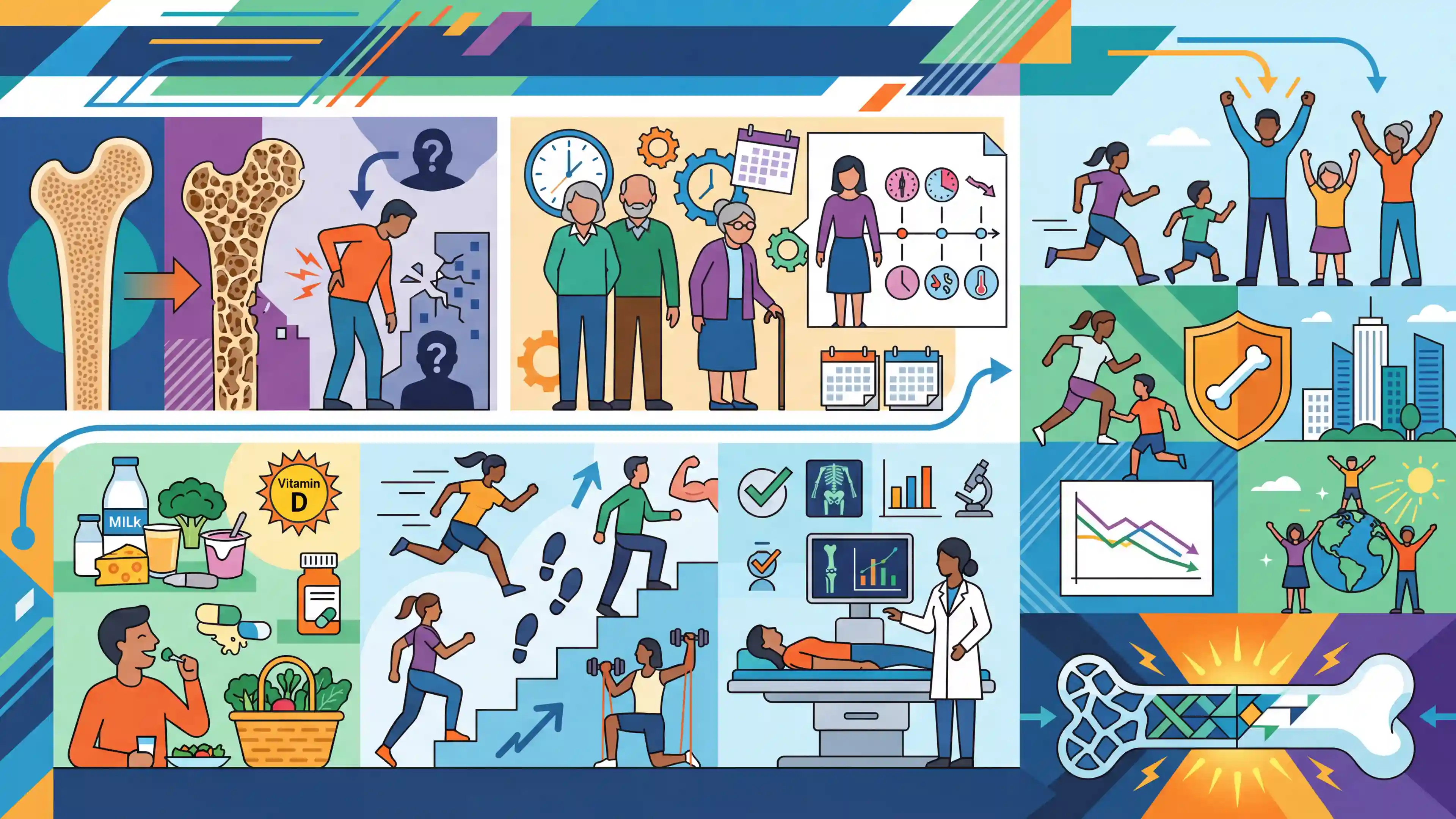
The article discusses osteoporosis, a widespread 'silent disease' that weakens bones and increases fracture risk. It highlights the particular vulnerability of post-menopausal women and the elderly. Emphasizing public awareness, the article outlines the importance of adequate Calcium and Vitamin D intake, regular weight-bearing exercises, and early screening (like DEXA scans) to prevent and manage the condition, thereby reducing the growing burden of geriatric non-communicable diseases.
Key Points
- Osteoporosis is a 'silent disease' characterized by low bone density and micro-architectural deterioration, leading to bone fragility and increased risk of fractures without prior symptoms.
- Post-menopausal women are disproportionately affected due to the sudden drop in estrogen levels, which normally protect bone mass.
- Key modifiable risk factors include a sedentary lifestyle, smoking, and deficiencies in essential nutrients like Calcium and Vitamin D.
- With increasing life expectancy and a growing geriatric population, osteoporosis requires targeted public health interventions and awareness to reduce morbidity and healthcare costs.
Prelims Trap
Osteoporosis typically presents with severe joint pain and inflammation long before any bone fractures occur.
Osteoporosis is a "silent disease" causing no pain until a fracture occurs. Aspirants often confuse it with Osteoarthritis, which involves joint cartilage degeneration and severe early-stage pain.
Static Concepts Connected
What is the physiological role of Vitamin D and Estrogen in bone health?
- Vitamin D: Essential for intestinal calcium absorption; deficiency impairs bone matrix formation, leading to rickets in children and osteomalacia or osteoporosis in adults.
- Estrogen: Protects bone mass by inhibiting osteoclasts (bone-resorbing cells); its sharp post-menopausal decline accelerates bone density loss in women.
What is the demographic shift driving India's non-communicable disease (NCD) burden?
- Aging Population: India's elderly population is projected to reach ~20% by 2050, drastically increasing the prevalence of age-related NCDs like osteoporosis and Alzheimer's.
- Double Burden of Disease: India faces a simultaneous healthcare challenge: managing lingering communicable/infectious diseases while treating a rapidly exploding NCD crisis among the elderly.
Cross-Topic Patterns
Demographic Transition + Geriatric NCDs
India's shifting population pyramid directly links demographic transition theory (Geography) with the rising need for robust geriatric NCD frameworks like NPHCE (Governance/Social Justice).
Gendered Health & Hidden Hunger
Micronutrient deficiency (hidden hunger) intersects with biological milestones (menopause), highlighting why women's health policies must extend beyond maternal care into life-cycle geriatric wellness.

Expect a Prelims question matching diagnostic tests (DEXA) to diseases, or evaluating Vitamin D's exact physiological role in bone health.
Linked PYQs · 3
Linked PYQs · 3
- 2020MainsGS2
In order to enhance the prospects of social development, sound and adequate health care policies are needed particularly in the fields of geriatric and maternal health care. Discuss.
- 2014PrelimsGS1
Consider the following pairs : Vitamin Deficiency disease 1. Vitamin C : Scurvy 2. Vitamin D : Rickets 3. Vitamin E : Night blindness Which of the pairs given above is/are correctly matched?
- 2004PrelimsGS1
Consider the following statements: 1. Non-function of lachrymal gland is an important symptom of deficiency of Vitamin A. 2. Deficiency of Vitamin B1 can lead to indigestion and heart enlargement. 3. Vitamin C deficiency can lead to pain in the muscles. 4. Deficiency of Vitamin D causes increased loss of Ca++ in urine. Which of the statements given above are correct?
