Opposition MPs suspended from Lok Sabha over disruptions
Source:Indian Express ↗
Why It Matters
Frequent disruptions and subsequent suspensions of MPs highlight a systemic issue in parliamentary functioning. It underscores the tension between the opposition's right to protest and the Speaker's duty to maintain order, directly impacting legislative productivity and democratic accountability.
Summary
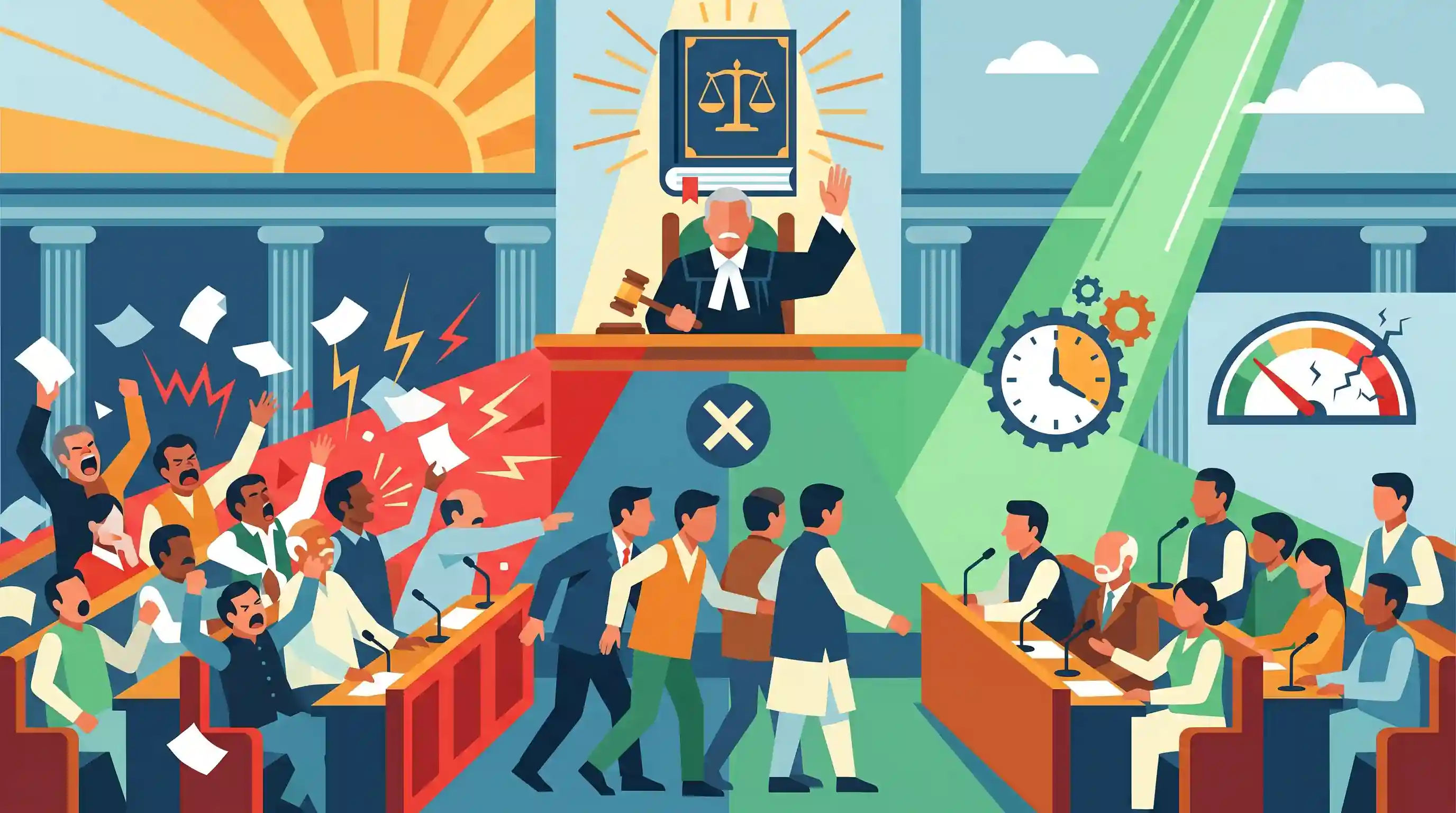
Multiple opposition members were suspended from the Lok Sabha for indiscipline, including shouting slogans and tearing up papers during parliamentary proceedings. The action underscores the Speaker's authority to maintain decorum and order in the House under the Rules of Procedure. The recurring issue of parliamentary disruptions raises concerns about the declining quality of legislative debates and the functioning of India's democratic institutions.
Key Points
- Opposition members were suspended from the Lok Sabha for unruly behavior, which included shouting slogans and tearing up papers.
- The suspension highlights the powers vested in the Speaker under the Rules of Procedure to enforce discipline and ensure the smooth functioning of the House.
- Such incidents reflect the growing challenge of parliamentary disruptions, which reduce the time available for constructive debate and diminish the effectiveness of the legislature.
Important Terms
Rules of Procedure and Conduct of Business in Lok Sabha

The set of internal regulations, framed under Article 118 of the Constitution, governing the Lok Sabha's debates, legislative business, and the maintenance of order by the Speaker.
UPSC context
GS Paper 2 (Polity); essential for understanding how the Speaker exercises disciplinary authority and maintains house decorum.
Rule 374A (Lok Sabha)
A specific provision that empowers the Speaker to automatically suspend a member for five sittings or the session's remainder for 'grave disorder,' bypassing the need for a House motion.
UPSC context
GS Paper 2 (Parliament); tests knowledge of the Speaker's unique powers compared to the Rajya Sabha Chairman.
Naming a Member
The formal identification of a member by the Speaker for persistently obstructing the House, serving as the necessary procedural precursor to a suspension motion or automatic suspension.
UPSC context
GS Paper 2 (Governance); technical parliamentary terminology often tested in Prelims regarding disciplinary procedures.
Speaker of the Lok Sabha
The presiding officer of the Lok Sabha, vested with the primary responsibility and supreme authority to maintain order and enforce the Rules of Procedure during House sittings.
UPSC context
GS Paper 2 (Polity); central figure in topics regarding parliamentary sovereignty, neutral conduct, and anti-defection law.
Parliamentary Disruption
Actions that obstruct legislative proceedings, such as shouting slogans or entering the 'well' of the House, which hinder the Parliament's primary functions of law-making and executive oversight.
UPSC context
GS Paper 2 (Mains); critical for discussing the declining productivity of legislatures and the erosion of democratic institutions.
Article 122 of the Constitution
A constitutional provision stating that the validity of any proceedings in Parliament shall not be called in question in any court on the ground of any alleged irregularity of procedure.
UPSC context
GS Paper 2 (Constitution); relates to the separation of powers and the finality of the Speaker's procedural decisions.
Prelims Trap
The Chairman of Rajya Sabha can automatically suspend an MP for grave disorder like the Lok Sabha Speaker.
This is false. While Lok Sabha's Rule 374A allows automatic suspension by the Speaker, Rajya Sabha lacks an equivalent rule. Suspension in the Upper House strictly requires a formal motion passed by the House.
Static Concepts Connected
What are the exact consequences of an MP's suspension from Parliament?
- Chamber access: They are strictly barred from entering the parliamentary chamber and lobbies for the duration of the suspension.
- Committee meetings: They lose the right to attend meetings of Parliamentary Committees to which they belong.
- Notices & Questions: They forfeit the right to give notices for discussion and will not receive replies to their submitted questions.
How do Rules 373, 374, and 374A of the Lok Sabha differ?
- Rule 373 (Withdrawal): The Speaker can direct a member to withdraw immediately for the remainder of that day's sitting due to disorderly conduct.
- Rule 374 (Suspension Motion): Requires the House to formally pass a motion to suspend a member after they have been "named" by the Speaker.
- Rule 374A (Automatic Suspension): Allows for automatic suspension (5 days or remainder of session) without a motion when a member is named by the Speaker for grave disorder.
Cross-Topic Patterns
Suspension vs. Disqualification (Anti-Defection)
While suspension is a temporary disciplinary action under House Rules, disqualification under the Tenth Schedule permanently vacates the seat, adjudicated independently by the Presiding Officer subject to judicial review.
Parliamentary Privileges and Judicial Intervention
Suspensions often trigger debates on Article 122, which bars courts from inquiring into parliamentary proceedings. However, courts can review actions if they are grossly unconstitutional or lack substantive legislative privilege.

Expect a multi-statement question in 2026 contrasting the automatic suspension powers of the LS Speaker with the RS Chairman's limitations.
Linked PYQs · 3
Linked PYQs · 3
- 2023MainsGS2
Discuss the role of Presiding Officers of state legislatures in maintaining order and impartiality in conducting legislative work and in facilitating best democratic practices.
- 2020MainsGS2
Once a Speaker, Always a Speaker' ! Do you think this practice should be adopted to impart objectivity to the office of the Speaker of Lok Sabha ? What could be its implications for the robust functioning of parliamentary business in India?
- 2019MainsGS2
Individual Parliamentarian's role as the national law maker is on a decline, which in turn, has adversely impacted the quality of debates and their outcome. Discuss.
