Turkish drones and China involvement in Indo Pak military standoff
Source:Indian Express ↗
Why It Matters
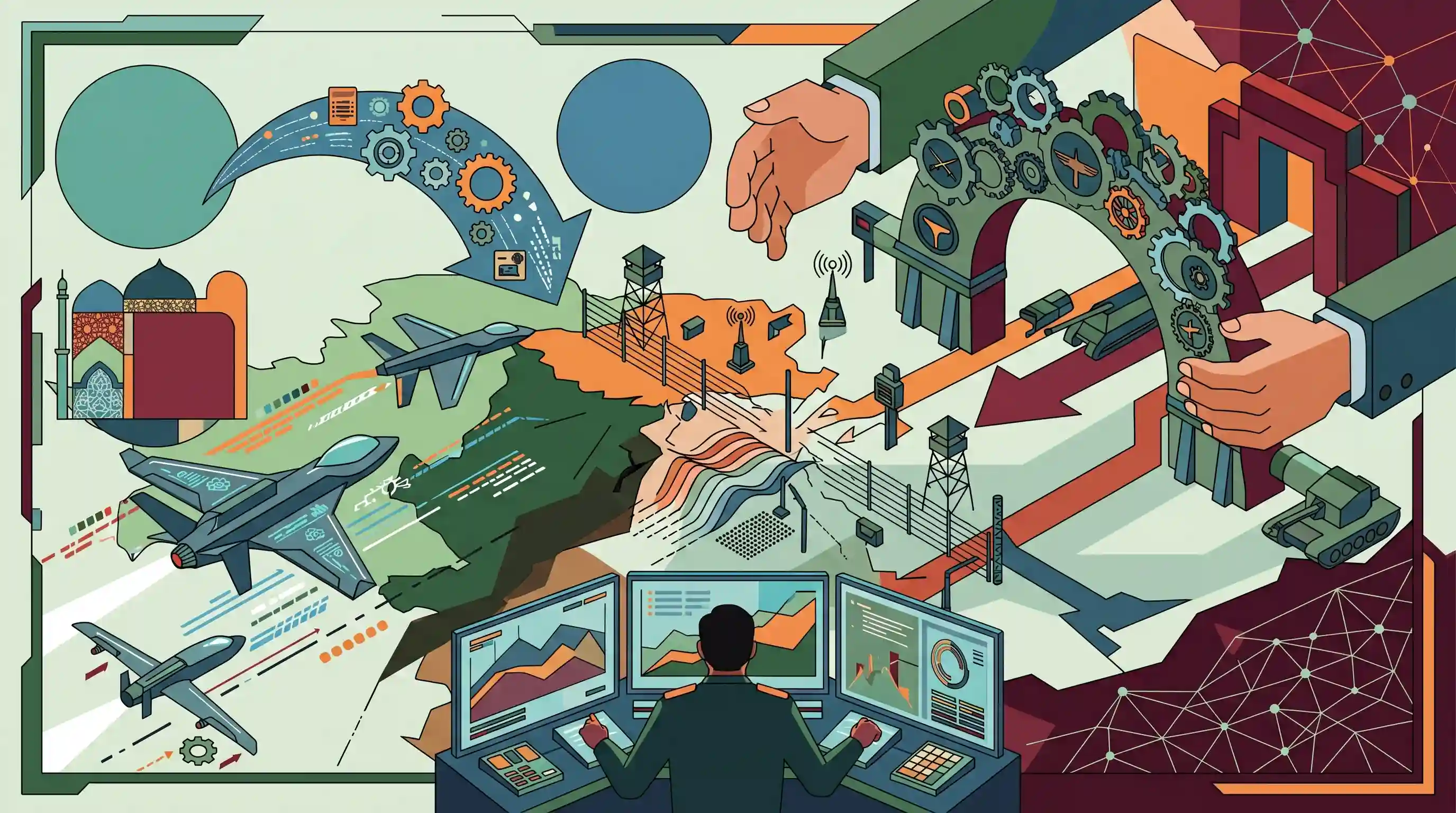
The integration of advanced technologies like Turkish UAVs into Pakistan's arsenal, coupled with China's strategic backing, directly impacts India's internal security and border management strategies. It underscores the urgency for India to adapt to asymmetric warfare and develop effective counter-drone measures.
Summary
A recent panel discussion in Pune examined the evolving dimensions of the Indo-Pak standoff, highlighting emerging security challenges. Defence experts pointed out that Pakistan's acquisition of advanced drones from Turkey introduces new tactical complexities for Indian armed forces. Furthermore, discussions emphasized China's continued strategic role in backing Pakistan, strengthening the China-Pakistan military nexus and complicating India's border management and overall security architecture.
Key Points
- Experts highlighted the growing tactical threat posed by Pakistan's acquisition of advanced drones from Turkey, which complicates India's border security and surveillance along the LoC.
- China's strategic and military support to Pakistan acts as a significant force multiplier, deepening the Sino-Pak nexus and elevating the risk of a two-front challenge for India.
- The nature of the Indo-Pak standoff is evolving, increasingly relying on asymmetric warfare, unmanned aerial vehicles (UAVs), and advanced technologies over conventional combat.
- To counter these emerging threats, India must prioritize the modernization of its air defence systems, develop robust anti-drone technologies, and enhance border management infrastructure.
Prelims Trap
Hard-kill anti-drone systems neutralize approaching UAVs by jamming their radio frequency signals.
This describes a "soft-kill" measure. Hard-kill systems physically destroy or damage the drone using Directed Energy Weapons (lasers) or kinetic projectiles.
Static Concepts Connected
What are the mechanisms of Soft-kill vs Hard-kill anti-drone systems?
- Soft-kill methods: Employs RF jamming, GPS spoofing, or cyber interception to sever the drone's control links without causing physical destruction.
- Hard-kill methods: Uses Directed Energy Weapons (like lasers), high-power microwaves, or kinetic projectiles to physically destroy the incoming UAV.
How are military drones classified by their combat roles?
- ISR Drones: Platforms strictly dedicated to Intelligence, Surveillance, and Reconnaissance missions without carrying offensive weaponry.
- UCAVs: Unmanned Combat Aerial Vehicles equipped with external missiles or bombs for precision strikes (e.g., Predator drones).
- Loitering Munitions: Kamikaze or suicide drones with built-in warheads that hover in an area before acquiring and crashing into a target.
Cross-Topic Patterns
Turkey's rising defense diplomacy
Turkey’s drone exports to Pakistan alter South Asian security, reflecting its ambition to leverage arms diplomacy (like the Bayraktar TB2) for geopolitical influence beyond the Middle East.
Asymmetric warfare and deterrence thresholds
Cheap, precise drone technology supplied by the Sino-Pak axis lowers the threshold for border conflicts, forcing India to rethink conventional deterrence thresholds below the nuclear level.

Expect a GS3 question on the dual-front UAV threat, or a Prelims item contrasting soft-kill vs hard-kill anti-drone technologies.
Linked PYQs · 2
Linked PYQs · 2
- 2023MainsGS3
The use of unmanned aerial vehicles (UAVs) by our adversaries across the borders to ferry arms/ammunitions, drugs, etc., is a serious threat to the internal security. Comment on the measures being taken to tackle this threat.
- 2024MainsGS3
India has a long and troubled border with China and Pakistan fraught with contentious issues. Examine the conflicting issues and security challenges along the border. Also give out the development being undertaken in these areas under the Border Area Development Programme (BADP) and Border Infrastructure and Management (BIM) Scheme.
