Strategic limits of covert operations and extraterritorial deterrence
Source:The Hindu ↗
Why It Matters
For UPSC aspirants, this highlights the intersection of internal security and foreign policy. It is crucial for understanding the limitations of covert operations as deterrence, the mandate of intelligence agencies like R&AW, and the diplomatic costs of extraterritorial security measures in a multipolar world.
Summary
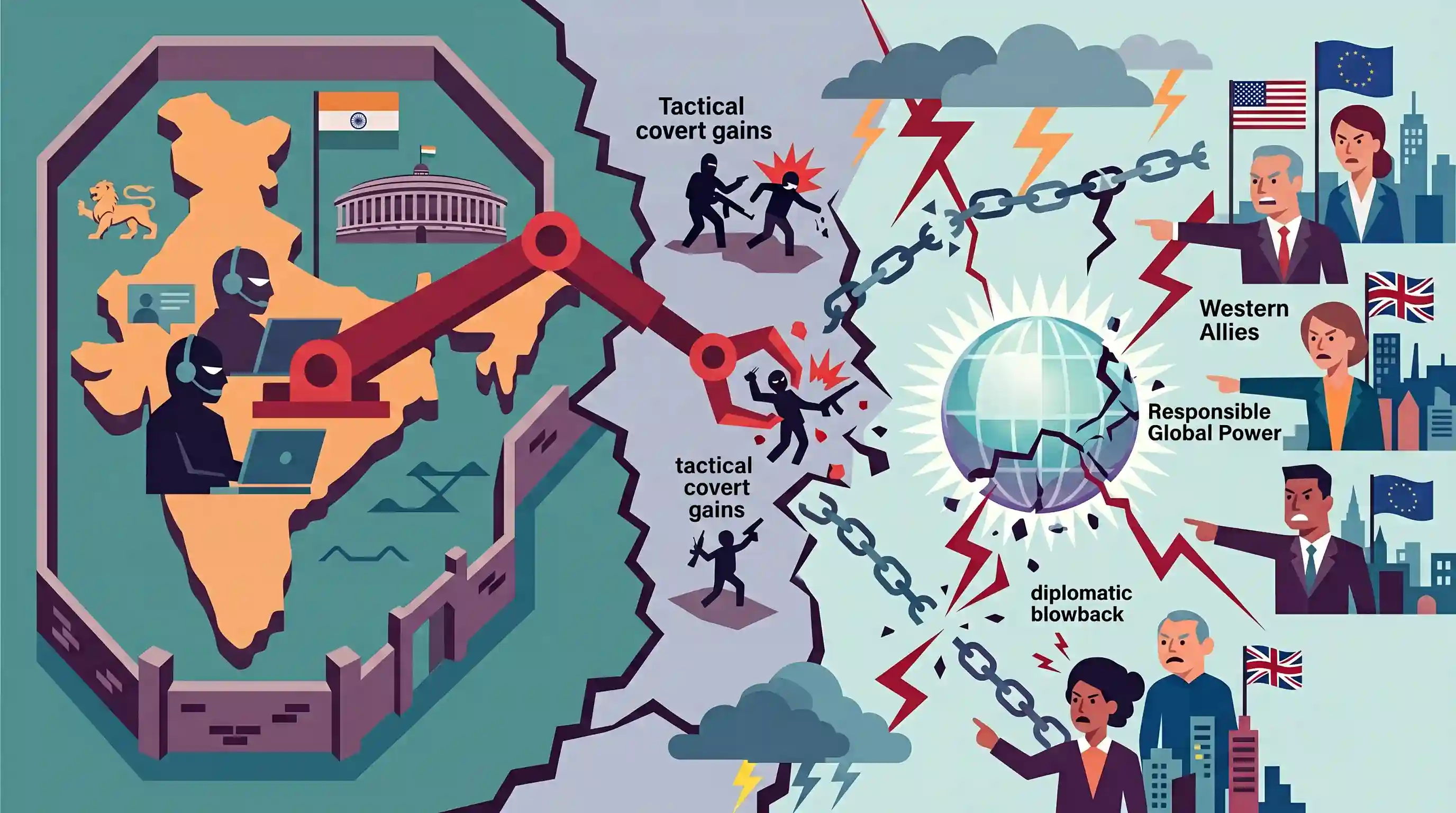
The article analyzes the strategic and diplomatic implications of "Operation Sindoor," likely an umbrella term or codename for recent controversial covert operations abroad. It argues that utilizing targeted operations as a mechanism for deterrence is fundamentally flawed, yielding only "doubtful deterrence" against external threats. While designed to neutralize extremist elements and assert national strength, such operations risk severe diplomatic blowback, particularly with strategic Western allies concerned about sovereignty violations. Ultimately, the piece calls for a careful reassessment of India's intelligence posture, emphasizing that tactical covert gains should not compromise long-term bilateral relationships or the country's reputation as a responsible global power.
Key Points
- The article critically evaluates "Operation Sindoor" — a term reportedly associated with recent covert intelligence operations — questioning its efficacy as a reliable tool for strategic deterrence.
- It argues that targeted extraterritorial operations yield "doubtful deterrence," as they often fail to sustainably curb extremist or separatist activities and may instead provoke retaliatory sentiments.
- The diplomatic fallout from such covert tactics is highlighted, particularly the strain they place on bilateral relations with key Western partners who perceive these actions as violations of their sovereignty.
- The piece cautions that an aggressive, covert strategic posture risks undermining India’s long-standing international image as a rule-abiding and responsible democratic power.
- The author advocates for a recalibration of national security strategy, urging a balance between robust intelligence capabilities, diplomatic prudence, and adherence to international legal norms.
Important Terms
Operation Sindoor

A May 2025 tri-service Indian military operation involving precision strikes against terror infrastructure in Pakistan and PoJK, following the Pahalgam terror attack.
UPSC context
GS III - Internal Security: Examines India’s evolving counter-terrorism strategy and proactive military responses against external state-sponsored threats.
Offensive Deterrence
A security posture where a state uses proactive military action and the threat of punitive costs to discourage an adversary from initiating aggression.
UPSC context
GS II - International Relations: Crucial for understanding the transition from reactive to preventive security doctrines in India-Pakistan relations.
Compellence
The use of limited force or threats to persuade an opponent to stop an ongoing action or undo a previous action.
UPSC context
GS II - IR Theories: A fundamental concept for analyzing the effectiveness of coercive diplomacy and military strikes in changing adversary behavior.
Strategic Restraint
A long-standing Indian policy of avoiding major military escalation across the border to maintain regional stability and prevent nuclear conflict.
UPSC context
GS II - Foreign Policy: Essential for tracing the history of India's response to cross-border terrorism until recent doctrinal shifts.
Research and Analysis Wing (R&AW)
India's premier external intelligence agency responsible for foreign intelligence, counter-terrorism, and conducting covert operations to safeguard national interests.
UPSC context
GS III - Security Agencies: Tests knowledge of the institutional framework for intelligence-led operations and their role in regional security.
Gupta Karya
An ancient Indian strategic concept referring to clandestine or secret actions used to achieve national security objectives.
UPSC context
GS IV/GS II: Relates to the indigenous roots of Indian strategic culture and the ethical/strategic dimensions of modern covert operations.
Doubtful Deterrence
The critical view that tactical military strikes may fail to stop future attacks if underlying terror infrastructure and ideology remain intact.
UPSC context
GS III - Internal Security: Challenges candidates to evaluate the efficacy and sustainability of muscular national security policies versus systemic reform.
Prelims Trap
Operation Sindoor is an official bilateral military exercise between India and Western nations.
It is not a formal military exercise. It is a term/codename reportedly associated with controversial covert extraterritorial intelligence operations aimed at neutralizing threats abroad.
Static Concepts Connected
What is the mandate and oversight mechanism of R&AW?
- Genesis: Formed in 1968 after the 1962 and 1965 wars, it was carved out of the Intelligence Bureau to focus exclusively on external intelligence.
- Core Mandate: Gathers external intelligence, engages in counter-terrorism, and advises policymakers on foreign strategic affairs and covert operations.
- Accountability: Operates directly under the PMO and the Cabinet Secretariat. Unlike many Western intelligence agencies, it currently lacks formal statutory parliamentary oversight.
How does the UN Charter govern the extraterritorial use of force?
- Non-intervention principle: Article 2(4) strictly prohibits the threat or use of force against the territorial integrity or political independence of any sovereign state.
- Self-defense exception: Article 51 permits self-defense if an armed attack occurs. However, using this to justify preemptive covert killings of non-state actors on foreign soil remains legally contested.
Cross-Topic Patterns
Covert ops straining tech diplomacy
Diplomatic blowback from alleged intelligence operations in Western nations directly tests the resilience of strategic defense and technology transfers, such as the US-India iCET framework.
Extradition hurdles and diaspora extremism
Extraterritorial covert posturing often stems from institutional frustration with sluggish extradition treaties and the harboring of separatist non-state actors under Western free-speech protections.

Expect a GS-2/GS-3 Mains question weighing the necessity of robust intelligence deterrence against the diplomatic costs to India's soft power.
Linked PYQs · 3
Linked PYQs · 3
- 2021MainsGS3
Analyse the multidimensional challenges posed by external state and non-state actors, to the internal security of India. Also discuss measures required to be taken to combat these threats.
- 2023MainsGS3
What are the internal security challenges being faced by India? Give out the role of Central Intelligence and Investigative Agencies tasked to counter such threats.
- 2020MainsGS2
Indian diaspora has a decisive role to play in the politics and economy of America and European Countries'. Comment with examples.
