NSA Doval Welcomes Stabilization of Strait of Hormuz
Source:The Hindu ↗
Why It Matters
The Strait of Hormuz is one of the world's most critical maritime chokepoints; its stabilization directly impacts India's energy security, macro-economic stability, and import bills for vital commodities like oil and fertilizers. Additionally, understanding the expanding diplomatic footprint of BRICS is crucial for tracking India's strategic push for a multipolar world order.
Summary
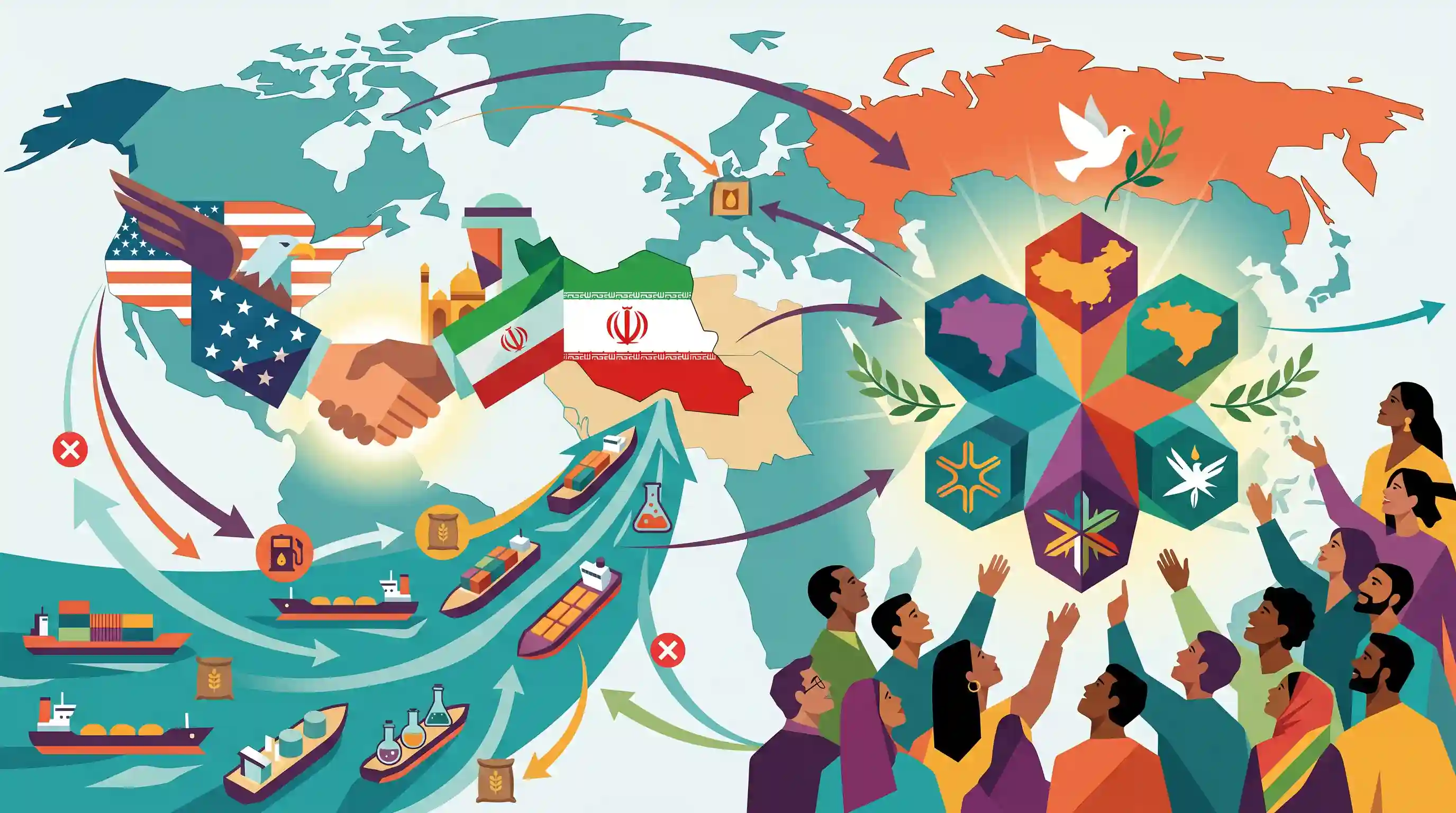
At the BRICS National Security Advisers' conclave in New Delhi, Indian NSA Ajit Doval expressed "cautious optimism" over a US-Iran MoU and the potential stabilization of the Strait of Hormuz, recognizing its critical role in global energy security. Easing transit through this vital maritime chokepoint is expected to relieve supply chain disruptions and mitigate global shortages in essential imports like fertilizers and chemicals. Doval also highlighted the strategic significance of the expanded BRICS bloc—now encompassing 11 major emerging economies—as a stabilizing force meant to promote peace, foster a multipolar world order, and amplify the influence of the Global South amid ongoing geopolitical uncertainties.
Key Points
- NSA Ajit Doval welcomed the potential opening of the Strait of Hormuz and a US-Iran MoU, citing its importance for global energy security.
- Reopening the Strait of Hormuz could resolve severe global supply chain bottlenecks, particularly alleviating shortages in critical commodities like fertilizers and chemicals.
- At the BRICS NSA conclave in New Delhi, Doval underscored the organization's expanding role in shaping a multipolar world order and strengthening the Global South's voice.
- BRICS has officially expanded to 11 major emerging economies, recently adding Egypt, Ethiopia, Iran, and the UAE, with Indonesia set to join in 2025.
Important Terms
BRICS

An intergovernmental grouping of 11 major emerging economies (Brazil, Russia, India, China, South Africa, Egypt, Ethiopia, Iran, Saudi Arabia, UAE, and Indonesia) representing ~40% of global GDP.
UPSC context
GS Paper 2: International Relations; crucial for understanding multilateralism, global governance reforms, and India's leadership in the Global South.
Strait of Hormuz
A critical maritime chokepoint between the Persian Gulf and Gulf of Oman, handling approximately 20% of the world's oil consumption and 35% of global LNG trade.
UPSC context
GS Papers 1 & 2: Geography/International Relations; essential for maritime security, strategic chokepoints, and India's energy import vulnerabilities.
US-Iran MoU (2026)
A 14-point preliminary agreement signed June 17, 2026, to end hostilities, reopen the Strait of Hormuz, remove naval blockades, and initiate a 60-day negotiation period for a comprehensive deal.
UPSC context
GS Paper 2: International Relations; signifies major shifts in West Asian geopolitics and the stabilization of global energy supply chains.
Global South
A geopolitical term representing developing and emerging nations in Africa, Asia, and Latin America, emphasizing their collective political influence and shared economic interests.
UPSC context
GS Paper 2: International Relations; core theme of India's foreign policy and efforts to rebalance global power dynamics.
Multipolar World Order
A global power structure where influence is distributed among several major nations or blocs, rather than being dominated by a single superpower (unipolar) or two (bipolar).
UPSC context
GS Paper 2: International Relations; the primary strategic objective of BRICS and a central pillar of India's vision for global stability.
Energy Security
The reliable and affordable availability of energy sources, vital for economic growth, which can be jeopardized by disruptions in maritime trade routes or geopolitical conflicts.
UPSC context
GS Paper 3: Economic Development/Environment; links geopolitical stability directly to India's fiscal health, inflation control, and industrial productivity.
Maritime Chokepoint
A narrow waterway that serves as a critical passage for international shipping; its closure can significantly disrupt global trade and spike commodity prices.
UPSC context
GS Papers 1 & 3: Geography and Security; essential for studying Sea Lines of Communication (SLOCs) and vulnerability in global logistics.
Prelims Trap
"The Strait of Hormuz is a strategic maritime chokepoint bordered by Iran and the United Arab Emirates."
The Strait of Hormuz is bordered by Iran to the north and Oman (the Musandam Peninsula exclave) to the south, not the UAE.
Static Concepts Connected
What are the key strategic maritime chokepoints in the Middle East?
- Strait of Hormuz: Connects the Persian Gulf to the Gulf of Oman and Arabian Sea. Bordered by Iran and Oman.
- Bab el-Mandeb: Connects the Red Sea to the Gulf of Aden and Arabian Sea. Bordered by Yemen on the Arabian Peninsula, and Djibouti and Eritrea in Africa.
- Suez Canal: An artificial sea-level waterway in Egypt connecting the Mediterranean Sea to the Red Sea, separating the African continent from Asia.
How does India manage its fertilizer imports and subsidy framework?
- Urea Dependency: India imports massive quantities of Urea, which remains under strict statutory price control, making the government bear the fluctuating international cost.
- Nutrient Based Subsidy: Phosphatic and Potassic (P&K) fertilizers are covered under the NBS scheme, but India remains heavily dependent on imported rock phosphate, DAP, and muriate of potash.
- DBT Mechanism: Subsidies are paid directly to fertilizer manufacturing and importing companies based on actual point-of-sale data through Point of Sale (PoS) devices to farmers.
Cross-Topic Patterns
Energy chokepoints & fertilizer subsidies
Disruptions in Middle Eastern chokepoints don't just spike oil prices; they drive up freight costs for crucial LNG and fertilizer imports, directly inflating India's fiscal deficit via the agricultural subsidy bill.
BRICS expansion & alternate payment systems
With major energy producers like Iran and the UAE officially joining BRICS, the bloc's ongoing push for intra-group trade in local currencies could accelerate a structural shift away from petrodollar dominance.

Map-based pairing of Middle East chokepoints (Hormuz/Bab el-Mandeb) with newly added BRICS member states is highly probable for Prelims.
Linked PYQs · 4
Linked PYQs · 4
- 2025MainsGS2
"Energy security constitutes the dominant kingpin of India's foreign policy, and is linked with India's overarching influence in Middle Eastern countries.” How would you integrate energy security with India's foreign policy trajectories in the coming years?
- 2017MainsGS2
The question of India's Energy Security constitutes the most important part of India's economic progress. Analyze India's energy policy cooperation with West Asian countries.
- 2012MainsGS2
Compare the significance of IBSA and BRICS in the context of India's multilateral diplomacy.
- 2022PrelimsGS1
The term "Levant" often heard in the news roughly corresponds to which of the following regions?
