OpenAI Acquisition of AI Startup Neptune for Model Training
Source:The Hindu ↗
Why It Matters
The rapid consolidation of the AI industry by tech giants raises important questions for GS-3 regarding digital economy regulation, the monopolization of emerging technologies, and the socio-economic impact of embedding AI into traditional sectors. It highlights the vast capital required to sustain Large Language Model development.
Summary
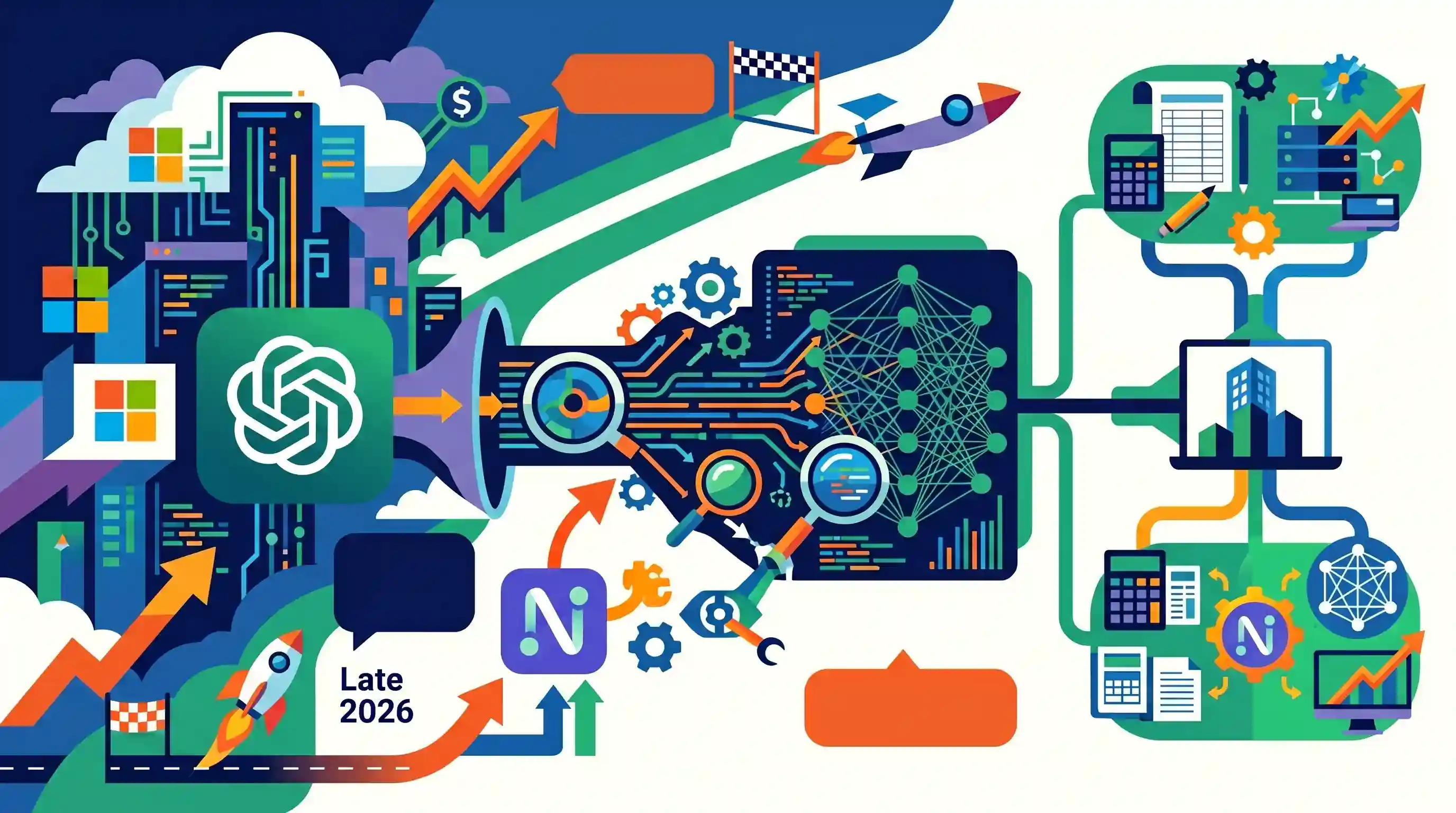
OpenAI, the Microsoft-backed creator of ChatGPT, has agreed to acquire AI startup Neptune to bolster its capabilities in tracking and debugging the training of large language models (LLMs). The all-stock deal, reportedly valued at under $400 million, will integrate Neptune’s diagnostic tools—already used by major companies like Samsung and Roche—more deeply into OpenAI's infrastructure. The acquisition comes as OpenAI's valuation hits $500 billion ahead of a potential mammoth IPO in late 2026. Concurrently, OpenAI is expanding its enterprise AI push by taking a stake in Thrive Holdings to embed AI solutions into traditional sectors like accounting and IT services.
Key Points
- OpenAI has agreed to acquire AI startup Neptune for under $400 million in stock to enhance its model training and debugging capabilities.
- Neptune provides tracking tools used to monitor the training of GPT large language models, serving clients like Samsung, Roche, and HP.
- OpenAI has recently reached a $500 billion valuation and is reportedly laying the groundwork for a potential IPO by late 2026 that could value the firm at up to $1 trillion.
- The acquisition underlines ongoing consolidation in the tech sector, as Big Tech and AI leaders acquire specialized startups to build out enterprise solutions.
- OpenAI is concurrently expanding its footprint in traditional sectors, highlighted by taking a stake in Thrive Holdings to embed AI into accounting and IT services.
Important Terms
OpenAI

A leading US-based artificial intelligence research organization, creator of ChatGPT, and pioneer in generative AI, backed by multi-billion dollar investments from Microsoft.
UPSC context
GS Paper III: Science and Technology. Essential for understanding global AI leadership, digital sovereignty, and ethical AI governance.
Neptune
A Polish AI startup specializing in "experiment tracking" and "model observability" tools that help researchers monitor and debug the complex training workflows of large-scale AI models.
UPSC context
GS Paper III: S&T and Economy. Illustrates the importance of specialized infrastructure and "vertical integration" in the global AI startup ecosystem.
Thrive Holdings
An investment platform launched by Thrive Capital to acquire and build companies in traditional sectors like accounting and IT services, intended to be modernized through deep AI integration.
UPSC context
GS Paper III: Economy and Investment. Relevant for studying how AI is transitioning from "research" to "enterprise adoption" in traditional industries.
Large Language Models (LLMs)
Advanced AI systems trained on massive datasets to understand and generate human-like text; they form the foundation for tools like ChatGPT and require high-fidelity tracking during development.
UPSC context
GS Paper III: Science and Technology. A core topic under IT and Artificial Intelligence; critical for questions on "IndiaAI Mission" and digital infrastructure.
Deepsense
A Polish deep-tech company and AI consultancy where Neptune was originally developed as an internal tool before being spun off as an independent startup in 2018.
UPSC context
GS Paper III: Economy/Startups. Highlights the lifecycle of tech startups and the role of specialized R&D firms in the global technology value chain.
Microsoft
A global technology corporation and the primary financial backer of OpenAI, providing the Azure cloud infrastructure necessary for training frontier AI models.
UPSC context
GS Paper III: S&T and IT. Key for understanding corporate-led AI development and the concentration of computing power in "Big Tech."
Prelims Trap
LLMs are autonomous algorithms that self-debug and self-track during their training processes.
LLMs rely on complex neural networks that require external diagnostic tools, massive compute, and human interventions to track weights and debug training.
Static Concepts Connected
What defines the architecture and function of Large Language Models (LLMs)?
- Transformer networks: Built on deep learning architectures that process sequential data to understand context and relationships.
- Generative capability: Functions by statistically predicting the next word or token to generate human-like text or code.
- Massive datasets: Requires pre-training on vast amounts of unstructured text data, demanding immense computational power.
What is an Initial Public Offering (IPO) and its economic role?
- Primary market: The process by which a private company offers shares to the public for the first time.
- Capital formation: Allows companies to raise equity capital from public investors to fund expansion and research.
- Regulatory oversight: In India, IPOs are strictly regulated by SEBI to ensure transparency and protect retail investors.
Cross-Topic Patterns
Generative AI + Drug Discovery
Pharmaceuticals are increasingly relying on LLMs to synthesize clinical data and accelerate drug design, linking deep tech advancements directly to GS2/GS3 Health syllabus areas.
Big Tech + Antitrust Regulation
The rapid acquisition of niche AI startups by massive tech conglomerates triggers concerns about market monopolies, a key theme for the Competition Commission of India (CCI).

Expect a multi-statement Prelims question in 2026 distinguishing Generative AI/LLMs from traditional predictive Machine Learning models.
Linked PYQs · 2
Linked PYQs · 2
- 2023MainsGS3
Introduce the concept of Artificial Intelligence (AI). How does Al help clinical diagnosis? Do you perceive any threat to privacy of the individual in the use of Al in healthcare?
- 2023MainsGS3
What is the status of digitalization in the Indian economy? Examine the problems faced in this regard and suggest improvements.
