Kerala Shigellosis Deaths Highlight WASH Deficits and Groundwater Risk
Source:The Hindu ↗
Why It Matters
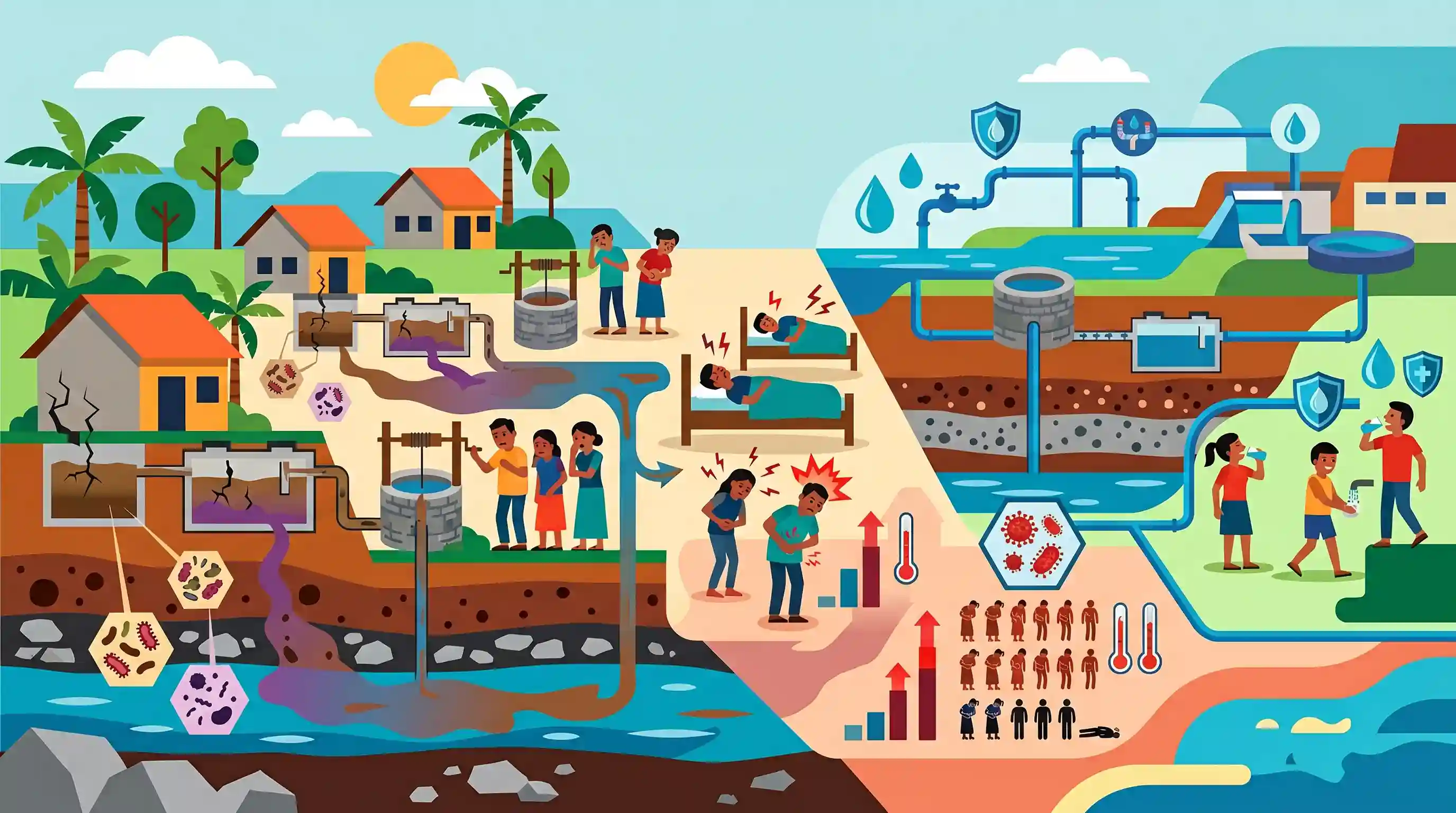
Highlights the direct link between poor sanitation infrastructure (unscientific septic tanks) and fatal public health crises (shigellosis outbreaks). It underscores the importance of the WASH (Water, Sanitation, and Hygiene) framework for effective health governance, relevant for GS2 (Health) and GS3 (Environment/Pollution).
Summary
A recent death due to shigellosis in Kerala has brought the state's death toll from the bacterial infection to three this year, alongside over 132 confirmed cases. Health authorities have traced the root cause of these recurring water-borne disease outbreaks to severe groundwater contamination. Unscientific septic tanks and leach pits located too close to household wells are causing widespread faecal contamination of drinking water sources. Experts stress that ensuring access to safe drinking water and adequate sewage infrastructure is as critical as medical intervention in tackling the state's public health challenges.
Key Points
- Kerala reported its third shigellosis-related death this year, with 132 confirmed and 75 probable cases spread across multiple districts.
- The Food Safety wing isolated the Shigella bacteria from pineapple juice served at a local shop in Kattakada.
- Health officials attribute the repeated outbreaks of water-borne diseases to deteriorating groundwater quality in the state.
- The primary cause of this contamination is the proximity of household drinking water wells to unscientific septic tanks and leach pits, leading to faecal contamination (E. coli).
- Public health experts emphasize that medical treatment must be paired with systemic improvements in sewage disposal, sanitation infrastructure, and access to safe drinking water to prevent future outbreaks.
Important Terms
Shigellosis

A highly contagious intestinal infection caused by Shigella bacteria, leading to severe or bloody diarrhea (bacillary dysentery). It primarily spreads via the faecal-oral route through contaminated food or water.
UPSC context
GS Paper 2 (Health) and Prelims. Tests knowledge of infectious diseases and public health challenges in states like Kerala.
Water-borne diseases
Illnesses caused by pathogenic microorganisms—including bacteria, viruses, and parasites—transmitted through contaminated water. Common Indian examples include cholera, typhoid, hepatitis A, and shigellosis.
UPSC context
GS Paper 2 (Public Health) and Paper 3 (Environment). Focuses on the nexus between sanitation and health.
Groundwater Contamination
The degradation of water quality in aquifers due to pollutants like faecal matter, nitrates, or arsenic. It often results from unscientific waste disposal, such as leaking septic tanks.
UPSC context
GS Paper 3 (Environmental Pollution). Analyzes causes of environmental hazards and their impact on domestic water security.
WASH Infrastructure
A public health framework encompassing Water, Sanitation, and Hygiene. It aims to provide safe drinking water and adequate waste disposal to prevent faecal-oral disease transmission.
UPSC context
GS Paper 2 (Social Justice/Health). Crucial for discussing infrastructure-led development and achieving Sustainable Development Goal 6.
Commissionerate of Food Safety
The state-level regulatory body under the Food Safety and Standards (FSS) Act, 2006. It enforces food safety through inspections, licensing, and analytical laboratory testing.
UPSC context
GS Paper 2 (Statutory Bodies) and Prelims. Tests understanding of the FSSAI framework and state-level regulatory implementation.
Prelims Trap
"Shigellosis is a viral water-borne disease transmitted through contaminated groundwater."
Shigellosis is a bacterial infection (caused by the Shigella genus), not viral. UPSC frequently swaps the causative agents (virus/bacteria/protozoa/fungi) in science questions.
Static Concepts Connected
What are biological indicators of water pollution?
- Coliform bacteria: Total coliforms act as broad environmental indicators of water quality and potential contamination.
- Faecal coliforms (E. coli): The presence of E. coli specifically indicates recent faecal contamination from human or animal waste, signaling a high risk of water-borne pathogens.
How does bacillary dysentery differ from amoebic dysentery?
- Causative Agent: Bacillary dysentery is caused by Shigella bacteria, while amoebic dysentery is caused by the protozoan parasite Entamoeba histolytica.
- Transmission & Onset: Both are transmitted via the faecal-oral route. However, bacillary dysentery typically has a much shorter incubation period and acute onset compared to amoebic dysentery.
Cross-Topic Patterns
WASH gaps accelerating AMR
Poor sanitation causes frequent bacterial enteric infections, driving the overuse of antibiotics and directly accelerating antimicrobial resistance (AMR) in rural and peri-urban populations.
Jal Jeevan's source quality gap
The push for universal tap water access via JJM must be paired with greywater management (Swachh Bharat 2.0); otherwise, groundwater sources remain vulnerable to faecal seepage.

Expect a 2026 multi-statement question linking biological indicators of water pollution (E. coli, Coliform) to groundwater sanitation.
Linked PYQs · 3
Linked PYQs · 3
- 2017MainsGS2
To ensure effective implementation of policies addressing water, sanitation and hygiene needs the identification of the beneficiary segments is to be synchronized with the anticipated outcomes." Examine the statement in the context of the WASH scheme.
- 2024MainsGS2
In a crucial domain like the public healthcare system the Indian State should play a vital role to contain the adverse impact of marketisation of the system. Suggest some measures through which the State can enhance the reach of public healthcare at the grassroots level.
- 2024MainsGS3
The world is facing an acute shortage of clean and safe freshwater. What are the alternative technologies which can solve this crisis? Briefly discuss any three such technologies citing their key merits and demerits.
