Digital arrest scam targeting elderly highlights cyber crime threats
Source:Indian Express ↗
Why It Matters
The emergence of 'digital arrest' scams represents a dangerous evolution in cybercrime, leveraging psychological manipulation and impersonation of state authorities. It is highly relevant for GS-3 (Internal Security - Cyber Crime) and GS-2 (Social Justice - Mechanisms for the protection of vulnerable sections like the elderly).
Summary
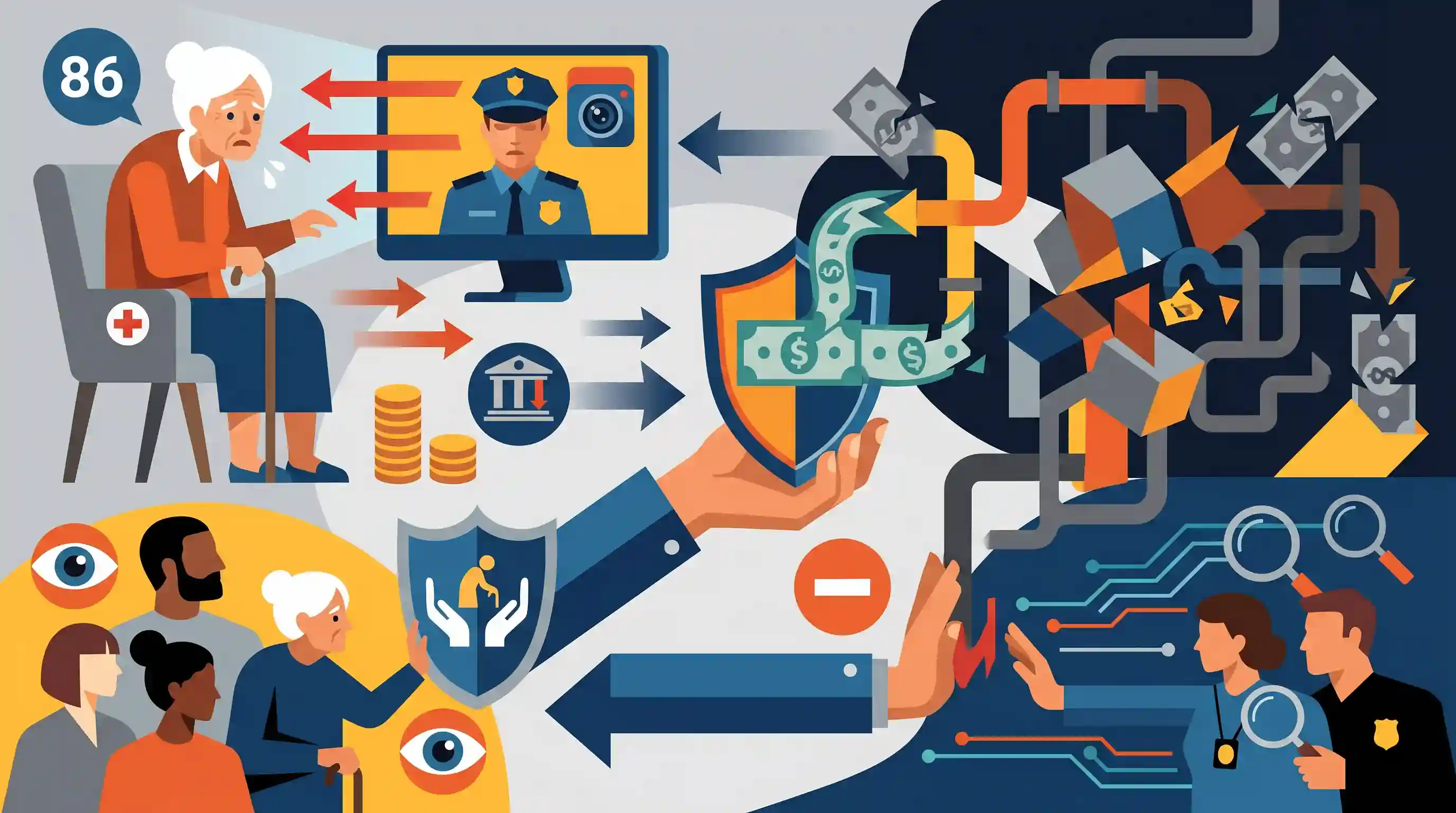
An 86-year-old cancer patient from Pune was duped out of Rs 1.27 crore by cybercriminals in a 'digital arrest' scam. The fraudsters posed as law enforcement officials and falsely alleged that her bank accounts were involved in illegal transactions. By keeping her under continuous video surveillance, they coerced her into transferring her life savings. This case highlights the alarming rise in sophisticated cyber-enabled financial frauds and exposes the extreme vulnerability of senior citizens—particularly those with severe health conditions—to digital extortion, emphasizing an urgent need for enhanced geriatric protection and specialized cyber awareness programs.
Key Points
- An 86-year-old cancer patient in Pune was defrauded of Rs 1.27 crore in a sophisticated 'digital arrest' scam.
- Cybercriminals posed as law enforcement officials, falsely claiming the victim's bank accounts were linked to illegal activities.
- The perpetrators used psychological coercion, keeping the elderly victim under constant digital surveillance via video calls until the funds were transferred.
- The incident underscores the acute vulnerability of senior citizens and medically fragile individuals to modern cybercrimes, highlighting the need for targeted digital literacy and robust cyber policing.
Important Terms
Digital Arrest

A cyber-extortion tactic where scammers impersonate law enforcement via video calls, falsely accusing victims of crimes (e.g., money laundering) to isolate and extort them.
UPSC context
GS Paper III: Cyber Security. Focuses on emerging threats and the psychological manipulation tactics used by organized cyber-syndicates.
Indian Cyber Crime Coordination Centre (I4C)
The nodal agency under the Ministry of Home Affairs established to coordinate and combat cybercrime across India in a structured manner.
UPSC context
GS Paper III: Security Challenges. Tests knowledge of institutional frameworks for managing internal security and digital threats.
Money Laundering
The process of concealing the illicit origins of money to make it appear legitimate, involving stages of placement, layering, and integration.
UPSC context
GS Paper III: Money Laundering. Relevant for understanding the legal threats (PMLA) often weaponized by scammers to intimidate victims.
Vulnerable Sections (Elderly)
Populations, such as the elderly, who are disproportionately at risk due to factors like digital illiteracy, social isolation, and trust in authority.
UPSC context
GS Paper II: Social Justice. Examines challenges faced by senior citizens and the need for specialized geriatric protection policies.
Cyber Hygiene
Routine best practices and digital safety habits—like verifying callers and updating software—intended to maintain system security and prevent cyber infections.
UPSC context
GS Paper III: Cyber Security. Relates to public awareness programs and individual-level preventive measures against financial fraud.
Prelims Trap
Digital arrest is a statutory provision allowing virtual detention of cyber suspects under the IT Act.
'Digital arrest' is not a legal term or procedure in India. It is simply a modus operandi used by cybercriminals to extort money through psychological coercion and impersonation.
Static Concepts Connected
What is the mandate of the Indian Cyber Crime Coordination Centre (I4C)?
- Nodal Agency: Established under the Ministry of Home Affairs to act as a comprehensive nodal point to tackle cybercrime in India.
- National Helpline: Operates the National Cyber Crime Reporting Portal and manages the national toll-free cyber helpline 1930.
- Coordination: Facilitates Joint Cyber Coordination Teams (JCCTs) to address multi-jurisdictional cybercrimes originating from specific hotspots.
How do cybercriminals use 'mule accounts' for money laundering?
- Mule Accounts: Bank accounts of innocent or complicit third parties used to receive, layer, and transfer illicit funds to obscure their origin.
- PMLA Intervention: The Enforcement Directorate (ED) investigates these complex digital money trails to freeze assets under the Prevention of Money Laundering Act (PMLA).
- RBI Guidelines: RBI guidelines stipulate a 'Zero Liability' framework for customers if unauthorized transactions from third-party breaches are promptly reported.
Cross-Topic Patterns
Digital India vs. Geriatric Vulnerability
The rapid push for digital banking lacks concurrent digital literacy for seniors, creating a policy blind spot often linked to the Maintenance and Welfare of Parents and Senior Citizens Act.
AI Deepfakes and Cyber Extortion
Criminals increasingly use AI-generated voice and video deepfakes to impersonate law enforcement, bridging Internal Security (cyber threats) with Science & Technology (AI regulations).

Expect a Prelims question on the legal non-existence of 'Digital Arrest', or Mains focus on I4C's role against cross-border cyber frauds.
Linked PYQs · 4
Linked PYQs · 4
- 2020MainsGS3
Discuss different types of cyber crimes and measures required to be taken to fight the menace.
- 2017MainsGS3
Discuss the potential threats of Cyber attack and the security framework to prevent it.
- 2020PrelimsGS1
In India, under cyber insurance for individuals, which of the following benefits are generally covered, in addition to payment for the loss of funds and other benefits? 1. Cost of restoration of the computer system in case of malware disrupting access to one's computer 2. Cost of a new computer if some miscreant wilfully damages it, if proved so 3. Cost of hiring a specialized consultant to minimize the loss in case of cyber extortion 4. Cost of defence in the Court of Law if any third party files a suit Select the correct answer using the code given below:
- 2020MainsGS2
In order to enhance the prospects of social development, sound and adequate health care policies are needed particularly in the fields of geriatric and maternal health care. Discuss.
