Crude Oil Price Surge Amid US Iran Conflict and Blockades
Source:The Hindu ↗
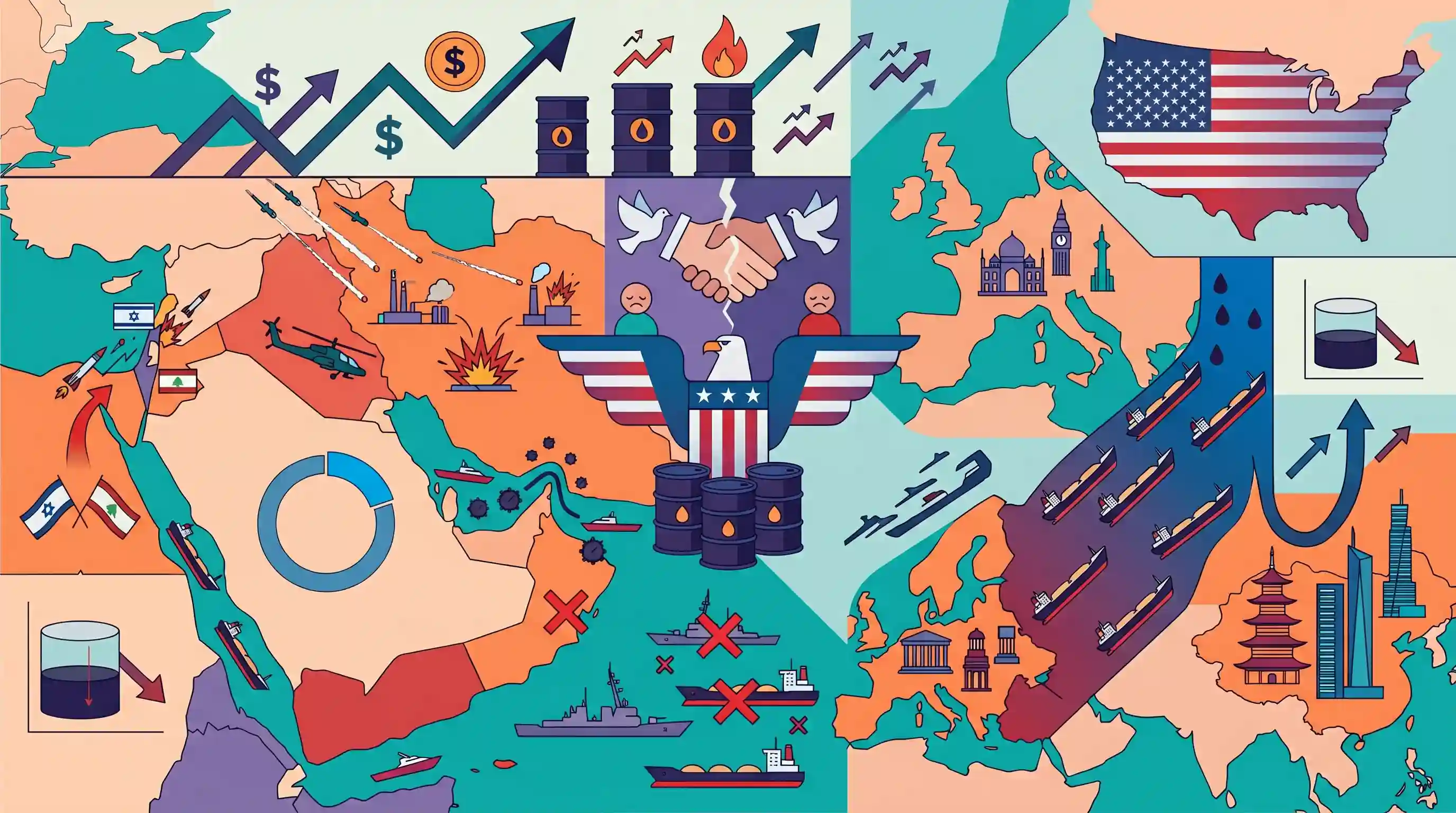
Why It Matters
The Middle East is a critical region for India's energy imports. Escalation in the US-Iran conflict and blockades at major maritime chokepoints like the Strait of Hormuz directly threaten India's energy security, drive up inflation, and necessitate a delicate balancing act in foreign policy.
Summary
Global crude oil prices spiked following US airstrikes on Iran, retaliating against the downing of a US Apache helicopter. This escalation has endangered a fragile ceasefire brokered by Qatar and Oman. The market shock is compounded by a significant drop in US crude inventories and the ongoing Iranian blockade of the Strait of Hormuz—a crucial maritime chokepoint for a fifth of global crude and LNG. Concurrently, a US naval blockade on Iranian ports has further constricted supply. Amidst escalating regional tensions involving Israel and Hezbollah, the US has surged its oil exports to fill supply gaps in Europe and Asia, solidifying its role as the key marginal supplier in a volatile energy market.
Key Points
- Global crude oil prices (Brent and WTI) surged due to renewed US-Iran hostilities and a tightening of global supply.
- US airstrikes on Iran, executed in retaliation for the downing of an Apache helicopter, threaten a fragile ceasefire brokered by Qatar and Oman.
- The Strait of Hormuz, a critical chokepoint handling 20% of global crude and LNG trade, remains blocked by Iran, while the US has counter-blockaded Iranian ports.
- US crude inventories fell by 2 million barrels, tightening the domestic market even as the US increases exports to fill supply gaps in Europe and Asia.
- The broader regional escalation, which includes conflicts involving Israel and Lebanese Hezbollah, poses long-term risks to global energy security.
Important Terms
Strait of Hormuz

A narrow waterway between Iran and Oman connecting the Persian Gulf to the Gulf of Oman. It is the world’s most vital maritime chokepoint, facilitating 20% of global oil trade.
UPSC context
GS I/II/III; vital for India's energy security as it handles over 60% of its crude imports and significant LNG shipments from Qatar.
Marginal Supplier
A producer capable of adjusting output to balance global demand and supply, effectively setting the market price. The US shale industry currently serves this "swing" role alongside OPEC.
UPSC context
GS III (Economy); crucial for understanding oil pricing mechanisms and how US production impacts India’s import bill and inflation.
Hezbollah
A Lebanon-based Shia political and military group backed by Iran. It is a central member of the regional "Axis of Resistance" and a major combatant in conflicts involving Israel.
UPSC context
GS II (IR); its actions influence West Asian stability, affecting India’s regional interests and the safety of its massive diaspora.
American Petroleum Institute (API)
The primary US trade association for the oil and gas industry. It sets technical standards and publishes weekly inventory reports that serve as influential global market indicators.
UPSC context
GS III (Economy); relevant for monitoring supply-side signals that drive volatility in international crude prices and domestic fuel costs.
Energy Security
The uninterrupted availability of energy sources at an affordable price, involving the protection of physical supply routes and the diversification of energy sources to withstand shocks.
UPSC context
GS III (Infrastructure); a pillar of India’s economic stability, requiring Strategic Petroleum Reserves (SPR) to mitigate West Asian disruptions.
Liquefied Natural Gas (LNG)
Natural gas cooled to -162°C for efficient maritime transport. It is a critical component of the global energy mix and India's transition to a gas-based economy.
UPSC context
GS III (Energy); vital for India's energy transition. Blockades in the Strait of Hormuz threaten major supplies from Qatar.
Prelims Trap
West Texas Intermediate (WTI) is the primary crude oil pricing benchmark for India's oil imports.
India's crude basket is priced against Brent and the Dubai/Oman benchmarks, not WTI. WTI is a US-centric benchmark, while Brent dictates global and Middle Eastern sea-borne crude pricing.
Static Concepts Connected
How does a global crude oil price spike impact India's macroeconomic indicators?
- Current Account Deficit: Widens significantly due to higher import bills, as India relies on imports for over 85% of its crude oil requirements.
- Imported Inflation: Elevated fuel prices cascade into higher transportation and manufacturing costs, pushing up both WPI and CPI.
- Currency Depreciation: Surging demand for dollars to pay for costlier oil imports exerts downward pressure on the Indian Rupee.
What are the primary geographical features of the Strait of Hormuz?
- Connecting Water Bodies: It links the Persian Gulf to the Gulf of Oman and ultimately the Arabian Sea.
- Bordering Nations: It is bordered by Iran to the north, and the Musandam Peninsula (Oman) and UAE south.
- Strategic Importance: Facilitates over 20% of global crude and LNG trade, making it the world's most critical energy chokepoint.
Cross-Topic Patterns
Energy chokepoints + Rupee trade
Recurrent West Asian blockades accelerate India's push for Rupee-Dirham trade settlements and expanding Strategic Petroleum Reserves to insulate against dollar-driven import inflation.
US oil exports + OPEC+ dynamics
The US surging exports during Middle East crises highlights a structural shift from OPEC+ hegemony to the US acting as the de-facto global marginal supplier.

Expect a multi-statement Prelims question linking Strait of Hormuz blockades directly to India's CAD and crude basket pricing benchmarks.
Linked PYQs · 3
Linked PYQs · 3
- 2024PrelimsGS1
Consider the following statements : Statement-I : Sumed pipeline is a strategic route for Persian Gulf oil and natural gas shipments to Europe. Statement-II : Sumed pipeline connects the Red Sea with the Mediterranean Sea. Which one of the following is correct in respect of the above statements?
- 2017MainsGS2
The question of India's Energy Security constitutes the most important part of India's economic progress. Analyze India's energy policy cooperation with West Asian countries.
- 2025MainsGS2
"Energy security constitutes the dominant kingpin of India's foreign policy, and is linked with India's overarching influence in Middle Eastern countries.” How would you integrate energy security with India's foreign policy trajectories in the coming years?
