Strait of Hormuz maritime security and global energy supplies
Source:Indian Express ↗
Why It Matters
The Strait of Hormuz is the world's most important oil chokepoint; any disruption threatens global energy security, drives inflation, and impacts macroeconomic stability in importing nations like India. The shift toward US burden-sharing in maritime security reflects changing dynamics in international relations and global commons protection.
Summary
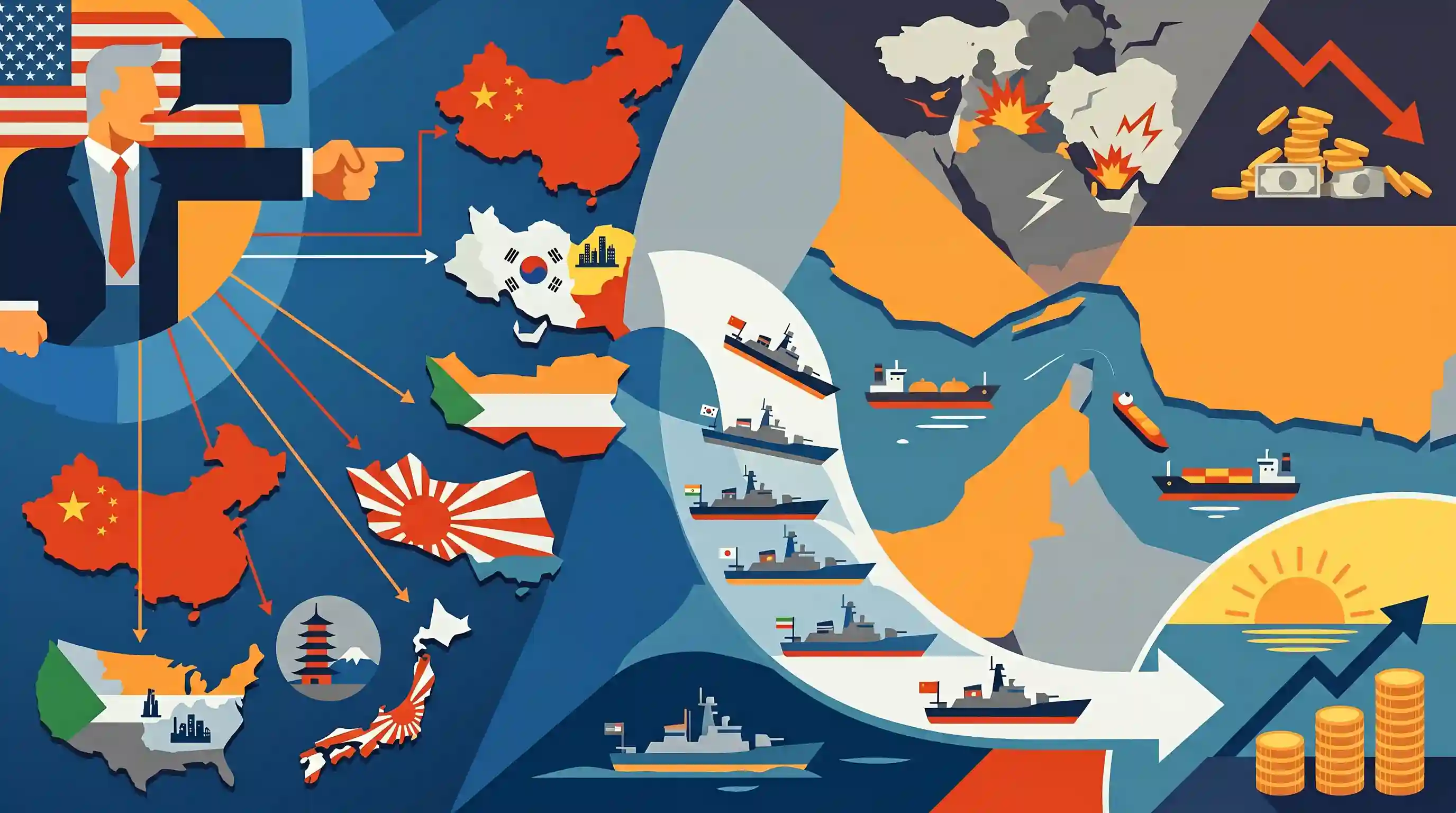
Donald Trump has demanded that seven countries heavily reliant on Middle Eastern oil, specifically naming China and Japan, send warships to secure the Strait of Hormuz. Arguing that these nations should share the burden of protecting their own energy supply chains rather than relying solely on the US, the remarks underscore the geopolitical vulnerability of global energy transit routes. Trump also linked ongoing conflicts to high energy costs, predicting that global crude oil prices will tumble once wars conclude and stability returns to the region.
Key Points
- The Strait of Hormuz is a critical global maritime chokepoint connecting the Persian Gulf to the Gulf of Oman, handling a massive portion of the world's daily oil consumption.
- Former US President Donald Trump demanded that seven nations, including China and Japan, deploy warships to secure the Strait, arguing that countries heavily reliant on Middle Eastern oil should share the security burden.
- He suggested that current high crude oil prices carry a 'war premium' and predicted that prices will tumble significantly once ongoing geopolitical conflicts are resolved.
- The remarks highlight a growing US foreign policy trend toward demanding burden-sharing from global partners in maintaining security over international waters and global commons.
Important Terms
Strait of Hormuz

A strategic waterway connecting the Persian Gulf and the Gulf of Oman. It is the world’s most critical oil transit chokepoint, facilitating nearly 20-30% of global petroleum trade.
UPSC context
GS 2 (IR) and GS 1 (Geography); tests knowledge of Middle East geopolitics and India’s energy import vulnerabilities.
Maritime Chokepoints
Narrow geographical passages, such as straits or canals, that connect larger bodies of water. They are vital 'funnels' for global trade but remain highly vulnerable to disruptions.
UPSC context
GS 2; vital for understanding global trade routes, maritime security, and India's 'Act East' and 'Look West' policies.
Energy Security
The uninterrupted availability of energy sources at an affordable price. It involves securing supply chains against geopolitical instability, price volatility, and sudden supply disruptions.
UPSC context
GS 3 (Economy); tests strategies for diversification of energy sources and protecting national supply chains from external shocks.
Sea Lines of Communication (SLOCs)
The primary maritime trade routes between ports used for commercial shipping and naval logistics. They are considered the 'arteries' of the global economy and regional stability.
UPSC context
GS 2; critical for studying maritime strategy, Indo-Pacific stability, and India's role as a Net Security Provider.
Burden-sharing
A geopolitical concept where the costs, responsibilities, and risks of maintaining international security or collective defense are distributed among allies rather than one nation.
UPSC context
GS 2; relevant to evolving US foreign policy and shifting responsibilities within global security architectures.
Prelims Trap
"The Strait of Hormuz is bordered by Iran to the north and Saudi Arabia to the south."
A frequent geographical trap. Saudi Arabia does not border the strait; its southern coast is formed by the Musandam Peninsula, which is shared by Oman and the UAE.
Static Concepts Connected
What are the primary maritime chokepoints critical to West Asian trade?
- Strait of Hormuz: Connects the Persian Gulf to the Gulf of Oman. Bordered by Iran (north) and Oman/UAE (south).
- Bab el-Mandeb: Connects the Red Sea to the Gulf of Aden. Bordered by Yemen, Djibouti, and Eritrea.
- Suez Canal: An artificial sea-level waterway in Egypt connecting the Mediterranean Sea to the Red Sea.
How do geopolitical oil shocks impact India's macroeconomic indicators?
- Widening CAD: Higher oil import bills immediately expand the Current Account Deficit (CAD), putting depreciative pressure on the Indian Rupee.
- Imported Inflation: Elevated fuel prices cascade into higher domestic transportation and manufacturing costs, driving up headline retail inflation.
- Fiscal Burden: If the government chooses to absorb price hikes through fuel subsidies or excise duty cuts, it strains the fiscal deficit.
Cross-Topic Patterns
Energy security + Macroeconomic stability
A 'war premium' on crude oil inflates India's import bill, directly worsening the Current Account Deficit (CAD) and placing depreciative pressure on the Rupee.
US isolationism + Operation Sankalp
US demands for burden-sharing validate India's proactive naval deployments, such as Operation Sankalp, aimed at independently securing Indian commercial shipping in the volatile Persian Gulf.

Map-based pairing of West Asian chokepoints (Hormuz, Bab el-Mandeb) with bordering nations is a high-probability Prelims 2026 question.
Linked PYQs · 2
Linked PYQs · 2
- 2025MainsGS2
"Energy security constitutes the dominant kingpin of India's foreign policy, and is linked with India's overarching influence in Middle Eastern countries.” How would you integrate energy security with India's foreign policy trajectories in the coming years?
- 2024PrelimsGS1
Consider the following statements : Statement-I : Sumed pipeline is a strategic route for Persian Gulf oil and natural gas shipments to Europe. Statement-II : Sumed pipeline connects the Red Sea with the Mediterranean Sea. Which one of the following is correct in respect of the above statements?
