Hormuz Crisis: Divergence Between Physical and Brent Oil Markets
Source:Indian Express ↗
Why It Matters
Understanding the mechanics of global oil pricing—specifically the distinction between physical and paper markets and the concept of backwardation—is crucial for analyzing macroeconomic stability and inflation. Furthermore, the geopolitical vulnerability of maritime chokepoints like the Strait of Hormuz directly impacts India's energy security and strategic calculus.
Summary
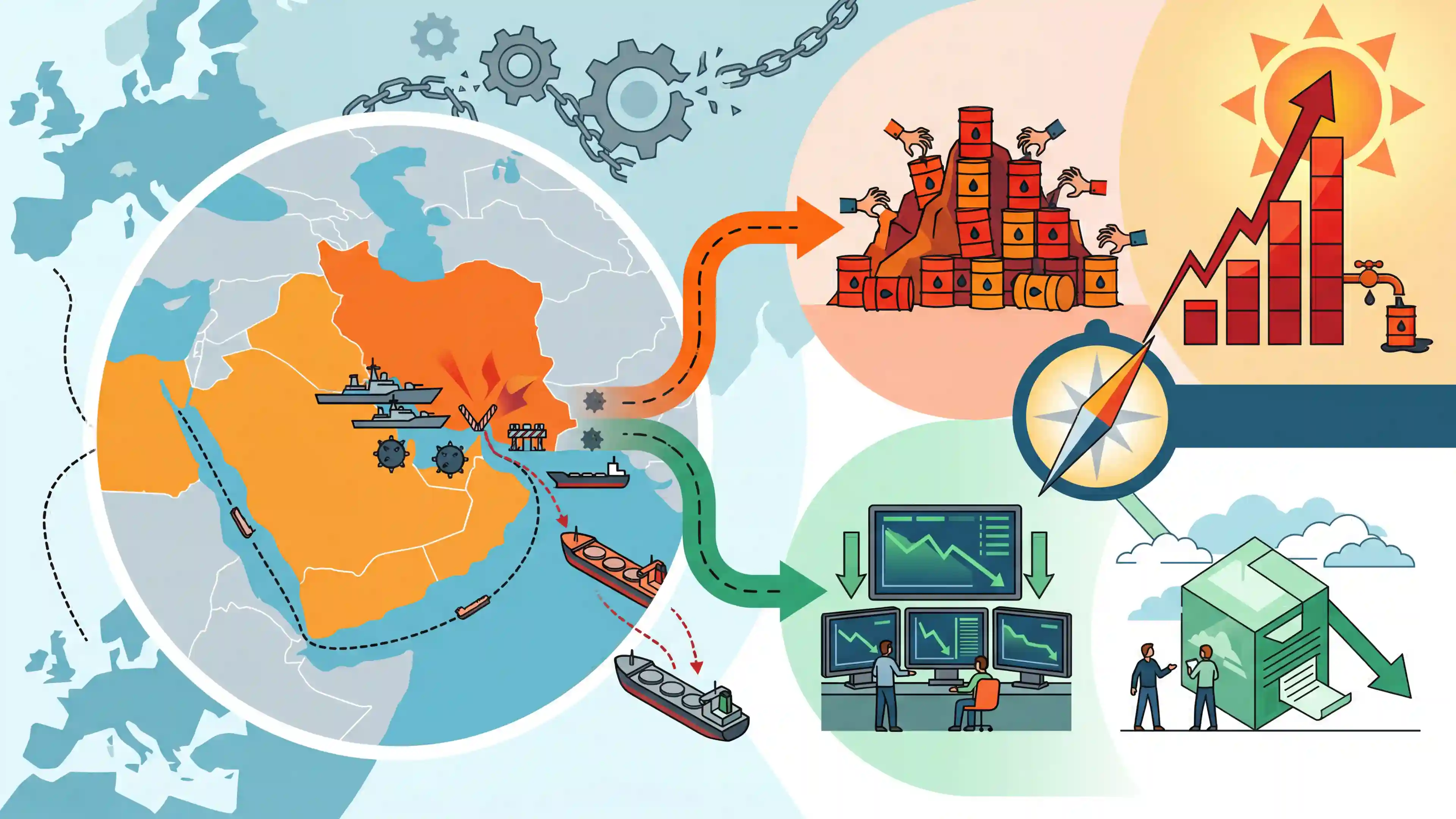
The article explains the significant divergence between paper (benchmark) and physical oil markets triggered by the unprecedented closure of the Strait of Hormuz amid the West Asia conflict. While futures markets like Brent crude reflect optimistic expectations of supply easing, the physical market is experiencing severe supply constraints. This has led to extreme 'backwardation', where immediate physical barrels command a massive premium over future contracts. The crisis underscores the vulnerability of global energy security to geopolitical chokepoints and highlights how benchmark prices can be deceptive indicators of real-time market stress during severe supply disruptions.
Key Points
- The West Asia war and the effective closure of the Strait of Hormuz have caused the largest oil supply disruption in history, according to the IEA.
- Global oil trading involves two distinct segments: the paper market (futures contracts indicating future expectations) and the physical market (actual procurement by refiners reflecting immediate demand-supply realities).
- The market is currently experiencing extreme 'backwardation', a scenario where physical barrels for immediate supply are priced significantly higher than paper barrels for future delivery due to acute supply scarcity.
- Relying solely on paper market benchmarks like Brent crude futures can be deceptive during crises, as refiners are paying much higher premiums (e.g., up to $150/barrel) for immediate physical supplies.
- Asian oil importers are disproportionately affected by the Strait of Hormuz blockade, forcing them to pay higher premiums and intensifying global competition for alternative energy supplies.
Important Terms
Strait of Hormuz

A narrow, strategic maritime waterway between Oman and Iran connecting the Persian Gulf to the Gulf of Oman; it facilitates approximately 20% of global oil consumption.
UPSC context
GS Paper 1 (Geography) & GS Paper 2 (International Relations); critical for India's energy security as ~70% of its crude imports transit here.
International Energy Agency (IEA)
A Paris-based autonomous intergovernmental organization established in 1974 (post-1973 oil crisis) to ensure global energy security and provide data-driven policy advice to member and association countries.
UPSC context
GS Paper 2 (International Institutions); India is an Associate Member and currently seeking full membership, impacting global energy governance.
Energy Security
The uninterrupted availability of energy sources at an affordable price, encompassing physical availability, economic accessibility, and environmental sustainability for a nation's development.
UPSC context
GS Paper 3 (Economy/Infrastructure); a core strategic objective requiring diversification of energy sources and strategic petroleum reserves.
Brent Crude
A major global price benchmark for Atlantic basin crude oils sourced from the North Sea; it is used to price approximately two-thirds of the world's internationally traded oil.
UPSC context
GS Paper 3 (Economic Development); fluctuations directly impact India’s inflation, fiscal deficit, and current account balance.
Backwardation
A market structure where the current (spot) price of a commodity is higher than prices for future delivery, signalling an acute immediate supply shortage.
UPSC context
GS Paper 3 (Investment Models/Markets); tests understanding of commodity market dynamics and their reflection of real-world supply-chain stress.
Prelims Trap
During extreme supply shocks, Brent crude futures accurately reflect the peak spot prices paid by refiners.
Brent is a paper futures benchmark. In 'backwardation' crises, actual physical barrels demand massive premiums over these futures, making paper prices deceptively low.
Static Concepts Connected
What do 'Contango' and 'Backwardation' mean in commodity trading?
- Contango: A normal market condition where future prices are higher than current spot prices, reflecting the cost of carrying/storing the asset over time.
- Backwardation: An abnormal condition where immediate physical/spot prices are significantly higher than future contracts due to acute, near-term supply scarcity.
Where are India's Strategic Petroleum Reserves (SPR) located?
- Phase I Locations: Visakhapatnam (Andhra Pradesh), Mangaluru (Karnataka), and Padur (Karnataka), built in underground rock caverns to store emergency crude.
- Phase II Locations: Chandikhol (Odisha) and a further expansion at Padur, being developed under a Public-Private Partnership (PPP) model.
- Strategic Purpose: To provide a buffer (currently ~9.5 days of requirement) against short-term global supply disruptions like the Hormuz blockade.
Cross-Topic Patterns
Maritime chokepoints dictating macroeconomics
The Strait of Hormuz maps directly to India's Current Account Deficit, linking maritime geography (Oman/Iran borders) with domestic inflation targeting and forex reserve depletion.
De-risking via alternative crude & SPRs
The West Asian crisis reinforces India's strategic shift toward discounted Russian crude and accelerates the need for Phase II Strategic Petroleum Reserve (SPR) commercialization.

Expect a 2026 Prelims question linking Strait of Hormuz mapping, 'backwardation' in commodity markets, and India's SPR locations.
Linked PYQs · 3
Linked PYQs · 3
- 2024PrelimsGS1
Consider the following statements : Statement-I : Sumed pipeline is a strategic route for Persian Gulf oil and natural gas shipments to Europe. Statement-II : Sumed pipeline connects the Red Sea with the Mediterranean Sea. Which one of the following is correct in respect of the above statements?
- 2020PrelimsGS1
The term 'West Texas Intermediate', sometimes found in news, refers to a grade of
- 2025MainsGS3
Why is maritime security vital to protect India's sea trade? Discuss maritime and coastal security challenges and the way forward.
