Global Crude Oil Market Volatility and Strait of Hormuz Blockade
Source:The Hindu ↗
Why It Matters
The Strait of Hormuz is one of the most critical maritime chokepoints globally. Disruptions to this route directly threaten India's and the world's energy security. For UPSC aspirants, understanding the intersection of Middle Eastern geopolitics, US-Iran relations, and their direct impact on global crude oil prices and macroeconomic stability is crucial for both GS2 (IR) and GS3 (Economy/Energy).
Summary
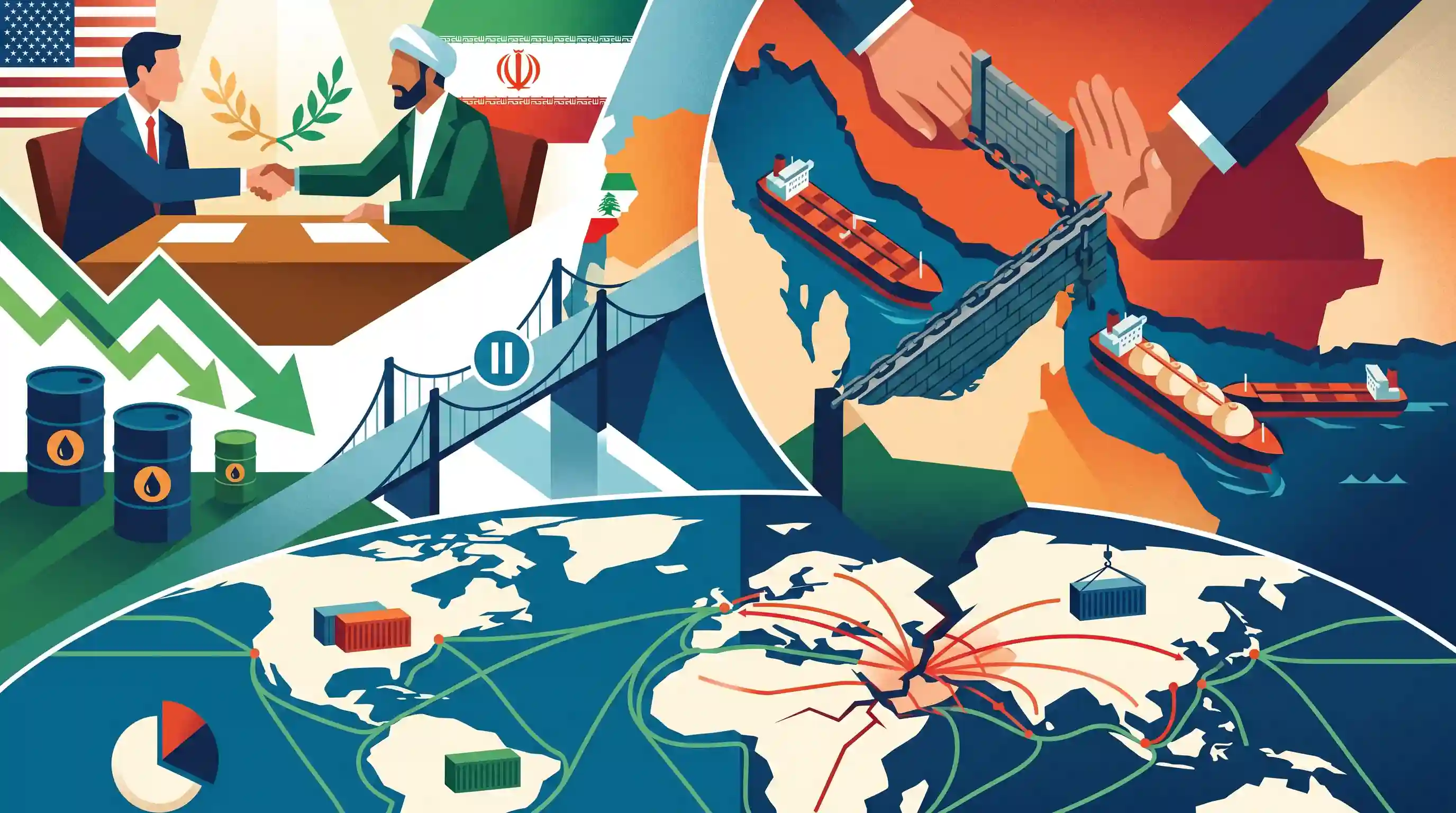
Oil prices have fallen amid cautious market optimism regarding peace talks between US President Donald Trump and Iranian officials aimed at stabilizing the Middle East. The negotiations are reportedly focused on extending the recent ceasefire between Israel and Lebanon and addressing Iran's blockade of the Strait of Hormuz. Iran's actions have effectively halted shipping into and out of the Persian Gulf, choking off a critical maritime route that handles 20% of global oil and LNG flows. This geopolitical tension highlights the extreme vulnerability of global energy supply chains to regional conflicts.
Key Points
- Global oil prices witnessed a decline as markets reacted to reports of peace talks between US President Donald Trump and Iranian officials regarding the Middle East conflict.
- The diplomatic negotiations aim to extend the recent Israel-Lebanon ceasefire and secure the reopening of the Strait of Hormuz.
- Iran has essentially halted commercial shipping into and out of the Persian Gulf, blocking a critical maritime chokepoint.
- The Strait of Hormuz is vital for global energy security, facilitating the transit of approximately one-fifth of the world's daily oil and liquefied natural gas (LNG) supplies.
- Any prolonged blockade of this chokepoint threatens to cause severe supply chain disruptions and volatility in global energy markets.
Prelims Trap
"The Strait of Hormuz connects the Persian Gulf to the Red Sea."
Aspirants frequently confuse Middle Eastern chokepoints. Hormuz connects the Persian Gulf to the Gulf of Oman, while the Bab-el-Mandeb connects the Red Sea to the Gulf of Aden.
Static Concepts Connected
Which countries share a border with the Strait of Hormuz?
- Iran: Borders the strait to the north, exerting significant geopolitical control over the shipping lanes.
- Oman: An exclave of Oman (the Musandam Peninsula) borders the strait to the south, forming its narrowest point.
- United Arab Emirates: Shares a coastline adjacent to the strait on the southern side, playing a key role in regional maritime security.
How do crude oil supply blockades impact India's macroeconomic indicators?
- Widening CAD: Higher import bills for crude oil directly increase the trade deficit, worsening the CAD and depleting forex reserves.
- Cost-push Inflation: Increased fuel and freight costs cascade across supply chains, triggering broad-based inflation in domestic goods and services.
- Rupee Depreciation: A surge in dollar demand to finance expensive oil imports exerts downward pressure on the domestic currency.
Cross-Topic Patterns
Energy Security & Strategic Reserves
Middle East supply volatility often triggers questions on India's Strategic Petroleum Reserves (ISPRL) in Padur, Mangaluru, and Visakhapatnam, which act as domestic buffers against chokepoint blockades.
Geography of the Levant & Gulf
UPSC frequently tests the "Levant" region (e.g., 2022 Prelims) and marginal seas. Expect map-matching pairs combining ongoing conflict zones (Israel/Lebanon) with adjacent water bodies and trade corridors.

Map-based matching questions combining West Asian conflicts (Levant) with maritime chokepoints (Hormuz/Bab-el-Mandeb) are highly probable.
Linked PYQs · 4
Linked PYQs · 4
- 2024PrelimsGS1
Consider the following statements : Statement-I : Sumed pipeline is a strategic route for Persian Gulf oil and natural gas shipments to Europe. Statement-II : Sumed pipeline connects the Red Sea with the Mediterranean Sea. Which one of the following is correct in respect of the above statements?
- 2022PrelimsGS1
The term "Levant" often heard in the news roughly corresponds to which of the following regions?
- 2025MainsGS2
"Energy security constitutes the dominant kingpin of India's foreign policy, and is linked with India's overarching influence in Middle Eastern countries.” How would you integrate energy security with India's foreign policy trajectories in the coming years?
- 2024MainsGS2
Discuss the geopolitical and geostrategic importance of Maldives for India with a focus on global trade and energy flows. Further also discuss how this relationship affects India's maritime security and regional stability amidst international competition ?
