अभिव्यक्ति की स्वतंत्रता और कार्टूनिस्टों को न्यायिक सुरक्षा
स्रोत:द हिंदू ↗
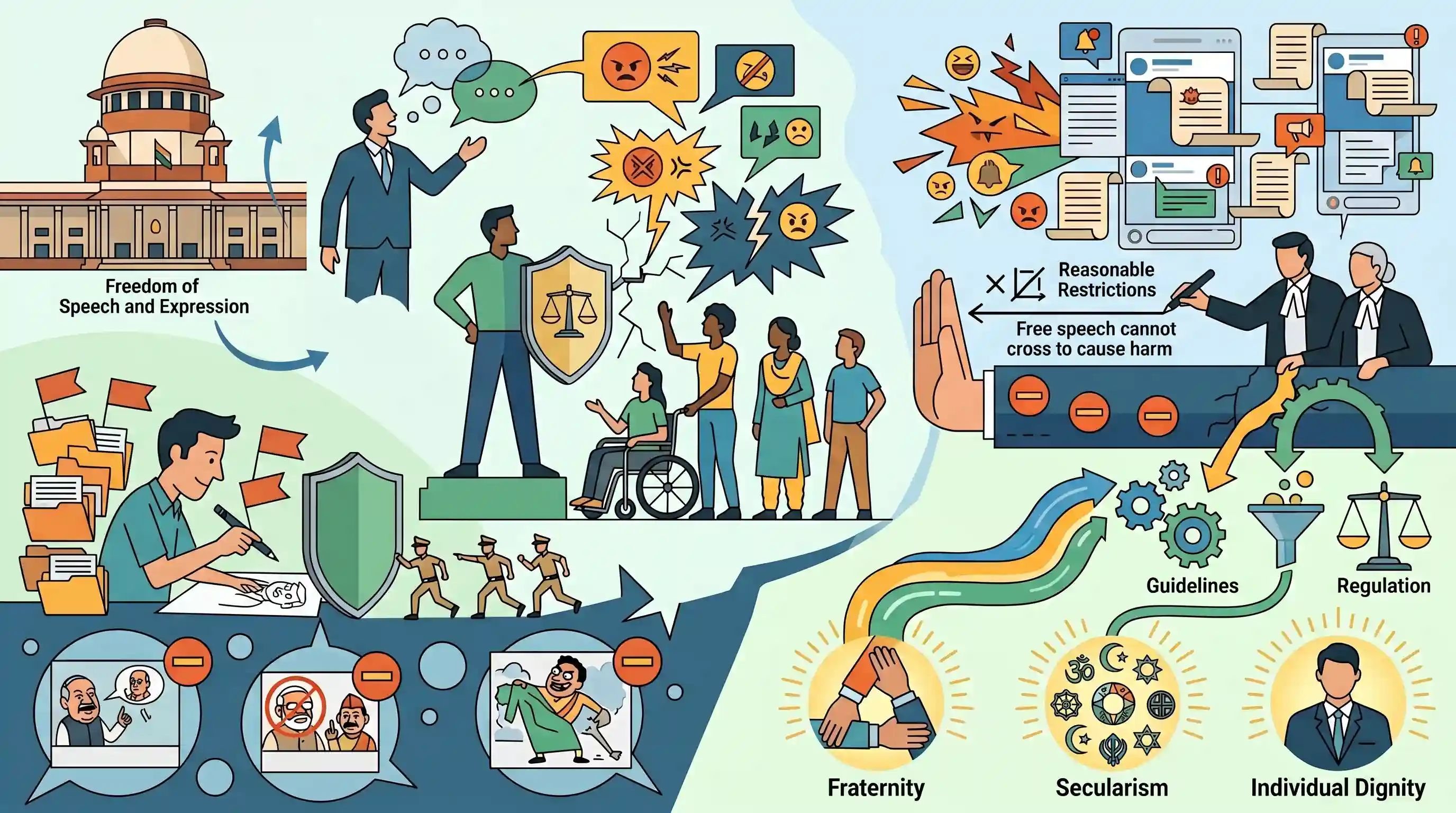
क्यों मायने रखता है
This development is crucial for understanding the contemporary constitutional debate balancing Article 19(1)(a) and Article 21 in the digital era. It underscores the challenges of social media regulation, the ethical implications of online free speech (hate speech vs. expression), and the judiciary's proactive stance in safeguarding individual dignity and fraternity.
सारांश
The Supreme Court of India granted interim protection from arrest to a cartoonist facing multiple FIRs over allegedly objectionable illustrations of the Prime Minister and the RSS. However, across multiple recent hearings, different Benches of the Supreme Court have strongly condemned the widespread abuse of social media. The judiciary has increasingly highlighted the conflict between Article 19 (freedom of speech) and Article 21 (right to life with dignity), firmly stating that free speech cannot justify making insensitive remarks about marginalized groups, such as persons with disabilities, or using derogatory language. The Court indicated a potential need for guidelines to regulate social media content to preserve constitutional values like fraternity, secularism, and individual dignity.
मुख्य बिंदु
- The Supreme Court granted interim protection to cartoonist Hemant Malviya, who faced FIRs for allegedly posting objectionable cartoons of PM Modi and the RSS.
- कार्टूनिस्ट को संरक्षण प्रदान करते हुए, सुप्रीम कोर्ट ने अभिव्यक्ति की स्वतंत्रता की आड़ में सोशल मीडिया प्लेटफॉर्म के बढ़ते दुरुपयोग पर गंभीर चिंता व्यक्त की।
- The Court emphasized that the freedom of speech and expression (Article 19) cannot overpower the fundamental right to a dignified life (Article 21), particularly in cases where content mocks persons with disabilities or uses abusive language.
- The judiciary hinted at formulating guidelines to curb insensitive, abusive, and derogatory content on social media to uphold fraternity, secularism, and individual dignity.
महत्वपूर्ण शब्द
Article 19(1)(a)

Guarantees Indian citizens the right to express views freely via speech, writing, or media. It is essential for a functional democracy but is not absolute.
UPSC context
GS Paper II: Fundamental Rights. Tests understanding of democratic foundations and judicial balancing of civil liberties.
Article 21
Fundamental right stating no person shall be deprived of life or personal liberty except by procedure established by law; judicially expanded to include the right to dignity.
UPSC context
GS पेपर II: राजव्यवस्था। विभिन्न मानवाधिकारों के लिए एक व्यापक और विकसित होते दायरे (umbrella) के रूप में "जीवन के अधिकार" को समझने के लिए महत्वपूर्ण।
युक्तियुक्त निर्बंधन
The legal power under Article 19(2) allowing the State to limit free speech for reasons like public order, morality, or the sovereignty of India.
UPSC context
GS पेपर II: संवैधानिक प्रावधान। स्वतंत्रता की सीमाओं और राज्य की सत्ता के मूल्यांकन के लिए महत्वपूर्ण।
संवैधानिक बंधुत्व
प्रस्तावना-आधारित मूल्य और मौलिक कर्तव्य (अनुच्छेद 51A(e)) जो समान भाईचारे को बढ़ावा देता है; हाल ही में न्यायालयों द्वारा विशिष्ट समुदायों को अपमानित करने वाले भाषणों पर अंकुश लगाने को उचित ठहराने के लिए इसका उपयोग किया गया है।
UPSC context
GS Paper II: Preamble & Fundamental Duties. Relates to social cohesion and judicial efforts to prevent communal discord.
Right to Dignity
अनुच्छेद 21 का एक व्याख्यात्मक घटक, जो यह प्रतिपादित करता है कि किसी व्यक्ति का आत्म-सम्मान के साथ जीने का अधिकार, किसी अन्य व्यक्ति के पूर्ण अभिव्यक्ति की स्वतंत्रता के अधिकार पर अधिभावी हो सकता है।
UPSC context
GS पेपर II: मौलिक अधिकार। "अधिकार बनाम अधिकार" की बहस और सामाजिक न्याय के मुद्दों के लिए अनिवार्य।
Interim Protection
Judicial relief preventing the arrest of an accused person while a case is pending or before an investigation is completed.
UPSC context
GS Paper II: Judiciary/Criminal Justice. Tests knowledge of legal remedies and the protection of individual liberty during litigation.
प्रारंभिक ट्रैप
The Constitution explicitly lists "hate speech" as a ground for restricting freedom of speech under Article 19(2).
Article 19(2) explicitly lists 8 grounds (e.g., public order, decency, defamation). "Hate speech" is not an explicit constitutional term; it is interpreted under broader headings like "incitement to an offence".
संबंधित अवधारणाएँ
अनुच्छेद 19(2) के तहत वाक् एवं अभिव्यक्ति की स्वतंत्रता को प्रतिबंधित करने के स्पष्ट आधार क्या हैं?
- State Security: Sovereignty and integrity of India, security of the State, and friendly relations with foreign States.
- Public Order: Public order, decency, or morality to maintain societal peace and ethics.
- Defamation & Contempt: Contempt of court, defamation, and incitement to an offence.
How does the judiciary resolve conflicts between competing Fundamental Rights?
- सामंजस्यपूर्ण व्याख्या: न्यायालय परस्पर विरोधी प्रावधानों (जैसे Art 19 बनाम 21) की व्याख्या इस प्रकार करते हैं कि वे सह-अस्तित्व में रहें, जिससे यह सुनिश्चित हो सके कि कोई भी अधिकार दूसरे पर पूरी तरह से प्रभावी न हो या उसे शून्य न कर दे।
- Proportionality Test: किसी एक मौलिक अधिकार पर दूसरे की रक्षा के लिए लगाया गया कोई भी प्रतिबंध कानूनी रूप से वैध, आवश्यक और उद्देश्य के प्रति कड़ाई से आनुपातिक होना चाहिए।
अंतर-विषय पैटर्न
IT Rules 2021 & Free Speech
SC's hint at new guidelines for social media platforms runs parallel to the ongoing legal scrutiny of the IT Rules 2021, particularly the 'safe harbour' protections for intermediaries under Section 79.
PwD Rights & Article 21
The Court’s specific focus on mocking persons with disabilities bridges GS2 Polity (Article 21 dignity) with Social Justice (Rights of Persons with Disabilities Act, 2016).

Expect a 2026 Mains GS2 question testing the judicial balancing of Article 19(1)(a) and Article 21 through the lens of digital abuse.
संबद्ध PYQ · 3
संबद्ध PYQ · 3
- 2014MainsGS2
What do you understand by the concept "freedom of speech and expression"? Does it cover hate speech also ? Why do the films in India stand on a slightly different plane from other forms of expression ? Discuss.
- 2023MainsGS2
“The Constitution of India is a living instrument with capabilities of enormous dynamism. It is a constitution made for a progressive society.” Illustrate with special reference to the expanding horizons of the right to life and personal liberty.
- 2025MainsGS4
In the present digital age, social media has revolutionised our way of communication and interaction. However, it has raised several ethical issues and challenges. Describe the key ethical dilemmas in this regard.
