NTPC Solar Project Commissioning and Green Energy Expansion
Source:scanx ↗
આ શા માટે મહત્વનું છે
Renewable energy capacity additions, especially in major hubs like Khavda in Gujarat, are highly relevant for the GPSC Prelims syllabus focusing on state and national infrastructure. Additionally, the energy transition of India's largest PSU power generator (NTPC) is a key topic in the economy and environment sections.
સારાંશ
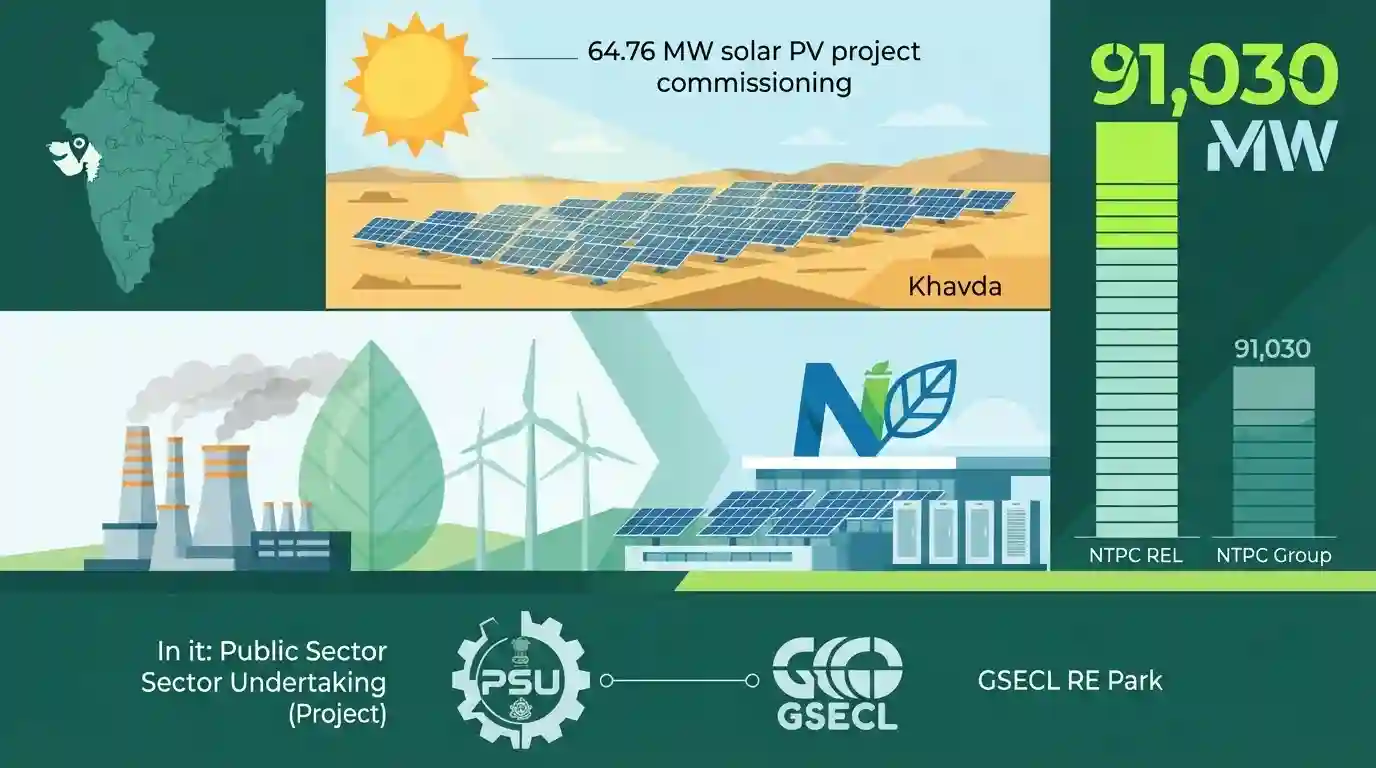
NTPC Renewable Energy Limited (NTPC REL) has successfully commissioned a 64.76 MW solar PV project in Khavda, Gujarat, raising the total installed capacity of the NTPC Group to 91,030 MW. The project, located within the 225 MW GSECL RE Park, signifies NTPC's strategic transition from a thermal power major to a diversified green energy producer, aligning with India's broader renewable energy targets.
મુખ્ય મુદ્દા
- NTPC Renewable Energy Limited commissioned a 64.76 MW solar PV project in Khavda, Gujarat on July 24, 2026.
- The project is part of the 225 MW GSECL Renewable Energy Park.
- With this addition, the total installed capacity of the NTPC Green Energy Limited (NGEL) group reached 10,786.56 MW.
- The overall NTPC Group installed capacity reached 91,030 MW, while total commercial capacity stood at 89,950 MW.
- The Khavda location offers high solar irradiance and strong grid infrastructure, facilitating NTPC's transition towards renewable energy generation.
મહત્વપૂર્ણ શબ્દો
NTPC Limited

India's largest power utility and a Maharatna Central Public Sector Enterprise under the Ministry of Power, primarily engaged in electricity generation and rapidly expanding its renewable energy portfolio.
UPSC context
GS Paper III (Infrastructure: Energy, Economic Development); crucial for studying power sector reforms and state-backed decarbonization efforts.
NTPC Green Energy Limited (NGEL)
A wholly-owned subsidiary of NTPC Limited incorporated in 2022 to consolidate and monetize NTPC's renewable energy business and drive its green transition.
UPSC context
GS Paper III (Infrastructure, Disinvestment); relevant for PSU corporate restructuring and green transitions in energy-intensive enterprises.
NTPC Renewable Energy Limited (NTPC REL)
A wholly-owned subsidiary of NTPC Green Energy Limited established in 2020 to rapidly expand India's utility-scale renewable energy projects, focusing on solar, wind, and green hydrogen.
UPSC context
GS Paper III (Renewable Energy, Climate Change); highlights India's progress toward achieving its clean energy and emissions targets.
Gujarat State Electricity Corporation Limited (GSECL)
A state-owned electricity generation utility in Gujarat, acting as a wholly-owned subsidiary of Gujarat Urja Vikas Nigam Limited, with a diverse power generation portfolio.
UPSC context
GS Paper III (Infrastructure: Energy); examines state electricity board unbundling and regional contributions to national green energy targets.
પ્રિલિમ્સ ટ્રેપ
"India now sources over 50% of its electricity generation from non-fossil fuels."
UPSC frequently tests the difference between installed capacity and actual generation. India crossed 50% in installed non-fossil capacity, but coal still dominates actual electricity generation.
સંલગ્ન સ્થિર ખ્યાલો
What is the geographical and strategic significance of the Khavda Renewable Energy Park?
- Scale and Location: Located in Gujarat's Rann of Kutch salt desert, it is designed as the world's largest renewable energy installation (30 GW target).
- Hybrid Generation: It leverages both high solar irradiance and strong wind speeds to create a hybrid generation profile, improving grid stability over single-source parks.
- Ecological Sensitivity: Sited in a sensitive ecosystem near the Indo-Pak border, raising environmental concerns regarding avian collisions for species like the Great Indian Bustard.
What are India's updated Panchamrit climate targets submitted to the UNFCCC?
- Non-Fossil Capacity: Achieve 500 GW of non-fossil energy capacity by 2030, a shift from the previous percentage-based capacity target.
- Carbon Reduction: Reduce the total projected carbon emissions by one billion tonnes from now onwards till 2030.
- Emission Intensity: Reduce the carbon intensity of the economy by 45% by 2030, over 2005 levels.
- Net Zero: Achieve the ultimate target of Net Zero emissions by the year 2070.
આંતર-વિષય પેટર્ન
Intermittency & Hybrid RE Parks
Mega parks combining wind and solar (like Khavda) address individual source intermittency, smoothing the generation curve for better grid integration and reducing transmission infrastructure costs.
Maharatnas pivoting to Green Energy
Traditional fossil heavyweights like NTPC and Coal India are creating green subsidiaries (e.g., NGEL) to diversify portfolios and execute sovereign climate commitments, reflecting a strategic shift in Maharatna operations.

Expect a 2026 prelims question contrasting India's >50% non-fossil installed capacity against its coal-heavy actual daily generation.
સંલગ્ન PYQ · 2
સંલગ્ન PYQ · 2
- 2026GPSC_PRELIMSGS1
Which of the following statement/s is/are correct regarding Renewable Energy Installed Capacity in India? 1. Wind energy is second only to solar energy in the Indian renewable sector. 2. Biomass power capacity accounts for around 30% of India's total renewable energy. 3. India ranks among the top three countries in the world in Hydropower Installed Capacity. Choose the correct option from the following.
- 2025GPSC_PRELIMSGS1
Which of the following statement(s) is / are true? (i) Ministry of Power has established National Mission on the use of biomass in thermal power plants known as SAMARTH (ii) The policy on biomass utilization for power generation through co-firing in coal-based power plants, mandates all thermal power plants in the country to use 5 - 10% biomass for power production.
