Cognitive Decline Dementia and Geriatric Health Care
Source:The Hindu ↗
Why It Matters
The growing elderly population in India makes age-related neurological disorders a significant public health challenge, directly relevant to UPSC GS2 topics on healthcare policies, vulnerable populations, and geriatric care, as well as GS3 Science & Technology topics on human diseases.
Summary
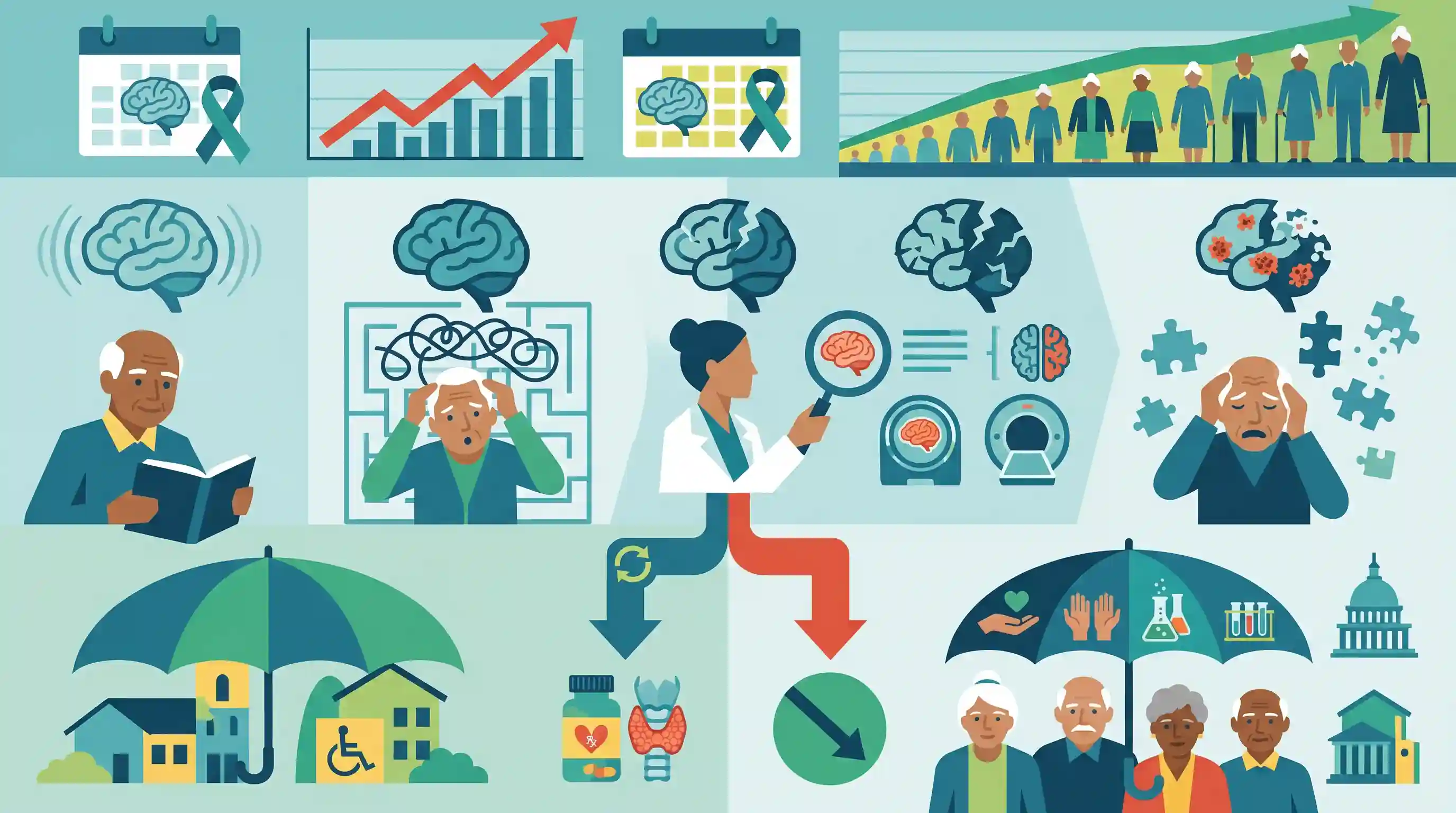
In the context of Brain Awareness Month, clinicians are emphasizing the critical clinical distinctions between normal age-related cognitive decline, dementia, and Alzheimer's disease. While cognitive decline can be a natural part of aging, dementia is a broader syndrome characterized by a severe loss of cognitive functioning, with Alzheimer's being its most prevalent underlying disease. Experts urge better public awareness and specialized diagnostic approaches to ensure that reversible causes of cognitive impairment are treated and progressive neurodegenerative diseases are managed early. The issue highlights the growing necessity for robust geriatric healthcare policies to support an aging demographic.
Key Points
- Not all cognitive decline indicates dementia, and not all dementia is caused by Alzheimer’s disease; dementia is an umbrella term for severe mental ability decline, while Alzheimer's is its most common specific cause.
- Mild Cognitive Impairment (MCI) is a transitional stage between normal aging and dementia, requiring monitoring as it may progress into Alzheimer's or other dementias.
- Clinicians emphasize the importance of early and accurate diagnosis to differentiate between reversible cognitive issues (caused by stress, vitamin deficiencies, or thyroid problems) and progressive neurodegenerative diseases.
- The growing burden of age-related cognitive disorders underscores the urgent need for specialized geriatric healthcare infrastructure and awareness campaigns.
Important Terms
Dementia

A clinical syndrome resulting in the progressive deterioration of cognitive functions like memory, reasoning, and personality, severe enough to interfere with daily life and independent functioning.
UPSC context
GS Paper II: Issues relating to development and management of Social Sector/Services relating to Health and the Elderly population.
Alzheimer’s Disease
A progressive neurodegenerative disorder and the most common cause of dementia, characterized by the abnormal buildup of amyloid plaques and tau tangles in the brain.
UPSC context
GS Paper III: Science and Technology—developments and their applications in everyday life (Neurobiology and Diseases).
Geriatric Healthcare
Specialized medical care focusing on the unique health needs of senior citizens (aged 60+), emphasizing disease prevention, management of chronic conditions, and improving quality of life.
UPSC context
GS Paper II: Welfare schemes for vulnerable sections; social justice and health infrastructure for the aging population.
National Programme for Health Care of the Elderly (NPHCE)
A 2010 Indian government initiative providing comprehensive, dedicated healthcare services—preventive, promotive, and curative—for the elderly at primary, secondary, and tertiary levels.
UPSC context
GS Paper II: Government policies and interventions for development in various sectors; health-related schemes.
Neurodegenerative Diseases
A category of conditions, including Alzheimer’s and Parkinson’s, involving the progressive loss of structure or function of neurons, typically leading to cognitive or motor decline.
UPSC context
GS Paper III: Science and Technology—Health and disease-related developments impacting public health policy.
Brain Awareness Month
A global campaign, typically held in March, aimed at fostering public awareness about brain research, neurological disorders, and the importance of brain health.
UPSC context
GS Paper II: Important aspects of governance, transparency, and accountability—Public health awareness and global health initiatives.
Prelims Trap
"Dementia and Alzheimer’s disease are synonymous conditions, and all associated cognitive decline is permanent and irreversible."
UPSC frequently swaps definitions. Dementia is a broad clinical syndrome (an umbrella term), whereas Alzheimer's is one specific disease under it. Furthermore, not all cognitive decline is irreversible neurodegeneration.
Static Concepts Connected
What are the biological hallmarks of Alzheimer's disease?
- Amyloid Plaques: Accumulation of neurotoxic amyloid-beta proteins outside brain cells, which disrupts cell-to-cell communication.
- Tau Tangles: Abnormal accumulation of tau proteins inside neurons, causing structural collapse and progressive brain atrophy.
- Irreversibility: Unlike cognitive issues caused by vitamin deficiencies or stress, Alzheimer's triggers progressive, irreversible neurodegeneration.
What are the key features of the National Programme for Health Care of the Elderly?
- Launch & Aim: Launched in 2010 to provide comprehensive and accessible geriatric care (preventive, promotive, curative, and rehabilitative) across India.
- Tiered Care: Integrates specialized elderly care across primary (PHCs), secondary (District Hospitals), and tertiary (Regional Geriatric Centres) healthcare levels.
Cross-Topic Patterns
Silver Economy + Demographic Transition
India's elderly population will double to 20% by 2050. Mains questions increasingly contrast India's closing 'demographic dividend' window with the rising systemic burden of geriatric healthcare and the 'silver economy'.
Micronutrients + Neural Health
Prelims frequently links vitamins to specific diseases. Severe Vitamin B12 deficiency and hypothyroidism can cause cognitive impairment that mimics dementia, showcasing the overlap between public nutrition schemes and neurocognitive diagnostics.

A 2026 Prelims question could blend Alzheimer's biological markers (amyloid plaques) with provisions of India's geriatric care policies.
Linked PYQs · 2
Linked PYQs · 2
- 2021PrelimsGS1
Magnetite particles, suspected to cause neurodegenerative problems, are generated as environmental pollutants from which of the following? 1. Brakes of motor vehicles 2. Engines of motor vehicles 3. Microwave stoves within homes 4. Power plants 5. Telephone lines Select the correct answer using the code given below.
- 2020MainsGS2
In order to enhance the prospects of social development, sound and adequate health care policies are needed particularly in the fields of geriatric and maternal health care. Discuss.
